1. Introduction
A car that shakes at highway speeds can turn an ordinary drive into a stressful one. The vibration might feel like a mild buzz in the steering wheel or a more noticeable shudder through the seat and floor. While it’s tempting to ignore it if the car seems to “drive fine,” highway-speed shaking often points to a problem that can worsen, reduce safety, and increase wear on tires and suspension parts. The good news is that many of the most common causes are straightforward to identify and fix, especially if you catch them early.
Recommended Tool: Professional OBD2 Scanner
Recommended Tool: Premium Brake Pads
Recommended Tool: Cooling System Diagnostic Tools
🔧 Recommended Professional Tool
Cooling System Diagnostic ToolsProfessional coolant tester and infrared thermometer for accurate overheating diagnosis.
✔ Recommended by automotive technicians ✔ Suitable for BMW, Mercedes, VAG & JLR platforms ✔ Fast international shipping
2. Causes
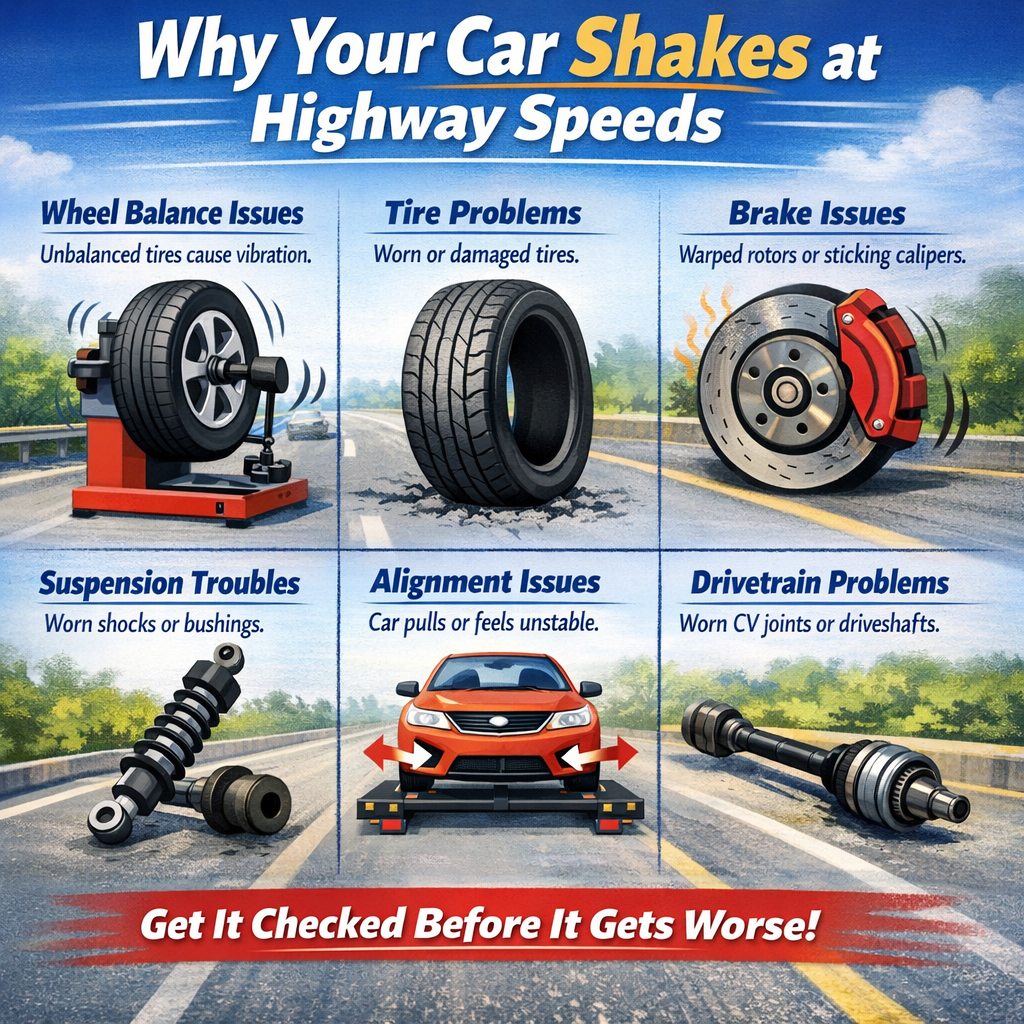
Shaking at 55–80 mph is most often related to rotating parts (tires, wheels, brakes, driveline). Below are the most common culprits.
Tire and wheel issues (most common)
- Unbalanced wheels/tires: Even a small imbalance can create vibration that becomes noticeable at higher speeds.
- Tires out of round or with internal damage: A separated belt or “bubble” in the tire can cause a rhythmic thump or shake.
- Uneven tire wear: Cupping, scalloping, or flat spots (sometimes from hard braking or long storage) can lead to vibration.
- Bent wheel (rim): Potholes and curbs can bend a rim just enough to cause shaking, even if the tire holds air.
- Incorrect tire pressure: Underinflation or overinflation can change how the tire rolls and may exaggerate existing issues.
Alignment and suspension wear
- Poor wheel alignment: Misalignment can cause pulling and uneven wear that later turns into vibration.
- Worn suspension components: Worn shocks/struts, ball joints, tie rods, or control arm bushings can allow wheel movement that shows up as shake at speed.
- Wheel bearing wear: A failing wheel bearing can create vibration and often a humming or growling noise that increases with speed.
Brake-related vibration (sometimes mistaken for “highway shake”)
- Warped brake rotors: Typically felt during braking from highway speeds as a pulsing in the pedal or steering wheel shake.
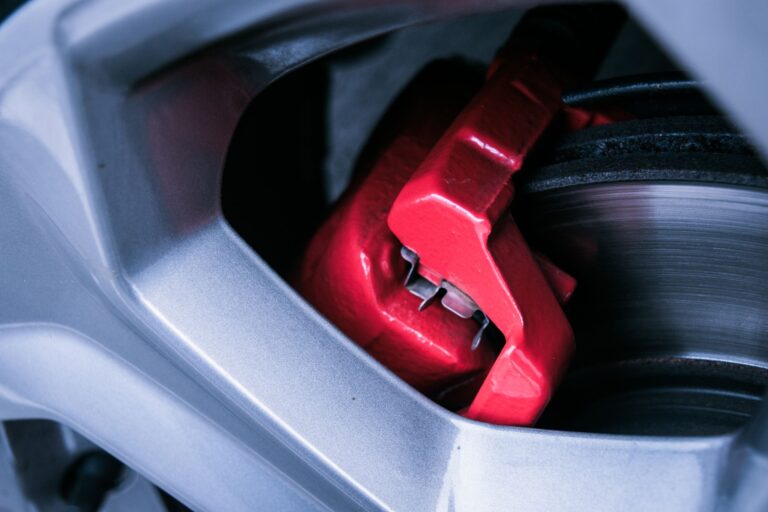
- Sticking brake caliper: Can overheat a rotor and cause vibration, pulling, or a burning smell.
Drivetrain problems (more common in certain vehicles)
- CV axle issues (front-wheel drive and many AWD): A worn CV joint or bent axle can cause vibration during acceleration.
- Driveshaft imbalance or worn U-joints (rear-wheel drive and some AWD): Often causes a vibration that increases with speed and may be felt through the seat more than the steering wheel.
- Engine/transmission mount wear: Worn mounts can allow excessive movement and amplify vibration.
3. Symptoms
Paying attention to when and where you feel the shake can narrow the cause quickly.
Where you feel it matters
- Steering wheel shake: Often points to front tire/wheel balance, a bent front wheel, or front suspension/alignment issues.
- Seat/floor vibration: More likely rear tire/wheel issues, driveshaft problems (RWD/AWD), or rear suspension wear.
- Brake pedal pulsation: Commonly brake rotors, but can also involve wheel hub or bearing issues.
When it happens matters
- Only at certain speeds (like 60–70 mph): Classic sign of wheel/tire imbalance.
- Gets worse while accelerating: Often drivetrain-related (CV axle, driveshaft, mounts), though tires can still be involved.
- Mostly while braking: Strongly suggests rotor issues or a sticking brake component.
- Constant and worsening with speed: Could be tires/wheels, wheel bearings, or driveline issues.
4. How to diagnose
You can do several safe checks at home before scheduling service. Always work on a cool car, park on level ground, and use caution around traffic if you’re inspecting after a drive.
Step 1: Note the pattern
Ask yourself:
- What speed does it start?
- Does it happen on smooth roads?
- Is it worse when accelerating, coasting, or braking?
- Is it in the steering wheel, seat, or whole car?
Write it down. These details help a shop diagnose faster and can save you money.
Step 2: Inspect tires and wheels visually
Look for:
- Bulges, bubbles, or cuts in the tire sidewall
- Uneven wear (cupping/scalloping, bald edges, feathering)
- Objects stuck in the tread (stones, screws)
- Mud, ice, or debris packed inside the wheel (can throw off balance)
- Missing wheel weights (small clipped or adhesive weights on the rim)
If you see a sidewall bulge or cord showing, avoid highway driving and replace the tire.
Step 3: Check tire pressures
Use a gauge when tires are cold and inflate to the door-jamb sticker specification (not the max pressure on the tire). Incorrect pressure won’t usually be the only cause, but it can amplify vibration and uneven wear.
Step 4: Try a simple rotation test (if you’re due anyway)
If your tires are due for rotation and you have it done, pay attention afterward:
- Vibration moves from steering wheel to seat (or changes noticeably): suggests a tire/wheel issue rather than suspension.
- Vibration stays the same: could still be tires, but raises suspicion of alignment, wheel bearings, or drivetrain.
Step 5: Pay attention to noise and heat
After a normal drive:
- A humming/growling that rises with speed can indicate a wheel bearing.
- A burning smell or a wheel that feels unusually hot (careful—don’t touch hot brakes) can indicate a sticking caliper.
5. How to fix
The right fix depends on the cause. Here are common solutions you may hear at a tire shop or repair shop.
Wheel balancing and tire service
- Balance the wheels: This is often the first and least expensive fix.
- Replace damaged tires: Belt separation, bubbles, or severe uneven wear typically require replacement.
- Road-force balancing: Some shops use this to identify tires that are stiff or out-of-round even if they “balance” normally.
Wheel and alignment repairs
- Repair or replace bent wheels: Some alloy wheels can be straightened, but not all damage is safely repairable.
- Wheel alignment: Especially if you have uneven wear, pulling, or recently hit a pothole.
Suspension and steering repairs
If parts are worn, balancing won’t hold for long. Common repairs include:
- Tie rods, ball joints
- Control arm bushings
- Shocks/struts
Worn suspension parts can also destroy new tires quickly, so it’s worth addressing the root cause.
Brake repairs
- Resurface or replace rotors (often paired with new brake pads)
- Service or replace sticking calipers and replace contaminated brake hardware
If vibration is mainly during braking, focus here.
Drivetrain fixes
- Replace a worn CV axle (common if vibration occurs during acceleration)
- Repair/replace driveshaft components (U-joints, carrier bearing, or balancing)
- Replace worn engine/transmission mounts if excessive movement is found
6. Prevention tips
A few habits can significantly reduce the chance of highway-speed shaking.
- Rotate tires on schedule (often every 5,000–7,500 miles, or per your manual)
- Keep tires properly inflated and check monthly
- Balance tires when installing new tires and whenever vibration starts
- Get alignment checks if you hit a major pothole/curb or notice pulling
- Replace worn suspension parts promptly to protect tires and keep handling stable
- Wash wheels in winter to remove packed snow/ice and road debris that can affect balance
- Avoid driving on a damaged tire (a short delay can turn a repairable issue into a replacement)
7. When to see a mechanic
Schedule professional help promptly if:
- The shaking is sudden and severe
- You notice a tire bulge, exposed cords, or repeated air loss
- The car pulls hard, wanders, or feels unstable at speed
- Vibration is paired with grinding, humming, clunking, or a burning smell
- The steering wheel shakes even on smooth roads after balancing
- The vibration happens during braking (especially if the pedal pulses)
- You suspect a wheel bearing, brake, or drivetrain issue
Highway-speed shaking isn’t just an annoyance—it’s your car signaling that something rotating or supporting the vehicle isn’t working as it should. Starting with the simplest checks (tires, pressure, balancing) often resolves the problem, and when it doesn’t, the symptoms you’ve observed will help a mechanic pinpoint the real cause faster.