1. Introduction
Front stabilizer bar links (also called anti-roll bar links or drop links) are small but important suspension parts on the VW Tiguan Mk2 (AD1, 2016–present). They connect the front anti-roll bar to the suspension strut or control arm, helping keep the body stable when cornering, braking, or driving over uneven roads. Because these links rely on ball joints and rubber boots, they’re considered wear items—especially on European roads with potholes, speed humps, cobblestones, and winter salt.
Recommended Tool: Professional OBD2 Scanner
Recommended Tool: OEM Suspension Components
Recommended Tool: Transmission Diagnostic Tools
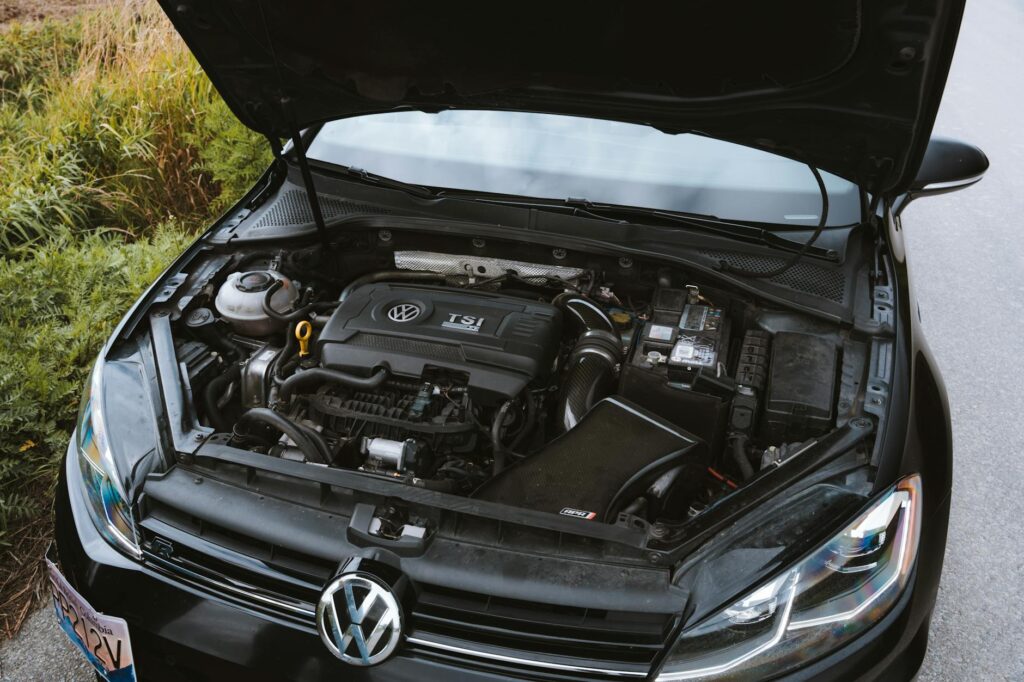
If you drive a Tiguan Mk2 with the 2.0 TSI (common engine codes include EA888 Gen 3 variants such as CZPA, CHHB, DKZA depending on market and year) and you’re hearing front-end noises or noticing vague steering feel, stabilizer links are a common—and often affordable—place to look. The same kind of issue also affects many BMW, Mercedes, Audi/VW Group, and JLR models, so the diagnostic approach and expectations will feel familiar if you’ve owned those brands.
🔧 Recommended Professional Tool
EA888 Engine Diagnostic ToolsEssential tools for EA888 engine diagnostics
✔ Recommended by automotive technicians ✔ Suitable for BMW, Mercedes, VAG & JLR platforms ✔ Fast international shipping
2. Causes
Stabilizer bar links fail gradually. Most aren’t “broken” suddenly—they develop play in the ball joints or the protective boots split and allow water and grit inside.
Common causes include:
- Normal wear of the ball joints: Repeated steering and suspension movement slowly loosens the joint.
- Split or leaking dust boots: Once the boot is torn, lubrication escapes and contamination enters, accelerating wear.
- Road impacts: Potholes and kerb strikes can stress the link and slightly bend it or shock-load the joint.
- Lowered suspension or incorrect ride height: Changes in geometry can increase link angle and load, reducing lifespan.
- Poor-quality aftermarket parts: Cheaper links may use weaker joint materials or inferior sealing.
- Corrosion and seized fasteners: Road salt can rust the nuts/studs, making removal harder and sometimes damaging the joint during disassembly.
On MQB-platform vehicles like the Tiguan Mk2, links are generally straightforward, but hardware condition (rust, rounded nuts) often determines how “easy” the job really is.
3. Symptoms
Worn front stabilizer links usually announce themselves clearly once you know what to listen and feel for.
Typical symptoms:
- Clunking or knocking from the front over small bumps, rough surfaces, or entering driveways
- Rattling noise at low speed on cobblestones or broken tarmac
- More body roll in corners (the car feels less tied-down)
- Steering that feels slightly vague or less precise in quick direction changes
- Noise that changes with road input rather than engine speed (unlike some drivetrain noises)
A key pattern: the noise is often worse with one wheel hitting a bump at a time (diagonal bumps), because that twists the anti-roll bar and loads the link.
4. How to diagnose
You can do meaningful checks at home, and then confirm with a workshop inspection. On VW Group cars, a shop may also use ODIS to scan for related faults, but stabilizer links are usually a mechanical diagnosis rather than an electronic one.
Home checks (simple and safe)
- Listen carefully: Drive slowly over a rough surface with the windows slightly open. A rhythmic clunk over small bumps is a classic sign.
- Visual inspection (wheel turned full lock helps):
- Look for torn boots, grease leakage, or obvious corrosion.
- Compare left vs right; one side often fails first.
- Bounce test (limited value): Pushing down on the wing may not reproduce the sound because the anti-roll bar isn’t loaded the same way as on-road bumps.
Workshop checks (more definitive)
A workshop will typically:
- Raise the car and unload the suspension appropriately.
- Use a pry bar to check for play in the link joints.
- Check adjacent parts that can mimic the same noise:
- Anti-roll bar bushes
- Top strut mounts/bearings
- Lower control arm bushes/ball joints
- Loose undertray or heat shields
- Confirm by loading the suspension on a shaker plate (if available), which is excellent for reproducing clunks.
If you’re used to brand-specific tools: BMW ISTA, Mercedes Xentry, JLR SDD/Pathfinder, and VW ODIS are great for diagnosing electronically monitored suspension systems, but stabilizer link wear is usually found by hands-on inspection.
5. How to fix
The correct fix is replacing the worn link(s). In most cases, it’s best practice to replace them in pairs (left and right), even if only one is noisy, because the other is likely close behind—and matched stiffness helps keep handling consistent.
What replacement typically involves
- Remove the front wheels.
- Unbolt the link from the strut and anti-roll bar (or control arm, depending on exact configuration).
- Install the new link, ensuring:
- Correct orientation (some links are side-specific)
- Proper torque settings
- No twisting of the boots
- If required, hold the ball stud with an internal hex/Torx while tightening the nut (common on VW/Audi).
OEM vs aftermarket
- OEM or OEM-equivalent brands (commonly Lemförder, TRW, SKF, Febi/Bilstein depending on application) tend to last longer and fit correctly.
- Very cheap links can develop play quickly, leading to repeat labor costs.
No wheel alignment is usually needed for stabilizer link replacement alone, but if other suspension parts are found worn and replaced at the same time (control arms, subframe movement), an alignment may be wise.
6. Repair costs
Costs vary across Europe based on labor rate, corrosion, and whether you replace one link or both. Below are realistic ranges for a VW Tiguan Mk2 2.0 TSI at an independent garage; main dealers are usually higher.
Typical cost ranges (parts + labor)
-
Replace one front stabilizer link
- Parts: €25–€90
- Labor: 0.5–1.0 hr (often €50–€180)
- Total: €90–€250
-
Replace both front stabilizer links (recommended)
- Parts: €50–€180
- Labor: 0.8–1.5 hr
- Total: €150–€420
What can push costs up?
- Seized or spinning studs requiring extra time, heat, or cutting: add €40–€150
- Replacing related parts found worn (anti-roll bar bushes, top mounts): can bring totals to €300–€900 depending on scope
If your Tiguan has a DSG (common gearboxes include DQ381/DQ500 depending on drivetrain), that doesn’t materially change stabilizer link labor—but AWD models can sometimes have slightly tighter access depending on workshop equipment and undertrays.
7. Prevention tips
You can’t make stabilizer links last forever, but you can extend their life and avoid repeat failures:
- Slow down for potholes and speed humps; sharp impacts are the enemy of ball joints.
- Wash the underbody in winter to reduce salt corrosion (especially wheel arches and suspension arms).
- Avoid very cheap suspension parts; labor is the bigger cost if you have to redo the job.
- Address worn shocks/struts: excessive wheel hop and uncontrolled movement can stress links.
- If you’ve lowered the car, consider geometry-correct components and check link angles to prevent constant overloading.
8. When to see a mechanic
Book an inspection if:
- The clunking persists after checking obvious loose items (wheel bolts, undertray fasteners).
- Handling feels unstable in corners or during emergency maneuvers.
- You notice uneven tyre wear along with noises (may indicate additional suspension wear).
- You suspect multiple worn components (links, bushes, top mounts), because diagnosing by parts-swapping gets expensive.
A good mechanic will confirm the fault quickly on a lift and quote for both sides, including new nuts/bolts if required. If the car has any stored chassis-related messages (rare for links), they can still run ODIS to ensure nothing else is going on.
9. Frequently Asked Questions
Frequently Asked Questions
Can I drive with a bad front stabilizer link on a VW Tiguan Mk2?
Usually yes for a short time, but it’s not ideal. The car may handle more loosely in corners, and the knocking can worsen quickly. Continued driving can also accelerate wear in anti-roll bar bushes and other joints.
Should I replace one stabilizer link or both?
Replacing both front links is typically recommended. Even if only one is noisy, the other is often at a similar wear level and may start knocking soon. Doing both at once usually saves labor and keeps handling balanced.
What other parts can sound like a bad stabilizer link?
Anti-roll bar bushes, top strut mounts, and lower control arm bushes can create very similar front-end noises. Loose undertrays or heat shields can also rattle and be mistaken for suspension knocks. A lift inspection with a pry bar test is the fastest way to confirm.
Do I need a wheel alignment after replacing stabilizer links?
Not usually, because stabilizer links don’t set camber or toe. However, if other suspension components are replaced at the same time or if the subframe is loosened, an alignment is a sensible extra step. If the steering feels off afterward, get it checked.
How long do OEM stabilizer links typically last?
Many last anywhere from 60,000 to 120,000 km, depending on roads, driving style, and climate. Harsh winters, frequent potholes, and heavier wheel/tyre setups can shorten lifespan. Quality parts and clean underbody conditions tend to improve longevity.