1. Introduction
A front strut is one of the most important suspension components on many everyday European cars, especially VW Group models like the VW Polo, Golf, Audi A1/A3, SEAT Ibiza, and Škoda Fabia. It supports the car’s weight, controls wheel movement over bumps, and (on MacPherson strut setups) helps keep the front wheel aligned. When a strut wears out, the car can feel unsettled, tyres can wear quickly, and braking stability can suffer—often without an obvious warning light.
Recommended Tool: Professional OBD2 Scanner
Recommended Tool: Premium Brake Pads
Recommended Tool: OEM Suspension Components
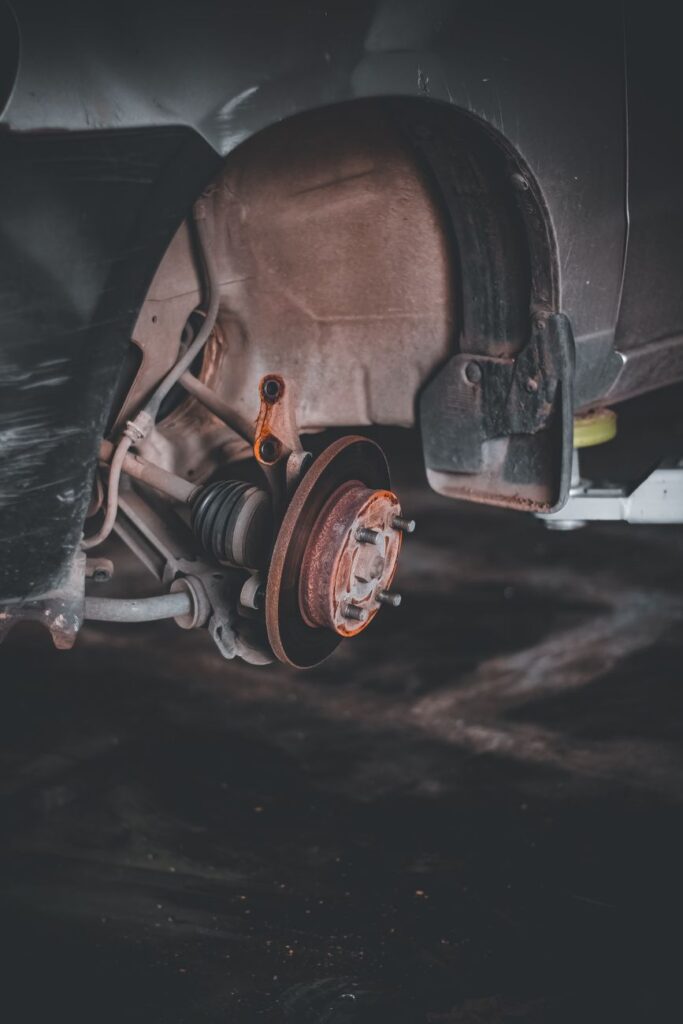
This guide is written for normal car owners, not mechanics. You’ll learn why front struts fail, what symptoms to look for, how diagnosis is typically done (including when dealer-grade tools like ODIS may be involved), and what a realistic repair looks like on European cars with common setups such as DSG gearboxes on VW Group models. While the focus is “front strut replacement,” the advice applies broadly across BMW, Mercedes, Audi, VW Group, and JLR vehicles that use similar suspension designs.
🔧 Recommended Professional Tool
DSG Transmission Service KitProfessional tools for DSG gearbox service
✔ Recommended by automotive technicians ✔ Suitable for BMW, Mercedes, VAG & JLR platforms ✔ Fast international shipping
2. Causes
Front struts wear gradually, but certain conditions accelerate failure:
- Normal mileage and age: Internal seals and valves wear out over time; damping reduces even if the strut isn’t visibly leaking.
- Potholes and kerb strikes: Sudden impacts can bend the strut, damage the piston rod, or crack the top mount.
- Worn top mounts and bearings: A noisy or seized top mount can stress the strut and cause steering “spring bind.”
- Broken or sagging coil springs: A cracked spring (common in salty climates) changes load on the strut and can cause clunks.
- Oil leaks: Struts are oil-filled; once leaking, damping performance drops quickly.
- Uneven tyre pressures or wheel alignment issues: These won’t directly kill a strut, but they can mask the problem or create handling complaints that lead to late diagnosis.
- Corrosion: In northern Europe, rust around the spring seat or lower clamp area can weaken components and complicate removal.
3. Symptoms
Worn or damaged front struts usually show up as changes in ride, noise, and tyre wear:
- Bouncing after bumps: The car continues to oscillate instead of settling quickly.
- Nose dive under braking: More pronounced forward pitch when slowing down.
- Clunking or knocking over rough roads: Often top mounts, drop links, or a loose strut pinch bolt—but struts can contribute.
- Creaking when steering: Common with strut top bearings or springs shifting in the seat.
- Steering feels vague or unstable: Especially at motorway speeds or in crosswinds.
- Uneven tyre wear: Cupping/scalloping is a classic sign of poor damping.
- Longer braking distances on bumpy roads: The tyre loses consistent contact with the road surface.
You may not get a dashboard warning. However, cars with adaptive damping (more common on Audi/Mercedes/BMW than a basic Polo) may log a fault if a damper valve fails.
4. How to diagnose
Diagnosis combines a road test, visual checks, and sometimes scan tool data. A good workshop will typically:
Road test checks
- Drive over small ripples and larger bumps at safe speeds to feel excessive bounce.
- Brake firmly in a straight line to assess nose dive and stability.
- Listen for top-end knocks on low-speed speed bumps and rough surfaces.
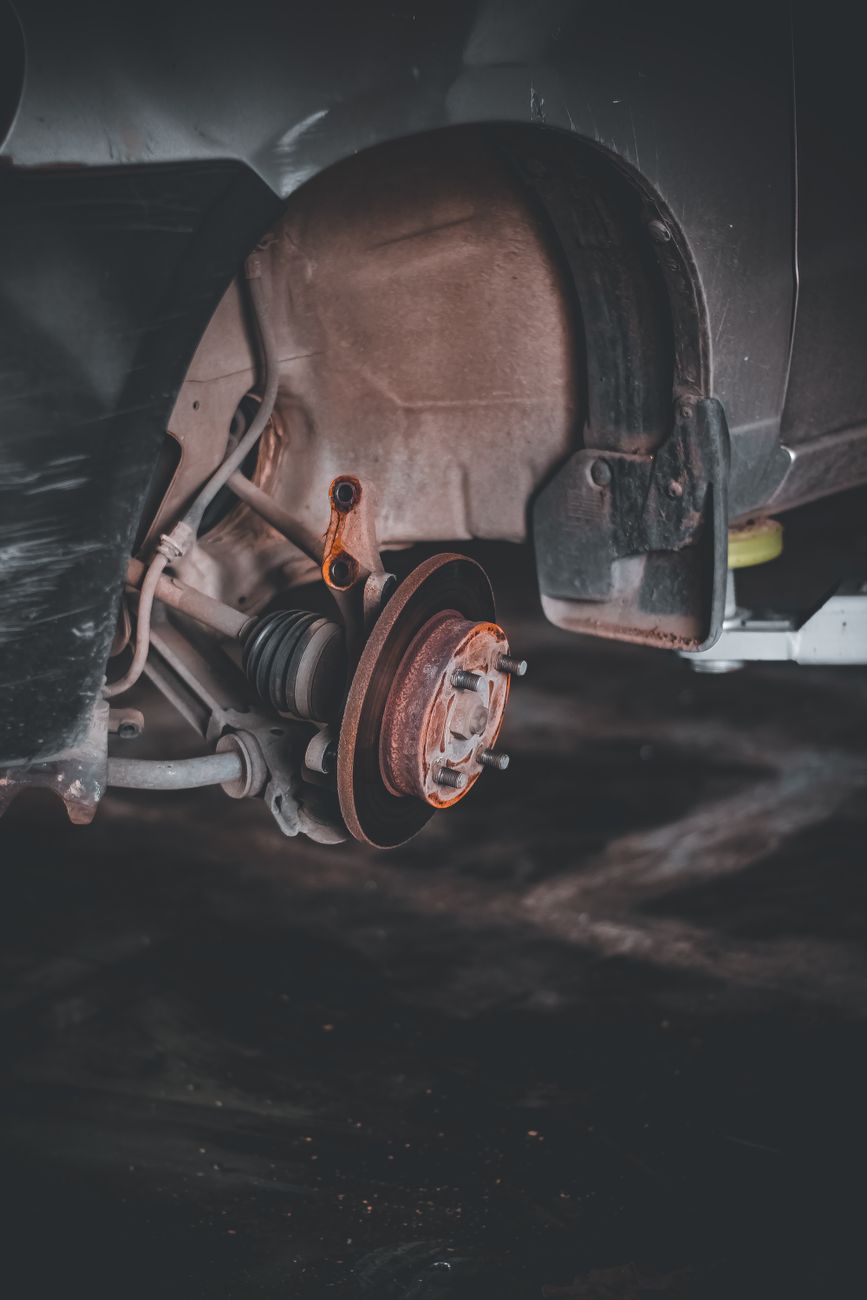
Visual inspection (on a lift)
- Look for oil leakage on the strut body or dust boot.
- Check the dust boot and bump stop—if torn or missing, the strut rod may be damaged by dirt.
- Inspect the spring for a broken coil (often the bottom coil snaps).
- Check top mounts for cracks, deformation, or excessive movement.
- Check drop links and control arm bushes—these can mimic strut noises.
Basic physical tests
- A “bounce test” (pressing down on the wing) can hint at worn damping, but modern cars are stiff and it’s not definitive.
- With wheels off the ground, a technician may feel for play and listen while turning the steering to detect top bearing issues.
When a diagnostic tool is relevant
A worn strut usually won’t set a fault code. Still, scan tools are helpful to:
- Confirm there are no related issues (e.g., ABS/ESC steering angle sensor calibrations after alignment).
- On VW Group cars, ODIS can help verify chassis-related fault memories and guide calibration steps if needed.
- For BMW/Mercedes/JLR equivalents, ISTA, Xentry, or Pathfinder/SDD can check adaptive suspension faults if fitted.
If your car pulls to one side, a proper alignment report is often part of diagnosis before replacing parts.
5. How to fix
For most VW Polo generations with a MacPherson front setup, “front strut replacement” typically means replacing the damper unit and, ideally, related wear items.
What is usually replaced
- Strut (damper) assembly left/right
- Top mount and bearing
- Bump stop and dust boot
- Spring (only if broken, heavily corroded, or sagging—but consider replacing in pairs if one is damaged)
- Often: pinch bolt(s) and other single-use fasteners (varies by model)
Key repair points (owner-friendly overview)
- Struts should generally be replaced in pairs (both front), even if only one seems bad. This keeps braking and handling balanced.
- If the spring is reused, it must be safely compressed with proper equipment. Many owners choose a shop for safety reasons alone.
- After replacement, a wheel alignment is strongly recommended. Even small changes in camber/toe can cause tyre wear and steering pull.
Common “while you’re in there” items
If the car has clunks, ask for an inspection (and quote) for:
- Anti-roll bar drop links
- Lower control arm rear bushes
- Top mounts and bearings (often the real noise source) This helps avoid paying labour twice.
6. Repair costs
Costs vary widely across Europe depending on brand of parts (OEM vs. quality aftermarket), labour rate, and whether seized bolts add time. Typical ranges:
VW Polo / small VW Group models (front struts as a pair)
- Parts (pair of struts): €180–€450
- Top mounts/bearings, boots, bump stops: €80–€200
- Labour (both sides): €200–€450
- Wheel alignment: €70–€130
Typical total: €530–€1,230
Premium brands (Audi A3/S3, BMW 1/3 Series, Mercedes A/C-Class, JLR models)
- Parts can be higher, especially if sport suspension or adaptive dampers are involved.
- Typical total (non-adaptive): €700–€1,600
- Adaptive/valved dampers: €1,400–€3,000+ depending on model and parts source
If your car has a DSG (VW Group) or ZF 8HP (BMW/JLR), that doesn’t change the strut job directly, but it may affect access time on some models and your workshop’s overall labour pricing.
7. Prevention tips
You can’t prevent all strut wear, but you can slow it down and catch issues early:
- Avoid potholes and kerb impacts where possible; slow down on rough roads.
- Keep tyre pressures correct to reduce harsh impacts and protect suspension joints.
- Wash winter salt off the wheel arches to reduce corrosion around springs and mounts.
- Fix torn dust boots early; they protect the strut rod seal.
- Do alignments after big tyre or suspension changes, and if you notice steering pull.
- If you regularly carry heavy loads, consider more frequent suspension inspections.
8. When to see a mechanic
Book a workshop visit soon if:
- The car feels unstable at speed, bounces excessively, or pulls under braking
- You hear clunks/knocks that are getting worse
- You see oil on the strut body or inside the wheel well
- A spring appears broken or the ride height looks uneven
Seek immediate help if the car feels unsafe to drive, a tyre is rubbing, or steering response suddenly changes. A reputable independent specialist with VW Group experience (and access to ODIS or equivalent guided diagnostics) can be a good alternative to a main dealer for this job.
9. Frequently Asked Questions
Frequently Asked Questions
Do I need to replace both front struts if only one is leaking?
Yes, it’s strongly recommended. A new strut on one side and a worn strut on the other can cause uneven braking stability, inconsistent steering feel, and odd behaviour over bumps.
Will replacing front struts fix a knocking noise over speed bumps?
Sometimes, but not always. Knocks are often caused by top mounts, drop links, or worn control arm bushes, so a proper inspection is important before parts are fitted.
Do I need a wheel alignment after front strut replacement?
In most cases, yes. Even if the steering feels “fine,” small alignment changes can lead to fast tyre wear and a slight pull that you only notice later.
How long do front struts typically last on a VW Polo?
Many last 80,000–140,000 km, but road conditions and driving style matter a lot. City driving with frequent potholes and speed bumps can shorten lifespan significantly.
Can a worn strut damage tyres?
Yes. Poor damping can cause cupping/scalloping and uneven wear patterns, which also increases road noise and reduces wet grip.