1. Introduction
A sudden loss of audio in a Mercedes S-Class W222 can be more than an annoyance—especially in cars equipped with the Burmester sound system, where the amplifier is the heart of the entire setup. When the Burmester amplifier fails, you can lose music, navigation voice guidance, phone audio, warning chimes, or even experience strange electrical side effects that feel unrelated at first.
Recommended Tool: Professional OBD2 Scanner
Recommended Tool: Portable Jump Starter
Recommended Tool: Cooling System Diagnostic Tools
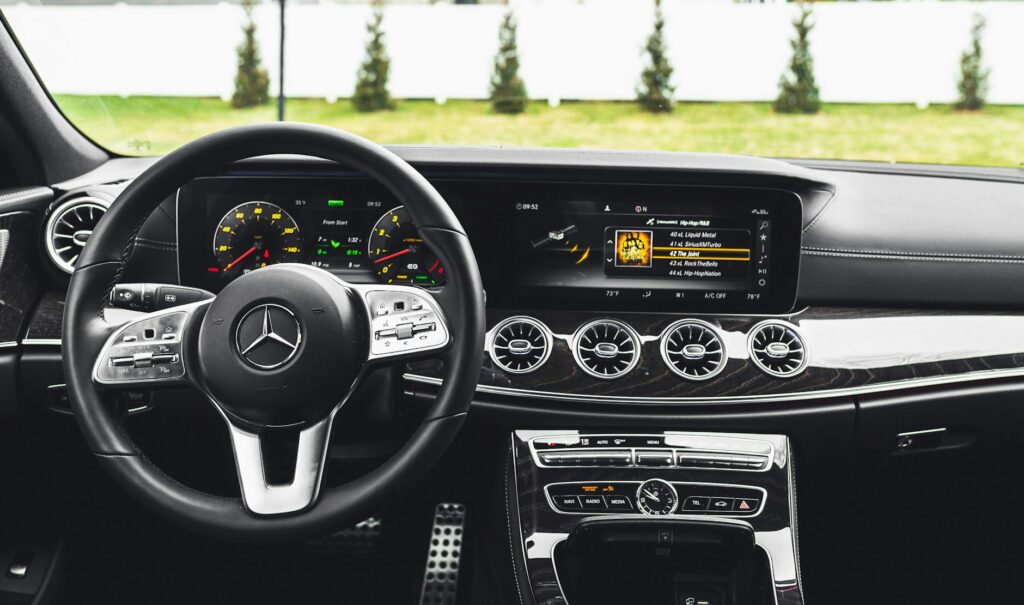
The W222 (2013–2020) is a highly networked vehicle. The infotainment system, amplifier, control units, and speakers communicate over fiber-optic (MOST) and CAN networks. That means an amplifier problem can create fault codes elsewhere and may present as a “COMAND issue” when the real culprit is the amp itself. This article explains the common causes, what you’ll notice day-to-day, and how European owners can approach diagnosis and repair without guesswork.
🔧 Recommended Professional Tool
Cooling System Diagnostic ToolsProfessional coolant tester and infrared thermometer for accurate overheating diagnosis.
✔ Recommended by automotive technicians ✔ Suitable for BMW, Mercedes, VAG & JLR platforms ✔ Fast international shipping
2. Causes
Burmester amplifier failures on the W222 typically fall into a few real-world patterns:
Water ingress and moisture damage
Moisture is the biggest amplifier killer in luxury saloons. Depending on exact spec and model year, the amplifier can sit in areas vulnerable to damp:
- Blocked boot/trunk drains
- Rear lamp seal leaks
- Water tracking in from the panoramic roof drain system
- Moisture in the spare wheel well or rear side compartments
Even light condensation over time can corrode connectors and circuit boards.
Overheating and thermal stress
High-output amplifiers generate heat. If the amp’s cooling is compromised (restricted airflow, failed internal thermal protection, or prolonged high-volume use), solder joints and components can degrade.
Power supply issues (battery/voltage events)
The W222 is sensitive to low voltage and jump-start spikes. A weak main battery, auxiliary battery problems, or improper jump-starting can stress the amplifier’s power stage.
Fiber-optic (MOST) ring faults misdiagnosed as amplifier failure
Sometimes the amp isn’t “dead”—it’s offline because the MOST ring is interrupted. A kinked fiber cable, dirty connector, or another module on the ring can take down audio and make the amplifier look guilty.
Previous repairs or retrofits
Aftermarket audio work, boot body repairs, or even a poorly seated connector after unrelated work can cause intermittent dropouts that eventually become permanent faults.
3. Symptoms
Owners usually report one or more of the following:
- No sound from any speakers (radio/media/BT/navigation all silent)
- Sound cuts in and out, often worse when cold or after bumps
- COMAND/MBUX (depending on year) appears to work, but audio is missing
- No parking sensor tones or warning chimes (important safety cue)
- “Telephone unavailable” or Bluetooth calls connect with no audio
- Balance/fader settings do nothing, or the audio menu behaves oddly
- Battery drain overnight (amp staying awake due to network errors)
- Crackling, popping, or distorted sound from multiple speakers
If sound disappears and the system also shows sporadic “device unavailable” messages, that often points to a MOST communication issue—either the amplifier itself or the fiber ring around it.
4. How to diagnose
Diagnosis is about proving whether the amplifier is truly faulty, or whether it’s being taken offline by power, network, or moisture issues.
Step 1: Basic checks you can do at home
- Check whether all audio sources are silent (FM/DAB, media, phone, nav voice).
- Observe if the issue changes with temperature or after a long drive (heat-related).
- Look for dampness in the boot/trunk: lift panels and check for water staining or musty smell.
- Note any recent low battery warnings or jump-start events.
Step 2: Scan the car properly (recommended)
A proper scan with Xentry/DAS (Mercedes factory diagnostics) is the fastest way to avoid parts darts. Ask for:
- Fault codes in the audio gateway/COMAND unit and amplifier module
- MOST ring status and which control unit is “not reachable”
- Voltage history and undervoltage events
You may see faults like “amplifier not detected,” “MOST ring interruption,” or communication errors with the sound system control unit. A technician can also perform guided tests to pinpoint whether the amplifier is failing internally or simply not communicating.
Step 3: Check the MOST fiber ring
A workshop can use a MOST loopback connector to bypass the amplifier temporarily:
- If the rest of the ring comes back alive when the amp is bypassed, the amp is strongly implicated.
- If problems remain, another MOST device or fiber section may be at fault.
Step 4: Power and ground verification
Before condemning the amp, a technician should verify:
- Correct battery voltage at the amplifier power feed
- Clean ground point with minimal voltage drop under load
- No signs of overheated pins or loose connector fitment
Step 5: Water ingress confirmation
If moisture is suspected:
- Inspect amplifier casing and connectors for green/white corrosion
- Check nearby modules and wiring for water trails
- Identify the leak source (drains, seals, roof drain outlets)
Replacing an amplifier without fixing the water source is a common and expensive mistake.
5. How to fix
The correct fix depends on what the diagnosis proves.
If the amplifier has internal failure
Options typically include:
- Replace with a new OEM amplifier (most reliable, highest cost)
- Replace with a used amplifier (cheaper, riskier; must match part numbers and coding requirements)
- Specialist repair/rebuild of your existing unit (often good value if the board damage is repairable)
Because W222 modules are integrated into the vehicle network, replacement often requires coding/adaptation with Xentry. Some units are also component-protected or variant-coded to the car’s equipment level.
If the issue is the MOST ring, not the amplifier
- Repair/replace damaged fiber-optic cables or connectors
- Replace the failing MOST module that is breaking the ring
- Clean and reseat connectors (carefully—fiber ends must remain clean)
If water ingress is involved
You need two fixes:
- Restore audio (repair/replace amplifier and any corroded connectors)
- Stop recurrence (clear drains, reseal lamps, repair roof drain routing, dry the boot area)
A workshop may need to remove trim, dry the wiring looms, and treat light corrosion before it becomes a broader electrical issue.
If low voltage contributed
- Test and replace the main battery if weak
- Check the auxiliary battery (where fitted)
- Verify charging system health and run a power management check with Xentry
6. Repair costs
Prices vary by country and labour rate, but these ranges are realistic for much of Europe:
- Diagnostic scan (Xentry) + basic inspection: €80–€180
- MOST ring test / loopback diagnosis: €120–€250 (often combined with diagnostics)
- Used amplifier (matching part number) + coding: €350–€900 parts, €150–€350 labour
- New OEM Burmester amplifier + coding: €1,200–€2,500 parts, €200–€500 labour
- Specialist amplifier rebuild/repair: €250–€600 plus removal/refit €150–€350
- Water ingress repair (seals/drains) + drying: €150–€600 (more if extensive corrosion)
If the boot area is flooded and multiple modules are affected, total costs can climb quickly—€1,500–€4,000 is possible in worst cases. Catching it early often keeps it to a single-module repair.
7. Prevention tips
A few habits can reduce the chance of repeat failure:
- Check the boot/trunk for dampness a few times per year, especially after heavy rain.
- Keep drainage channels clear (roof drains and boot channel drains).
- Address rear lamp condensation or water trails promptly—small leaks become expensive.
- Avoid repeated deep battery discharge; replace an ageing battery before winter.
- If you need a jump-start, follow Mercedes jump-start points and procedure to avoid voltage spikes.
If you regularly carry wet items in the boot (umbrellas, sports gear), use a waterproof liner and don’t let moisture sit under panels.
8. When to see a mechanic
Book a diagnostic visit if:
- You have total loss of audio across all sources
- Warning chimes are missing (safety concern)
- Sound cuts out intermittently and is getting worse
- You notice water in the boot or signs of corrosion
- The car develops unexplained battery drain after the audio issue starts
Look for a workshop familiar with Mercedes network diagnostics and MOST systems, ideally using Xentry and equipped with fiber loopback tools. This is not a job where generic code readers are enough.
9. Frequently Asked Questions
Frequently Asked Questions
Can I drive the car safely if the Burmester amplifier has failed?
Yes, the car will usually drive normally, but losing warning chimes and parking sensor tones can be a safety issue in daily use. If the failure is causing battery drain, you may end up with a no-start situation. Treat it as a priority rather than an emergency.
Is it always the amplifier, or could it be the COMAND unit?
It can be either, but a MOST ring interruption often makes the amplifier look guilty when another module or a fiber cable is at fault. Proper diagnosis with Xentry and a MOST loopback test is the best way to confirm the true cause. Replacing parts without ring testing is a common mistake.
Can I fit a used amplifier from another W222?
Sometimes, yes—if the part number and equipment level match and the unit can be coded to your car. Some vehicles may require additional adaptation steps in Xentry, and mismatched units can cause missing functions or no communication. Always confirm compatibility before purchase.
Why did the failure happen right after a low battery or jump-start?
Audio modules are sensitive to undervoltage and voltage spikes, and an ageing battery can create repeated stress events. A jump-start done incorrectly can also damage power electronics. After repairing the amp, it’s wise to test the battery and charging system to prevent a repeat.
How do I know if water caused the amplifier failure?
Signs include damp boot carpeting, water staining under trim, corrosion on connectors, and a musty smell. A workshop may find green/white oxidation on pins or water trails along the wiring loom. If water is present, fixing the leak is just as important as replacing the amplifier.