1. Introduction
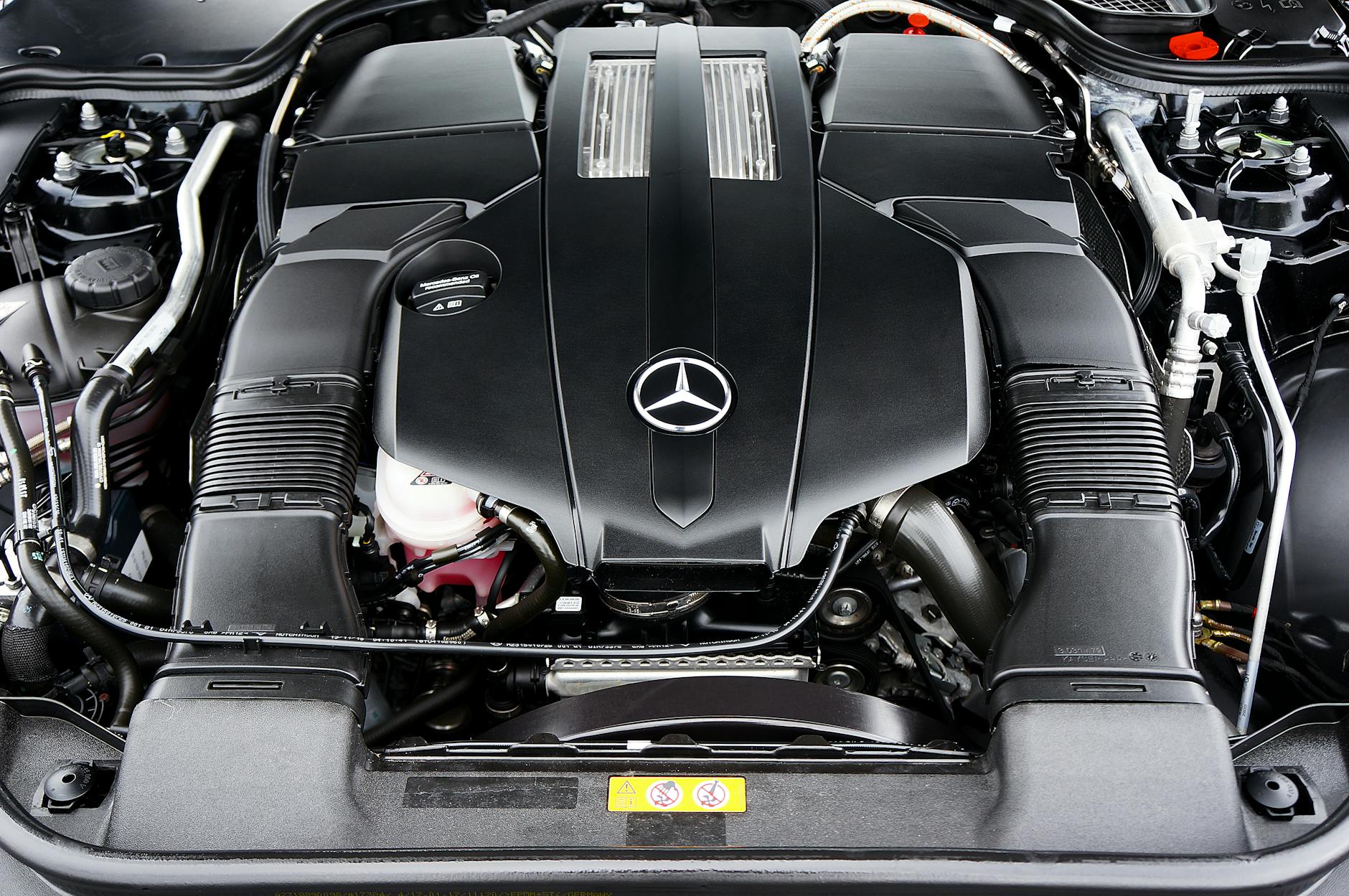
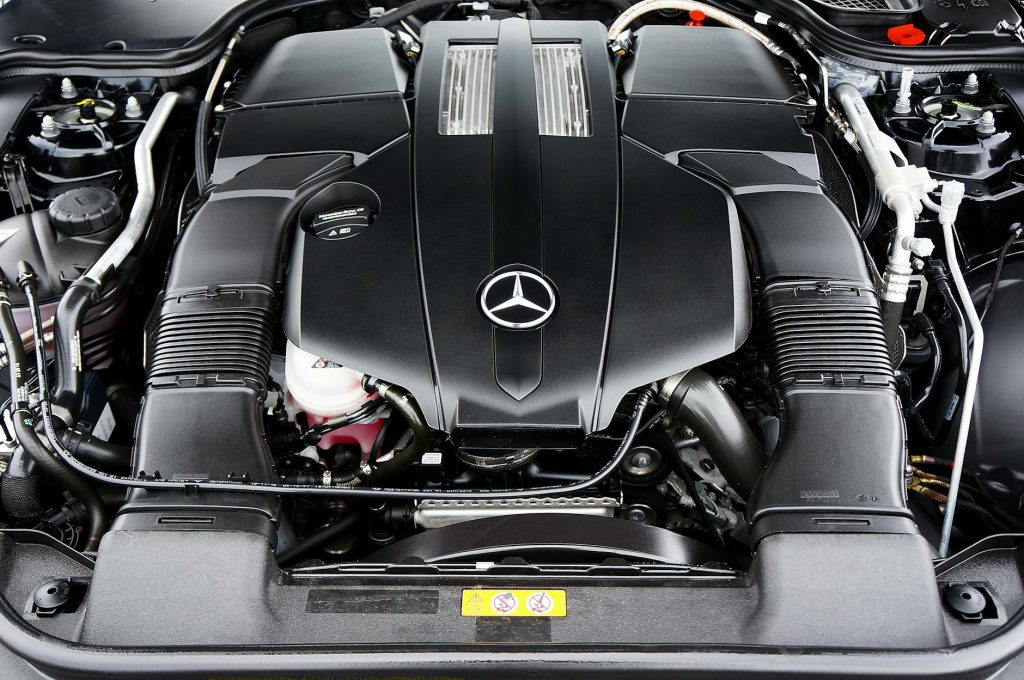
Mercedes’ W213 E-Class (2016–2023) with the E300 badge often uses the M264 2.0-litre turbo petrol engine paired with a 48V mild-hybrid system (EQ Boost). It’s a clever setup: a belt-driven starter-generator (often referred to as ISG/BSG) smooths stop/start, fills turbo lag with brief electric assistance, and helps run auxiliaries more efficiently.
Recommended Tool: Professional OBD2 Scanner
Recommended Tool: Portable Jump Starter
Recommended Tool: Cooling System Diagnostic Tools
When you see a “48V system failure” message, it can feel alarming because it sounds like a major hybrid fault. In reality, most issues come down to power supply, communication, or one component in the 48V chain—fixable, but important to handle correctly because 48V circuits can still cause damage if misdiagnosed.
🔧 Recommended Professional Tool
Cooling System Diagnostic ToolsProfessional coolant tester and infrared thermometer for accurate overheating diagnosis.
✔ Recommended by automotive technicians ✔ Suitable for BMW, Mercedes, VAG & JLR platforms ✔ Fast international shipping
2. Causes
A 48V system failure on an M264-powered W213 typically traces back to one of these areas:
- 48V battery (lithium-ion) degradation or internal fault
The 48V battery has its own monitoring electronics; weak cells or overheating can trigger shutdown. - DC/DC converter issues (48V to 12V)
The car still relies heavily on 12V. If the converter can’t stabilise voltage, the system throws faults and may disable EQ Boost/stop-start. - Belt-driven starter-generator (BSG/ISG) faults
Problems include internal electronics failure, bearing noise, or belt slip causing undercharging. - Wiring, connectors, or ground points
Water ingress, corrosion, or loose connections can cause intermittent faults—especially after battery replacement, accident repairs, or front-end work. - Cooling problems affecting 48V components
Some 48V batteries and converters are temperature-sensitive; blocked airflow, coolant issues (where applicable), or failed sensors can create “implausible” readings. - Software or calibration issues
A control unit update or coding mismatch after repairs can lead to fault messages. Mercedes software is usually robust, but it’s not immune. - 12V battery weakness triggering a cascade
Counterintuitive but common: a tired 12V AGM battery can cause communication errors and undervoltage events that the 48V system reports as a failure.
3. Symptoms
Owners usually notice a mix of warnings and drivability changes:
- Dashboard message such as “48V system malfunction” / “48V system failure”
- Stop/start disabled (often the first sign)
- Reduced smoothness at low speed; more noticeable turbo lag (loss of EQ Boost assistance)
- Battery/charging warnings or repeated “consumer shutoff” messages
- Cooling fan running more than usual, or strange electrical behaviour
- Intermittent faults that come and go after a restart
- In some cases: limp mode, especially if the DC/DC converter can’t support stable 12V voltage
4. How to diagnose
A correct diagnosis matters because randomly replacing parts in a 48V system gets expensive fast. For Mercedes, the gold standard is Xentry (dealer-level diagnostics), but a good independent with Xentry can do the same functional tests.
Step-by-step checks (owner-friendly overview)
1) Record the exact warning and conditions
- Did it happen after a cold start, heavy rain, long motorway drive, or short trips?
- Does it clear after cycling ignition?
2) Scan the car properly
- Use Xentry to read fault codes from:
- Power electronics / DC-DC converter
- 48V battery management
- Engine ECU (ME control unit)
- Front SAM / rear SAM (signal acquisition modules)
- Generic OBD readers often miss the deeper 48V-related faults.
3) Check 12V health first
- A workshop should perform a battery test (conductance test) on the 12V AGM.
- Low 12V voltage can cause misleading “48V” errors because control units drop offline.
4) Verify charging and voltage stability
- With diagnostics and a multimeter, the technician checks:
- 12V system voltage under load
- DC/DC converter operation (is it maintaining 12V properly?)
- 48V battery state of charge and temperature readings
5) Inspect belts, pulleys, and visible connectors
- The M264’s belt system must be in good condition. Belt slip can mimic charging faults.
- Inspect connectors at the DC/DC converter and 48V battery for corrosion or signs of heat.
6) Run guided tests
- Xentry provides guided component tests and “actual values” logging. This is where you can separate:
- A failing 48V battery
- A converter fault
- An ISG/BSG issue
- A wiring/ground problem
5. How to fix
Fixes depend on what failed; these are the most common real-world repairs.
48V battery replacement (or repair where possible)
If the battery fails capacity, temperature, or internal resistance checks, replacement is typical. Coding/initialisation is often required so the car correctly learns battery parameters.
DC/DC converter replacement
If the converter can’t maintain stable 12V output, it may cause repeated undervoltage codes and disable mild-hybrid functions. Replacement is usually straightforward, but correct diagnostics are crucial—wiring faults can mimic converter failure.
ISG/BSG repair or replacement
When the starter-generator fails, the car may still run normally but loses stop/start and boost assistance. Some cases are triggered by belt issues, so the belt and tensioner should be inspected and replaced if worn.
Wiring repairs and connector cleaning
Water ingress or corrosion can create intermittent faults. A good workshop will perform a voltage drop test and inspect grounds before condemning big components.
Software updates and reinitialisation
If faults started after a module replacement or a low-voltage event, a software update and proper commissioning via Xentry can resolve it. This is especially relevant if multiple control units show communication errors.
6. Repair costs
Prices vary by country and labour rates, but for everyday European ownership, these are realistic parts + labour ranges:
- 12V AGM battery replacement (if weak): €220–€450
(Battery, registration/coding, basic checks) - 48V battery replacement: €1,200–€2,800
(Battery cost is the big variable; includes programming/initialisation) - DC/DC converter replacement: €700–€1,600
(Part + fitting; may include software work) - ISG/BSG (starter-generator) replacement: €1,000–€2,500
(Depends on part pricing and whether belt drive components are included) - Belt + tensioner/pulley service (if slip/noise): €250–€650
- Wiring/ground repair or connector remediation: €150–€600
(Highly dependent on time to locate the fault) - Diagnostic session with Xentry and road test logging: €120–€250
A key point: it’s common to fix the warning with a 12V battery and charging-system correction if the car has been used for short trips and the 12V battery is marginal.
7. Prevention tips
You can’t prevent every electronics failure, but you can reduce the odds:
- Keep the 12V battery healthy
If you mainly do short journeys, consider an occasional longer drive or a proper battery maintainer suited for AGM batteries. - Address warning messages early
Repeated undervoltage events can create secondary faults and confuse diagnosis. - Don’t ignore belt noises
Squeal or chirping can indicate belt slip that affects the starter-generator’s operation. - Be cautious with jump-starting and incorrect charging
Poor jump-start procedures can cause voltage spikes. If the battery is flat repeatedly, get it tested rather than repeatedly boosting it. - After accident or water damage, insist on electrical inspections
Corroded grounds and damp connectors are common after water ingress.
8. When to see a mechanic
Book a professional diagnosis (ideally with Xentry) if:
- The warning returns repeatedly after restarting
- Stop/start has been disabled for days with no obvious reason
- You notice flickering lights, multiple random warnings, or unstable electrical behaviour
- The car goes into limp mode or shows charging system warnings
- You recently replaced a battery or had electrical work done and the fault started afterwards
Because the 48V system is integrated into charging and engine management, “wait and see” can turn a minor issue (like a weak 12V battery or corroded connector) into a bigger, more expensive problem.
9. Frequently Asked Questions
Frequently Asked Questions
Is it safe to drive with a Mercedes W213 E300 48V system failure message?
Usually the car will still drive, but you may lose stop/start and mild-hybrid assistance. If you also see charging warnings, reduced power, or multiple electrical faults, avoid long trips and have it checked quickly.
Will a weak 12V battery really trigger a 48V system failure?
Yes, because control units and the DC/DC converter rely on stable 12V voltage. A weak 12V AGM can cause undervoltage faults and communication errors that appear as a 48V malfunction.
Do I need dealer diagnostics for this, or is a generic scan tool enough?
A generic OBD scanner often won’t access the 48V battery management or power electronics data properly. A workshop with Xentry can run guided tests and view actual values, which makes diagnosis far more accurate.
What are the most commonly replaced parts for this fault on the M264?
Common culprits are the 12V AGM battery, the DC/DC converter, and the 48V battery itself. The starter-generator (ISG/BSG) is less common but can be a major cost when it fails.
Can software updates fix a 48V system failure?
Sometimes, especially after low-voltage events or module replacements where coding/initialisation wasn’t completed correctly. However, software won’t fix a weak battery, failing converter, or a wiring fault—those need physical repair.