1. Introduction
If you drive a Mercedes E-Class W213 E300, the front control arms are a key part of what makes the car feel stable, quiet, and “tight” over bumps. These arms connect the wheel hub/steering knuckle to the chassis through bushings and ball joints, controlling wheel movement as the suspension travels. When they wear, you’ll often notice steering vibration, clunks, uneven tyre wear, or a vague “floating” feeling at motorway speeds—issues many owners first blame on tyres or wheel balancing.
Recommended Tool: Professional OBD2 Scanner
Recommended Tool: OEM Suspension Components
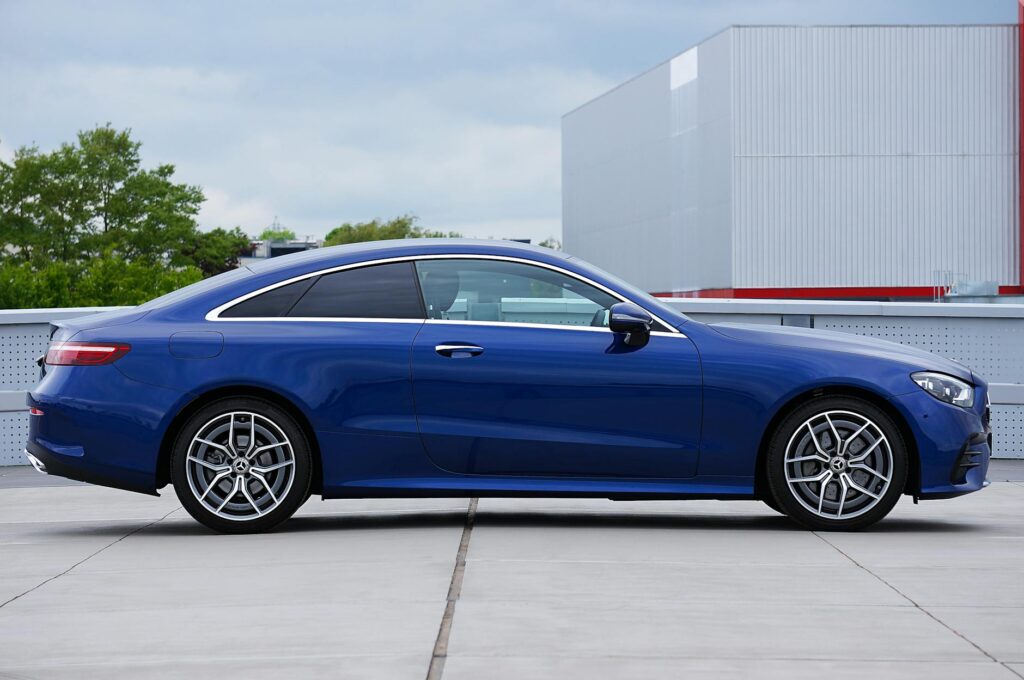
The W213 E300 (often the M274 2.0 petrol in Europe, and in some markets the M264) uses a sophisticated multi-link front suspension. That’s great for comfort and handling, but it also means there are multiple arms and joints that can wear, and ordering the wrong part is easy if you don’t verify the exact axle code and chassis number. This guide explains what typically fails, how to confirm it, and what you should check before buying parts.
Recommended Tool: Professional OBD2 Scanner
2. Causes
Control arms don’t usually “break” suddenly; they wear gradually. Common reasons on the W213 include:
- Bushing deterioration: Rubber bushings age from heat, road salt, oil contamination, and repeated flexing.
- Ball joint wear: The joint can develop play, especially after many pothole impacts.
- Potholes and kerb strikes: Even one hard hit can bend an arm slightly or tear a bushing.
- High torque and weight transfer: The E300’s torque delivery and frequent stop/start city driving can accelerate bushing stress.
- Incorrect previous repairs: Tightening suspension bolts with the wheels hanging can preload bushings, shortening life.
European roads and weather matter too: salted winter roads and rough city streets tend to reduce bushing life compared with mild climates.
3. Symptoms
Worn control arms on a W213 E300 typically show up as comfort and steering issues before any dashboard warning appears. Look for:
- Clunking or knocking over small bumps, speed humps, or when turning into driveways
- Steering shimmy at 80–120 km/h, sometimes mistaken for wheel imbalance
- Vague or wandering steering, especially in crosswinds or on rutted roads
- Uneven front tyre wear, often inner-edge wear if alignment is off due to play
- Braking instability: the car feels like it “moves around” slightly under braking
- Squeaks or creaks in cold weather when rubber bushings stiffen
If you also feel vibration under acceleration, don’t assume it’s control arms—on some cars it can be tyres, bent wheels, or drivetrain mounts. But clunks plus uneven wear are classic control arm territory.
4. How to diagnose
A good diagnosis prevents buying the wrong arm (or replacing arms that aren’t the problem). You can do several checks as an owner, then confirm with a workshop inspection.
Basic checks you can do
- Tyre inspection: Look for feathering, inner-edge wear, or “cupping.” These patterns can suggest suspension play.
- Listen and feel: A dull thud over sharp bumps often points to bushings; a sharper click can point to a ball joint.
- Visual look behind the wheel (with the car safely parked): torn rubber, leaking hydraulic bushings (if fitted), or obvious cracks are red flags.
Workshop-level checks (recommended)
A proper inspection is done with the vehicle lifted and the suspension loaded appropriately:
- Pry-bar test on bushings to check for excessive movement or separation
- Ball joint play test by loading/unloading the joint and feeling for knock
- Alignment reading: Excessive or unstable camber/toe readings can indicate worn arms
- Road test with a technician to reproduce the noise and isolate left vs right
Diagnostics tools: what they can and can’t do
Tools like Xentry (Mercedes’ diagnostic platform) are useful to:
- Check for related faults in steering angle sensor calibration, ESP/ABS issues, or adaptive suspension if equipped
- Verify vehicle configuration and option codes that can affect part selection
However, worn control arms rarely trigger a direct fault code. Diagnostics support the process, but the final call is usually physical inspection.
5. How to fix
Fixing control arm wear is straightforward conceptually—replace the worn arm(s)—but on a W213 it’s important to do it correctly to avoid repeat wear or alignment problems.
Decide what to replace
Depending on wear, a shop may recommend:
- One specific arm (if one bushing or ball joint is clearly worn)
- Both sides (left and right), especially if mileage is high and wear is similar
- A “set” of front arms if multiple joints are tired and the car has high kilometres
Replacing only one arm is possible, but if the opposite side is close to failing, you may pay alignment twice.
Use the correct parts
Before ordering, confirm:
- VIN/chassis number and front axle configuration
- Whether the car has standard suspension, AGILITY CONTROL, AIRMATIC, or sport suspension
- Exact arm position (front/rear, upper/lower—multi-link layouts can be confusing)
OEM-quality brands (or genuine Mercedes parts) generally provide better bushing compound and longevity than the cheapest aftermarket options.
Installation essentials
A correct installation typically includes:
- New bolts/nuts where specified as stretch bolts
- Torquing fasteners to spec, often with angle tightening
- Final tightening at normal ride height to avoid bushing preload
- A four-wheel alignment afterwards (at minimum front toe/camber check)
Skipping alignment is a false economy: even if the steering feels fine initially, tyres can wear quickly.
6. Repair costs
Costs vary by country, labour rate, and whether you choose genuine parts or quality aftermarket.
Typical cost ranges (parts + labour)
- Single front control arm (one side): €300–€700
- Parts: €120–€350 (aftermarket to genuine)
- Labour: 1.0–2.0 hours depending on arm location and corrosion
- Both sides, same arm: €550–€1,200
- Multiple arms on the front axle (refresh): €900–€2,000
- More likely on higher-mileage cars or if several joints show play
- Wheel alignment: €90–€180
- Some shops bundle this; others itemise it separately
If bolts are seized or the car has heavy corrosion, labour can rise. Also, if the vehicle has advanced options (certain adaptive setups), extra time may be needed to verify ride height and ensure systems are happy after alignment.
7. Prevention tips
You can’t prevent all wear, but you can extend control arm life and reduce repeat repairs:
- Avoid potholes when possible and slow down for sharp bumps
- Keep tyres correctly inflated; underinflation increases impact load on bushings
- Balance and align on time if you notice steering vibration or uneven wear
- Fix oil leaks promptly—oil softens rubber bushings over time
- Ask for ride-height tightening: when suspension arms are replaced, insist the shop tightens final bushing bolts at normal ride height
- Choose quality parts: cheaper arms often use softer rubber or lower-grade ball joints
8. When to see a mechanic
Book a professional inspection if:
- You hear clunking that’s getting worse
- The car feels unstable at motorway speeds
- You see uneven tyre wear on the front axle
- The steering wheel is off-centre after a pothole hit
- You’re about to order parts but aren’t 100% sure which arm is worn
A shop with Mercedes experience and Xentry access can confirm your exact suspension configuration and help avoid ordering the wrong components. If you also own other European brands, the same principle applies: BMW owners may use ISTA, VAG owners ODIS, and JLR owners SDD/Pathfinder—but for control arms, the lift inspection is still the key step.
9. Frequently Asked Questions
Frequently Asked Questions
Should I replace both control arms at the same time on my W213 E300?
If one side is worn due to age and mileage, the other side is often not far behind. Replacing both sides can restore balanced handling and may save on a second alignment later. If the wear is clearly impact-related (one pothole hit), replacing one side can be reasonable.
Can worn control arms cause steering vibration even after wheel balancing?
Yes, play in bushings or ball joints can mimic an imbalance and create a shake at specific speeds. Balancing may reduce it temporarily, but the vibration often returns. A proper suspension inspection is the best next step.
Do I always need a wheel alignment after control arm replacement?
In most cases, yes. Even small changes in arm position can affect toe and camber, and incorrect alignment will quickly wear tyres. An alignment also confirms the repair has brought geometry back within specification.
How do I make sure I order the correct control arm for my W213 E300?
Use your VIN to confirm the exact axle and suspension option codes before purchasing. The W213 front suspension uses multiple arms, and “front control arm” can refer to several different parts. If you’re unsure, have a shop identify the worn arm on the car first and match the part number.
Is it safe to keep driving with a worn control arm?
Minor bushing wear may be driveable for a short time, but handling and braking stability can worsen quickly. If a ball joint has noticeable play, continued driving risks sudden loss of control or tyre damage. Treat clunks and steering looseness as a priority repair.