1. Introduction
Air suspension is one of those features you stop thinking about—until the car suddenly sits low on one corner, throws a warning message, or starts riding like a shopping trolley. The Jaguar XJ (X351) with the 3.0D V6 (AJV6D / 306DT) is a particularly common candidate for air suspension complaints as the cars age, especially in European climates with wet winters and salty roads. The good news: most “air suspension failure” problems can be diagnosed logically, and you often don’t need to replace everything at once.
Recommended Tool: Professional OBD2 Scanner
Recommended Tool: Portable Jump Starter
Recommended Tool: Cooling System Diagnostic Tools
This guide is written for everyday owners, not mechanics. It focuses on what to replace first, why those parts fail, and how to confirm the root cause before spending money. If you’re comfortable checking fuses, listening for the compressor, and using a basic code reader (or a specialist tool like JLR SDD/Pathfinder), you can usually narrow it down quickly.
🔧 Recommended Professional Tool
Cooling System Diagnostic ToolsProfessional coolant tester and infrared thermometer for accurate overheating diagnosis.
✔ Recommended by automotive technicians ✔ Suitable for BMW, Mercedes, VAG & JLR platforms ✔ Fast international shipping
2. Causes
Air suspension issues on the X351 typically come from one of four areas: air leaks, compressor problems, valve block faults, or sensor/electrical issues. Knowing the “most likely first” items helps avoid expensive guesswork.
Most common root causes on the X351
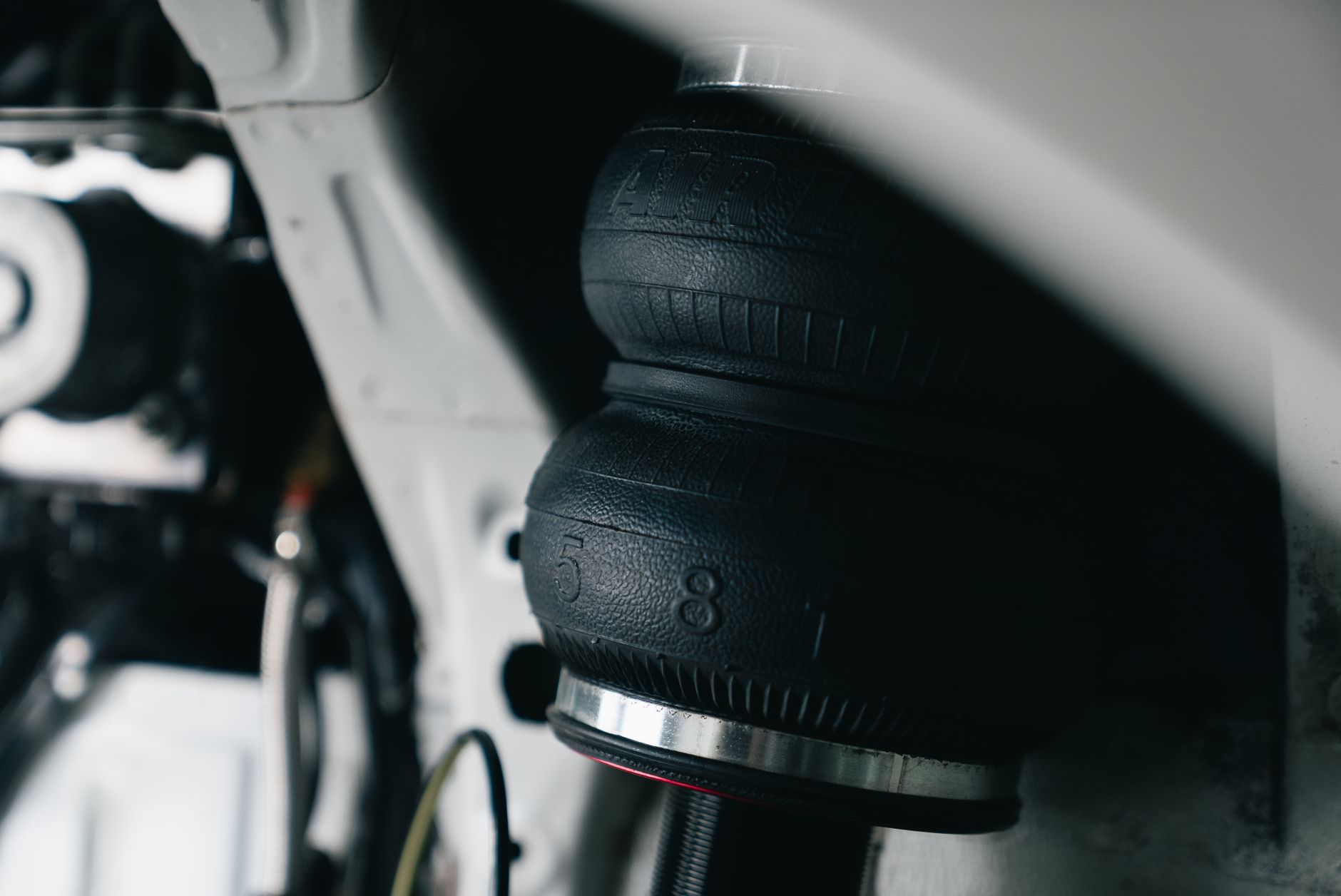
- Leaking air struts (air springs)
Rubber bellows age, crack, or start leaking at the crimp seals. Rear struts often show up first, but fronts fail too. - Tired or overheated compressor
The compressor runs longer to compensate for leaks, overheats, then becomes weak or fails. A clogged or wet dryer makes this worse. - Valve block leaks or sticking valves
The valve block can leak internally or stick, causing uneven height changes or overnight sinking. - Height sensor faults or linkage issues
Sensors can go out of range, corrode, or have damaged link arms. This can trigger warnings even if the air system is healthy. - Electrical supply problems
Relay issues, corroded connectors, low battery voltage, or blown fuses can mimic major suspension failures.
3. Symptoms
Different symptoms point to different “replace first” priorities. Pay attention to when it happens: overnight, only in cold weather, only after driving, or only when lifting the car.
What you might notice
- Car sinks overnight
- One corner low: likely that strut or its air line connection
- Both rears low: rear struts, rear air lines, or valve block bleed-off
- “Air suspension fault” message + limited height changes
- Compressor struggling, overheating, or a sensor reporting implausible height
- Compressor runs frequently
- Usually an air leak; the compressor is often a victim, not the cause
- Car rises slowly or not at all
- Weak compressor, saturated dryer, restricted intake, or valve block issue
- Uneven stance while driving
- Height sensor/linkage issue, valve block sticking, or a leak that only opens under certain positions
4. How to diagnose
You can do a lot before buying parts. The goal is to decide whether the first replacement should be an air strut, the compressor/dryer, or the valve block—based on evidence.
Step 1: Basic checks (15–30 minutes)
- Battery voltage matters: air systems hate low voltage. If the car cranks sluggishly or the battery is old, test it.
- Listen for the compressor: with the car unlocked and after starting, you may hear it run briefly. If it runs constantly, suspect a leak. If it never runs, suspect electrical supply, relay/fuse, or a dead compressor.
- Visual stance check: park on level ground and measure wheel arch height at each corner. Re-check after 3–8 hours.
Step 2: Scan for codes (best next move)
A generic OBD scanner may show limited chassis information. Ideally use JLR SDD or Pathfinder (many independent specialists have them). You’re looking for:
- compressor overrun/overheat codes
- reservoir pressure plausibility faults
- height sensor signal range/performance faults
- valve block solenoid or pressure control faults
This is similar to how BMW owners rely on ISTA, Mercedes owners on Xentry, and VW/Audi owners on ODIS for suspension fault pinpointing—factory-level data saves money.
Step 3: Leak detection (most decisive)
- Soapy water test: spray on the air strut bellows, top crimp, lower crimp, and air line fittings. Bubbles = leak.
- Check after raising suspension: some struts only leak when extended.
- Listen for hissing: in a quiet garage, a corner leak can be audible.
Step 4: Compressor and dryer evaluation
- Compressor run time: if it runs long to reach height, it’s compensating for leaks or it’s weak.
- Dryer condition: moisture contamination leads to slow filling, pressure issues, and compressor stress. On many systems, dryer service is cheaper than a compressor.
Step 5: Height sensor sanity check
If the car sits level but throws faults or makes odd corrections:
- inspect sensor link arms for damage or disconnection
- check for corrosion at connectors
- use SDD/Pathfinder live data to see if one sensor reads implausibly high/low
5. How to fix
The best “replace first” choice depends on what your diagnosis shows, but in real-world X351 ownership, there’s a sensible order.
What to replace first (most common scenarios)
Scenario A: One corner sinks overnight
Replace first: the leaking air strut on that corner.
If you confirm bubbles at the bellow or crimp, replacing the strut is the correct first spend. Replacing the compressor first won’t fix the leak and may waste money.
Scenario B: Compressor runs a lot + car sometimes won’t rise
Replace first: fix any leaks, then consider compressor + dryer service.
If leaks are present, repair them first. If no leaks are found and the compressor is noisy, slow, or logging overrun/temperature faults, replace the compressor and ideally the dryer (or a compressor kit that includes it).
Scenario C: Rear end drops evenly, front stays up
Replace first: rear struts or valve block diagnosis.
If both rear struts bubble at the bellows/crimps, replace them. If struts don’t leak but the rear still drops, suspect valve block internal leakage or a bleeding solenoid.
Scenario D: Warning messages but stance is normal
Replace first: address sensors/electrical issues.
A height sensor or wiring issue can create faults without a physical air leak. Repairing sensors is often cheaper and prevents unnecessary parts replacement.
Practical repair notes
- Replace air struts in pairs on the same axle if budget allows; it keeps ride height and damping balanced.
- After parts replacement, the system usually needs a calibration/reset with SDD/Pathfinder so the car learns correct heights.
- If a compressor failed after running constantly, treat the leak as the root cause or you may burn out the new compressor.
6. Repair costs
Prices vary by country and whether you use OEM, OEM-equivalent, or aftermarket parts. Below are realistic European ranges including labour.
- Single air strut (front or rear) replacement: €700–€1,400
(Part €400–€1,000, labour €250–€400, plus calibration) - Pair of rear air struts: €1,300–€2,400
Often the best value if both are aging. - Compressor replacement (with relay and dryer/service kit): €700–€1,500
(Part €350–€900, labour €200–€400) - Valve block replacement: €450–€950
(Part €200–€550, labour €200–€350) - Height sensor replacement: €200–€450 per sensor
(Part €80–€250, labour €100–€200) - Diagnostic session with SDD/Pathfinder + calibration: €100–€250
This can prevent a four-figure misdiagnosis.
7. Prevention tips
Air suspension can be reliable if you reduce compressor stress and catch leaks early.
- Don’t ignore slow rising or frequent compressor cycling
Early leaks are cheaper than a burned-out compressor. - Keep the battery healthy
Low voltage causes false faults and weak compressor performance. - Rinse winter salt from wheel arches and underbody
It slows corrosion on connectors, sensor linkages, and air line fittings. - Avoid jacking/raising without care
If the system is pressurised and the car hangs, it can stress struts and sensors. Use the correct jacking procedure (your manual often notes suspension modes). - Scan faults before they become permanent
Intermittent faults often provide clues (like overrun time) before the car refuses to lift.
8. When to see a mechanic
You should book a specialist (ideally one with JLR SDD/Pathfinder) if:
- the car is stuck low and won’t raise (risk of tyre or underbody damage)
- you have repeated compressor overheat/overrun faults
- you can’t locate a leak but the car drops overnight
- height calibration is needed after parts replacement
- multiple faults appear at once (electrical, sensors, and pressure faults), suggesting a wider wiring or control issue
A good independent workshop can usually confirm the cause within one diagnostic hour and stop you replacing parts blindly.
9. Frequently Asked Questions
Frequently Asked Questions
What should I replace first when my X351 drops on one corner overnight?
Replace the air strut on the corner that drops if you can confirm a leak with soapy water or clear symptoms. A compressor replacement won’t fix a corner-specific leak. After replacement, the car may need height calibration using SDD/Pathfinder.
Can a weak compressor cause the car to sink while parked?
A weak compressor usually causes slow lifting or “won’t rise” problems, not sinking by itself. Sinking while parked is more often an external leak (air strut or fitting) or an internal leak in the valve block. However, a weak compressor often appears after long-term leaks.
Do I need to replace both rear air struts if only one is leaking?
It’s not mandatory, but it’s often sensible on higher-mileage cars because the other side is usually close behind. Replacing both helps maintain consistent ride height and damping feel across the axle. If budget is tight, replacing one is acceptable, but monitor the other side.
Why do I get an air suspension warning but the car still sits level?
A height sensor can give an implausible signal even when the car looks normal, triggering a fault. Low battery voltage or a sticky valve can also cause temporary plausibility errors. Reading codes and live data with SDD/Pathfinder is the quickest way to avoid unnecessary parts replacement.
Is it safe to drive with an air suspension fault warning?
If the car maintains normal height and handling, a short careful drive may be possible, but treat it as a warning to diagnose soon. If the car is low, leaning, or the ride is harsh, stop driving to avoid tyre damage and loss of control. A workshop can confirm whether it’s a minor sensor issue or a pressure-related fault.