1. Introduction
Brake pads rarely wear perfectly evenly, and that’s not automatically a sign something is wrong. On modern European cars—BMW, Mercedes, Audi/VW Group, and JLR—brake systems are tightly integrated with stability control, electronic parking brakes, brake wear sensors, and even adaptive cruise functions. That means pad wear patterns can tell you a lot about how your braking system is behaving and what parts you should order next.
Recommended Tool: Professional OBD2 Scanner
Recommended Tool: Premium Brake Pads
Recommended Tool: Cooling System Diagnostic Tools
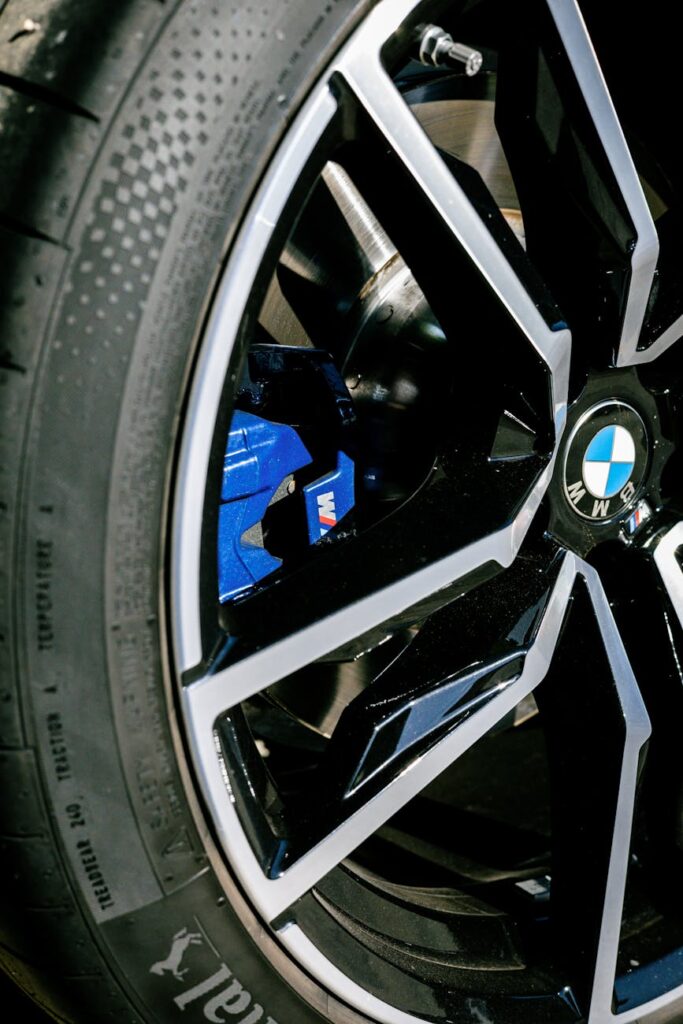
This guide explains common brake pad wear patterns, what causes them, how to diagnose them at home (and with dealer-level tools like ISTA, Xentry, ODIS, Pathfinder or SDD), and what to replace so you don’t waste money ordering the wrong parts. While the examples apply broadly, we’ll frequently refer to the BMW G30 530i because it’s a typical modern setup: strong brakes, wear sensors, and electronic systems that can hide developing mechanical issues.
🔧 Recommended Professional Tool
DSG Transmission Service KitProfessional tools for DSG gearbox service
✔ Recommended by automotive technicians ✔ Suitable for BMW, Mercedes, VAG & JLR platforms ✔ Fast international shipping
2. Causes
Brake pad wear patterns are mainly driven by friction balance, caliper movement, and heat. Common causes include:
- Sticky caliper slide pins or guide bushings: The caliper can’t “float” properly, so one pad does more work.
- Seized caliper piston: The inner pad may drag and wear quickly, sometimes with heat discoloration.
- Uneven rotor (disc) surface or runout: Causes pad tapering, glazing, or vibration-related wear.
- Low-quality or mismatched pad compound: Softer pads wear faster; aggressive pads can create uneven transfer layers.
- Driving style and environment:
- Short trips + moisture = corrosion ridges and uneven contact
- Mountain driving/towing = heat spots and glazing
- Electronic parking brake (EPB) issues (common on many JLR models and newer VAG): Rear pads can drag if the motor or mechanism doesn’t fully retract.
- Rear brake intervention by stability systems: DSC/ESP can use rear brakes subtly; this can bias wear depending on the vehicle.
3. Symptoms
You don’t need to be a mechanic to spot clues. Watch for:
- Squealing or scraping (especially at low speed): wear indicator or metal-to-metal contact
- Pulling left/right when braking
- Vibration through pedal or steering wheel (often rotors but can correlate with pad deposits)
- Burning smell after a drive or one wheel noticeably hotter than the others
- Reduced fuel economy (dragging brakes can add resistance)
- Brake warning messages: On BMW, a wear sensor triggers a service message; similar logic exists in Mercedes and VAG clusters.
4. How to diagnose
Visual check (safe and simple)
If you can remove the wheel (or look through spokes with a torch), check:
- Pad thickness inner vs outer pad on the same wheel
- Big difference suggests slider or piston issues.
- Pad surface:
- Tapered pad (thicker at one end): alignment/slider issue or rotor runout
- Glazing (shiny, glass-like): overheating or gentle braking with poor bedding
- Cracking/chunking: extreme heat or poor pad quality
- Rotor condition:
- Deep grooves, heavy lip/ridge, blue spots, or patchy coloration
Feel and temperature clues
After a normal drive (not a hard braking test), carefully check if one wheel is much hotter. A dragging caliper often leaves one corner hotter and dustier.
Use diagnostic tools (when relevant)
If you have access (or a specialist does), scan for brake-related faults:
- BMW ISTA: Can show brake pad service status, DSC faults, and in some cases help confirm wear sensor plausibility.
- Mercedes Xentry: Useful for SBC/ESP-related faults and EPB status where fitted.
- VAG ODIS: Can reveal EPB motor faults, ABS/ESC intervention history, and basic settings.
- JLR Pathfinder/SDD: Helpful for EPB module issues and brake pressure/ABS faults.
Diagnostics won’t “measure pad wear pattern,” but they can reveal why wear is abnormal—like EPB not retracting, DSC faults, or a caliper-related error.
5. How to fix
Match the fix to the wear pattern
Pattern: Inner pad worn much more than outer (same wheel)
Most common on floating calipers.
- Likely cause: Slide pins sticking or piston not retracting.
- Fix:
- Clean and lubricate slider pins with proper brake grease
- Replace slider boots/bushings if torn
- If piston is stiff: rebuild or replace caliper
- Replace pads, and often rotors if overheated or uneven
Pattern: Outer pad worn more than inner
- Likely cause: Caliper not centering, seized slider, or mounting corrosion.
- Fix: Same slider service; check caliper bracket for corrosion and ensure pad ears move freely.
Pattern: Tapered pad (one end thicker than the other)
- Likely cause: Caliper binding on pins, worn control arm bushings causing knock-back, or rotor runout.
- Fix:
- Service slider pins and pad hardware
- Measure rotor runout (a shop can do this quickly)
- If suspension play exists (common on heavier cars): address bushings/arms before fitting new brakes
Pattern: Glazed pads (shiny) with normal thickness
- Likely cause: Overheating, repeated gentle braking, or poor bedding-in.
- Fix:
- Replace pads if braking is poor or noisy (light sanding is sometimes possible but often not worth it)
- Inspect rotors for heat spots; replace if blue/patched
- Bed in new pads correctly (controlled stops per pad manufacturer)
Pattern: One axle wearing much faster than expected
- Likely cause: Driving conditions, stability control bias, or dragging brake/EPB issues.
- Fix:
- Confirm no dragging (wheel temp, free rotation)
- On EPB cars: run service mode and recalibration using ISTA/Xentry/ODIS/Pathfinder as applicable
- Replace pads/rotors if below limits, and correct the underlying cause first
What to order (practical guidance)
For a BMW G30 530i specifically, ordering mistakes are common:
- Front vs rear pad shapes differ, and some cars use different rotor sizes depending on options.
- Brake wear sensor(s): BMW typically uses sensors on specific corners (often front left and rear right). If a sensor has triggered, replace it with the pads.
- Hardware kits: Anti-rattle clips and pad retaining hardware are cheap and reduce noise issues.
- Rotors (discs): If rotors have a heavy lip, vibration, heat spots, or are near minimum thickness, replace them with pads—mixing new pads on worn rotors often causes noise and uneven bedding.
6. Repair costs
Costs vary by country and whether you choose OEM, OEM-equivalent, or budget parts. Realistic ranges (parts + labor):
- Front pads + sensor (no rotors): €250–€450
- Front pads + rotors + sensor: €450–€900
- Rear pads (EPB cars may require scan tool) + sensor: €250–€500
- Rear pads + rotors: €450–€950
- Caliper replacement (one corner) + pads/bleed: €450–€1,200
- Slider pin service only (if caught early): €80–€180
Premium models (larger discs, multi-piston calipers) push prices up. Labor is also higher if the car needs electronic service procedures (common on VAG and JLR EPB systems).
7. Prevention tips
- Inspect pad wear at every tyre rotation or seasonal wheel change
- Avoid riding the brakes downhill; use engine braking (especially on cars with ZF 8HP or DSG that can hold gears effectively)
- Rinse winter road salt off wheels and calipers when possible
- Use quality pads matched to your driving: cheap compounds often dust more and wear unevenly
- Bed in new pads properly to create an even transfer layer on the rotor
- Address sticking early: a simple slider service can prevent rotor damage and bigger bills
8. When to see a mechanic
Get professional help quickly if:
- The car pulls under braking
- One wheel is significantly hotter after normal driving
- You hear grinding, or the brake pedal feels inconsistent
- You have EPB errors or the rear brakes won’t release cleanly
- New pads were fitted and you now have persistent vibration or noise
A good independent European specialist can measure rotor runout, check caliper function, and run ISTA/Xentry/ODIS/Pathfinder/SDD procedures where needed—especially important on electronically controlled rear brakes.
9. Frequently Asked Questions
Frequently Asked Questions
What does it mean if my inner brake pad is thinner than the outer pad?
It usually points to a caliper that isn’t moving freely on its slider pins or a piston that’s not retracting properly. This can cause dragging, extra heat, and rapid wear. Fix the underlying sticking issue before fitting new pads, or the new set may wear the same way.
Should I replace rotors if only the pads are worn unevenly?
Often yes, especially if the rotor has grooves, heat spots, or a pronounced lip. Uneven pad wear frequently comes with an uneven rotor surface, which can prevent new pads from bedding in correctly. A shop can confirm rotor thickness and condition in minutes.
Do I need to replace the brake wear sensor every time on a BMW?
If the sensor has been triggered (warning shown), replace it with the pads because the tip is usually worn through. If it hasn’t triggered and is physically intact, some owners reuse it, but it’s relatively inexpensive insurance. On many BMW setups, sensors are only on specific corners, not every wheel.
Can an electronic parking brake cause rear pads to wear faster?
Yes, if the EPB motor or mechanism doesn’t fully retract, the pads can lightly drag. This is common enough that many cars require a scan tool procedure to enter service mode and reset/calibrate after pad replacement. If you’ve had rear pad wear that seems unusually fast, EPB diagnostics with ODIS/Pathfinder/SDD (or equivalent) is worth doing.
Why are my new pads squealing even though they’re installed correctly?
Squeal is often caused by improper bedding-in, missing hardware clips, or a rotor surface that’s not compatible with the new pad compound. It can also happen if one caliper is slightly sticking and creating a constant light contact. A quick inspection of hardware, rotor condition, and caliper movement usually finds the cause.