1. Introduction
On the BMW G20 3 Series (including the 330i), the lower control arm ball joint is a small but critical suspension component. It connects the control arm to the steering knuckle (hub carrier), allowing the front wheel to steer and move up and down while keeping alignment stable under braking and cornering. When it wears, the car can feel loose, noisy, and less predictable—especially on European roads with potholes, speed bumps, and cobblestones.
Recommended Tool: Professional OBD2 Scanner
Recommended Tool: OEM Suspension Components
Recommended Tool: Transmission Diagnostic Tools
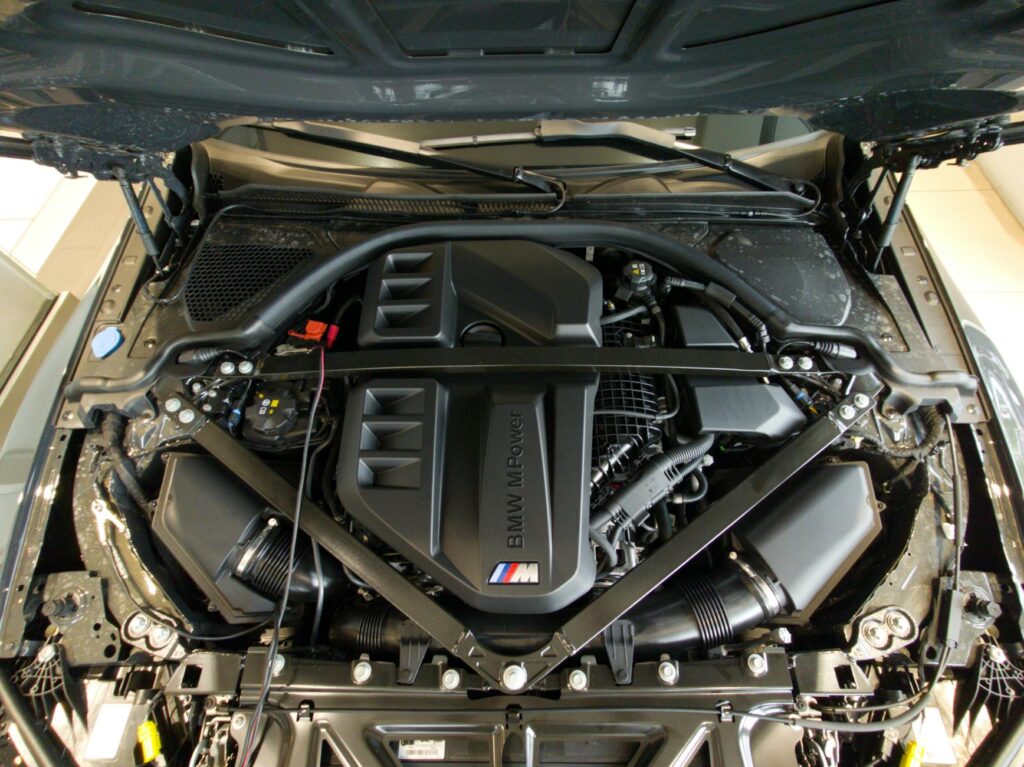
Although this post focuses on the BMW G20 330i, the same underlying issue is familiar to owners of Mercedes C‑Class/E‑Class, Audi A4/A5, VW Group cars on MQB/MLB platforms, and JLR models: ball joints and control arm bushings are “wear items.” If you drive a G20 with the B48 engine and commonly paired ZF 8HP automatic gearbox, a worn ball joint won’t affect the powertrain directly, but it can make the car feel less refined and can accelerate tyre wear quickly.
🔧 Recommended Professional Tool
BMW B48 Diagnostic ToolsRecommended tools for B48 engine diagnostics
✔ Recommended by automotive technicians ✔ Suitable for BMW, Mercedes, VAG & JLR platforms ✔ Fast international shipping
2. Causes
Ball joints wear because they constantly carry load while articulating. On modern European cars with precise steering and stiff suspension tuning, small amounts of play can become noticeable sooner than you’d expect.
Common causes include:
- Normal wear over mileage and time: The grease inside the joint degrades and the bearing surfaces wear.
- Damaged dust boot: If the rubber boot tears, water and grit enter, quickly accelerating wear.
- Potholes and curb impacts: A sharp hit can deform the joint or overload the control arm.
- Incorrect wheel/tyre setup: Heavy wheels, low-profile tyres, or aggressive offsets increase shock loads.
- Lowered suspension: Changes the operating angle of the joint, increasing stress.
- Mixed-quality parts: Cheaper aftermarket arms/joints may use softer ball studs or lower-grade boots.
On many cars (including several BMW suspension designs), the ball joint may be integrated into a control arm rather than being separately replaceable. That means “ball joint worn” often becomes “replace the whole control arm.”
3. Symptoms
A failing lower control arm ball joint usually announces itself through sound, steering feel, and tyre wear. Typical symptoms on a BMW G20 include:
- Clunking or knocking over bumps (often worse at low speed)
- Steering shimmy or vibration, especially during braking
- Wandering or vague steering on motorways
- Uneven tyre wear, often on the inner edge
- A “loose” feeling when changing lanes or entering roundabouts
- Steering wheel not centred after a straight-line drive
- Metallic creak or pop when pulling into a driveway at an angle
These symptoms can overlap with worn control arm bushings, track rod ends, or even a bent wheel. That’s why a structured diagnosis matters.
4. How to diagnose
You can do a first-pass check at home, but a proper inspection (and sometimes electronic steering angle checks) is best done on a lift.
Basic checks you can do safely
- Visual inspection (wheel off if possible): Look for a split or leaking ball joint boot, rust dust, or shiny metal where it’s been moving abnormally.
- Tyre inspection: Run your hand across the inner tread blocks; “feathering” can indicate play.
- Listen and localise: If the clunk is clearly one side, note left vs right for the workshop.
Workshop-level diagnosis (recommended)
A specialist will typically:
- Lift the car and check for play at the wheel while loading the joint (a pry bar test is common).
- Compare left and right sides; ball joints often wear unevenly depending on road camber and impacts.
- Inspect related components:
- Track rod ends (outer/inner)
- Control arm rear bushings
- Anti-roll bar links
- Strut top mounts
Using diagnostic tools (when relevant)
Electronic tools won’t “measure” a ball joint directly, but they help rule out related issues:
- BMW ISTA can check steering angle sensor plausibility, EPS faults, and can guide a chassis inspection routine. After suspension work, ISTA is useful for confirming no stored faults and verifying steering angle calibration status.
- For other brands, similar tool roles apply (e.g., Xentry, ODIS, Pathfinder/SDD)—mainly to confirm there isn’t an electronic steering or stability control issue masking a mechanical problem.
If there’s any doubt, ask the workshop to show you the play on the lift. A good technician can demonstrate movement at the joint clearly.
5. How to fix
The fix depends on whether the ball joint is replaceable separately or integrated into the control arm on your specific G20 configuration.
Typical repair approach
- Replace the affected lower control arm assembly (common on modern BMWs)
- Replace associated single-use fasteners if specified (many BMW suspension bolts are torque-to-yield)
- Wheel alignment after installation (strongly recommended, often essential)
What to replace in pairs?
- Ball joints/control arms: If one side is worn, the other may be close behind. Many owners choose to replace both front lower arms to restore balanced handling.
- Related components: If boots are cracked or bushings show movement, it can be cost-effective to address them together to avoid paying alignment twice.
Alignment considerations
After replacing a control arm, expect the steering wheel position and toe settings to shift. A proper alignment protects tyres and restores the sharp steering feel the G20 is known for.
6. Repair costs
Costs vary widely by country, labour rate, and whether you choose OEM, OEM-equivalent (e.g., Lemförder/TRW), or dealer parts. Below are realistic European ranges for a BMW G20 330i front lower control arm/ball joint repair.
Estimated cost ranges (parts + labour)
- Single side control arm replacement (one front lower arm): €350–€750
- Parts: €150–€400
- Labour: €150–€300 (about 1.0–2.0 hours depending on setup)
- Both sides (recommended if mileage is higher): €650–€1,300
- Parts: €300–€800
- Labour: €250–€500
- Wheel alignment (after suspension work): €80–€180
- Some shops bundle this; others charge separately.
Dealer vs independent specialist
- Dealer pricing can push totals toward the top of these ranges due to higher labour rates and OEM parts pricing.
- Independent BMW specialists often offer OEM-equivalent parts and more flexible options, while still using correct torque procedures.
If additional components are worn (track rod ends, anti-roll bar links, or bushings), add roughly €100–€400 depending on parts and labour.
7. Prevention tips
You can’t prevent ball joint wear entirely, but you can slow it down and catch it early.
- Avoid impacts: Slow down for potholes and sharp speed bumps; avoid clipping kerbs when parking.
- Keep tyres correctly inflated: Underinflation increases suspension stress.
- Choose sensible wheel/tyre setups: Extremely low-profile tyres transmit more shock into joints and bushings.
- Inspect boots during tyre changes: A torn boot is a “replace soon” warning sign.
- Do alignment checks periodically: If the car starts wearing tyres unevenly, don’t wait—alignment can reveal underlying play early.
- Fix small noises early: A minor knock can become a tyre-destroying alignment issue in a few thousand kilometres.
8. When to see a mechanic
Book an inspection promptly if you notice any of the following:
- Clunking that’s getting louder week by week
- Steering that feels unstable at motorway speeds
- Vibration under braking (after confirming wheels are balanced and discs are OK)
- Visible boot damage or grease leakage at the joint
- Rapid or uneven tyre wear on the front axle
If the steering suddenly feels unsafe, or the car pulls hard to one side, treat it as urgent. While complete ball joint separation is rare on modern cars, significant play can compromise braking stability and emergency manoeuvres.
9. Frequently Asked Questions
Frequently Asked Questions
What are the OEM part numbers for the BMW G20 330i lower control arm ball joint?
On many G20 setups the ball joint is not sold separately and comes as part of the lower control arm assembly, so the “OEM number” depends on your exact VIN and suspension option. The most reliable method is to check with a BMW parts catalogue by VIN or have a shop pull numbers through BMW parts systems. If you’re booking a repair, ask the workshop to list the exact part numbers on the estimate.
Can I drive with a worn lower ball joint on my G20?
You can often drive short distances, but it’s not advisable to postpone the repair for long. As the joint wears, steering precision and braking stability can degrade, and tyre wear can become expensive quickly. If you hear loud knocks or feel the car wander, reduce driving and get it inspected.
Do I need a wheel alignment after replacing the control arm/ball joint?
Yes, an alignment is strongly recommended and often essential. Replacing a control arm changes suspension geometry, and even small toe changes can ruin tyres and make the steering feel off-centre. Many owners notice the car feels “new again” after a proper alignment.
Should I replace both sides if only one ball joint is bad?
If the car has higher mileage or both sides are original, replacing both is often cost-effective and restores balanced handling. If one side failed due to a pothole impact and the other side is tight with an intact boot, you may choose to replace only the damaged side. A good workshop will measure play and advise based on condition, not guesswork.
Is this repair similar on Mercedes, Audi/VW, or JLR cars?
The symptoms and diagnosis are very similar across brands, even though the exact arm design and fasteners differ. Mercedes (checked with Xentry), VAG cars (ODIS), and JLR models (Pathfinder/SDD) still rely on mechanical inspection for joint play and boot condition. Costs are broadly comparable, with premium SUVs often costing more due to access and heavier components.