1. Introduction
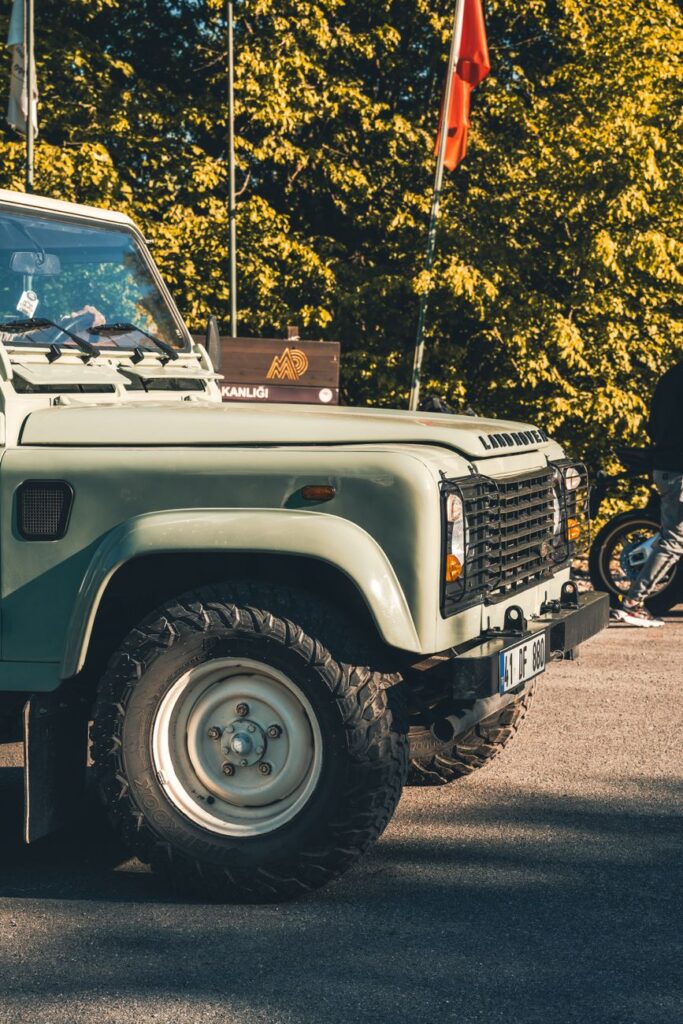
The new-generation Land Rover Defender (L663, launched 2020-on) blends old-school toughness with modern tech: independent suspension, lots of sensors, and—on many models—height-adjustable air suspension. For everyday European owners, that’s good news for comfort and capability, but it also means suspension faults can be more complex than on older 4x4s. A small air leak, a worn bushing, or a wheel alignment issue can quickly turn into uneven tyre wear, warning messages, and a Defender that no longer rides as it should.
Recommended Tool: Professional OBD2 Scanner
Recommended Tool: Cooling System Diagnostic Tools
Recommended Tool: OEM Suspension Components
This overview explains the main suspension parts on the new Defender, what typically fails, how problems show up, and what realistic repair costs look like in Europe. Even if you also own a BMW (with ISTA), Mercedes (Xentry), Audi/VW (ODIS), or another JLR product (Pathfinder/SDD), you’ll recognise the same principles: modern suspensions rely on correct sensor data, tight bushings, and leak-free pneumatics.
🔧 Recommended Professional Tool
Cooling System Diagnostic ToolsProfessional coolant tester and infrared thermometer for accurate overheating diagnosis.
✔ Recommended by automotive technicians ✔ Suitable for BMW, Mercedes, VAG & JLR platforms ✔ Fast international shipping
2. Causes
Suspension issues on the L663 Defender usually come from a handful of real-world factors:
- Road conditions and impact damage: Potholes, kerbs, and off-road hits can bend links, crack air lines, or knock alignment out.
- Wear in rubber bushings: Heavy vehicles on large wheels load bushes hard; repeated torque and braking forces accelerate wear.
- Air suspension leaks (if equipped): Age, dirt, and chafing can cause slow leaks in air springs or lines.
- Compressor strain: A small leak makes the compressor run more often, leading to premature wear or overheating.
- Sensor or calibration issues: Ride height sensors, steering angle sensors, and wheel speed data all affect how the vehicle controls height and stability.
- Incorrect tyres or pressures: Mismatched tyre sizes, uneven wear, or wrong pressures can trigger stability and height-control complaints.
- Previous poor-quality repairs: Non-OE control arms, low-quality bushings, or incorrect torque settings can lead to noise and rapid re-failure.
3. Symptoms
Common signs that the Defender’s suspension needs attention include:
- Vehicle sits uneven after parking (often one corner lower), especially with air suspension
- “Suspension fault” / “Vehicle height only available with limitations” messages
- Harsh or bouncy ride, or a “crashy” feel over small bumps
- Clunks/knocks over speed bumps or when turning at low speed
- Steering wander or feeling “nervous” at motorway speeds
- Uneven tyre wear, feathering, or rapid inner-edge wear
- Compressor running frequently (you may hear it after starting or after closing doors)
- One side pulling during braking or acceleration (sometimes alignment, sometimes bushings)
4. How to diagnose
A good diagnosis mixes basic checks you can do at home with targeted scanning and measurement.
Visual and basic checks (owner-friendly)
- Tyres first: Confirm all tyres match size and model, and check pressures when cold.
- Ride height observation: Park on level ground, take photos of each corner, and re-check after a few hours/overnight.
- Listen for compressor behaviour (air suspension): Frequent compressor cycling can point to a leak.
- Quick underbody look: Check for obvious damage, loose undertrays, torn rubber boots, or shiny rub marks on air lines.
Workshop-level checks (recommended)
- Diagnostic scan with JLR Pathfinder (or SDD on older workflows): Look for faults in the Air Suspension Control Module, ride height sensors, compressor temperature/overrun, and stored pressure-related codes.
- Live data review: Compare ride height sensor readings side-to-side; large deviations may indicate sensor issues, bent linkages, or mechanical sag.
- Leak testing (air suspension):
- Soapy water on air spring bellows, line fittings, and valve blocks
- Pressure decay tests if the tool supports it
- Suspension play checks: A technician should check:
- Front and rear lower control arm bushings
- Ball joints
- Anti-roll bar drop links
- Subframe bushings (less common, but possible)
- Alignment check: Measure toe/camber; a Defender with worn arms can “move” under load, showing inconsistent readings.
If you come from other brands: the process is similar to using ISTA to compare BMW ride height sensor values, Xentry for Mercedes AIRMATIC faults, or ODIS for Audi/VW air suspension level control—scan, confirm with physical tests, then calibrate.
5. How to fix
The correct repair depends on whether the Defender has coil springs or air suspension and which components are worn.
Common fixes (coil or air)
- Replace worn control arms or bushes: Many arms are replaced as assemblies because pressed-in bush replacement isn’t always cost-effective.
- Replace anti-roll bar links: Often responsible for low-speed knocking.
- Wheel alignment: Essential after any arm replacement, and often a “fix” on its own for tyre wear and wandering.
Air suspension-specific fixes
- Replace leaking air spring (air strut): If a corner drops overnight, the air spring is a prime suspect.
- Repair/replace air lines and fittings: Chafed lines can leak only at certain steering angles or heights.
- Valve block service or replacement: Less common than air springs, but possible if it can’t hold pressure or distributes air incorrectly.
- Compressor replacement: If it’s noisy, overheats, or logs overrun faults, it may be worn—often secondary to an unresolved leak.
- Calibration/adaptation: After sensor replacement, suspension work, or sometimes after repairs, the system needs a ride height calibration using Pathfinder/SDD to ensure the vehicle sits level and behaves correctly.
Avoid “parts darts.” Replacing a compressor without fixing the leak that killed it is one of the most expensive mistakes owners make.
6. Repair costs
Realistic European cost ranges (parts + labour) vary by country and whether you choose OE, OEM, or aftermarket parts. Typical ranges:
- Wheel alignment (4-wheel): €120–€220
- Anti-roll bar drop links (pair): €200–€450
- Front lower control arm (each, fitted): €450–€900
- Rear control arm/link (each, fitted): €300–€700
- Ride height sensor replacement + calibration: €250–€500
- Air spring/air strut (single corner, fitted + calibration if needed): €900–€1,800
- Air line repair (minor leak): €200–€500
- Valve block replacement (fitted + calibration): €600–€1,200
- Compressor replacement (fitted + system checks): €900–€1,700
If multiple items are worn (for example, front arms plus alignment, or an air spring plus compressor), the bill can climb quickly. A careful diagnosis is what keeps costs contained.
7. Prevention tips
You can’t prevent all wear, but you can slow it down and catch issues early:
- Keep tyre pressures correct and avoid mixing tyre brands/models across axles.
- Rotate tyres (where permitted by tyre type) and monitor for early uneven wear.
- Rinse the underbody after winter salt or off-road mud to reduce corrosion and dirt abrasion on air lines.
- Avoid repeated kerb strikes and take speed bumps slowly; heavy wheels transmit high loads into bushings.
- Don’t ignore early warning messages—an air leak today can become a compressor failure later.
- Get an alignment check after any significant pothole hit or if steering feel changes.
8. When to see a mechanic
Book a workshop visit (preferably one familiar with JLR diagnostics like Pathfinder/SDD) if:
- The vehicle leans or drops after parking
- You get repeated suspension fault warnings or height limitations
- The compressor runs often or sounds strained
- You notice clunks, especially combined with vague steering
- Tyres show rapid or uneven wear
- The Defender feels unstable at speed, even after checking tyre pressures
Suspension problems affect braking, stability control, and tyre life—so it’s not an area to “wait and see.”
9. Frequently Asked Questions
Frequently Asked Questions
Can I drive with a Defender air suspension fault message?
You can often drive short distances, but the system may lock into a limited height mode and handling can change. If the vehicle is leaning, scraping, or the warning returns immediately after clearing, it’s best to stop and arrange diagnosis. Continued driving with a leak can overwork the compressor.
Why does my Defender sit lower on one corner overnight?
A slow leak in the air spring or a fitting is the most common cause. Less often, a valve block internal leak can let air bleed away from one corner. A workshop can confirm with a leak test and pressure decay checks.
Do I need an alignment after replacing suspension parts?
Yes—at minimum after control arm, tie-rod, or subframe-related work. Even small changes in toe can cause rapid tyre wear and wandering. A proper 4-wheel alignment is usually cheaper than a set of tyres.
Is a noisy compressor always a sign it’s failing?
Not always, but frequent running or a harsh, strained sound often means it’s working too hard due to a leak. Fixing the leak early can sometimes save the compressor. Diagnostic logs in Pathfinder/SDD can show overrun or temperature events that point to excessive duty cycle.
Are aftermarket control arms and links worth it?
Some OEM suppliers offer good value, but very cheap parts often use softer rubber and wear quickly on a heavy SUV. If you plan to keep the car, mid-to-high quality OEM/OE parts usually reduce repeat labour costs. Ask for warranty terms and whether new bolts/fasteners are included where required.