1. Introduction
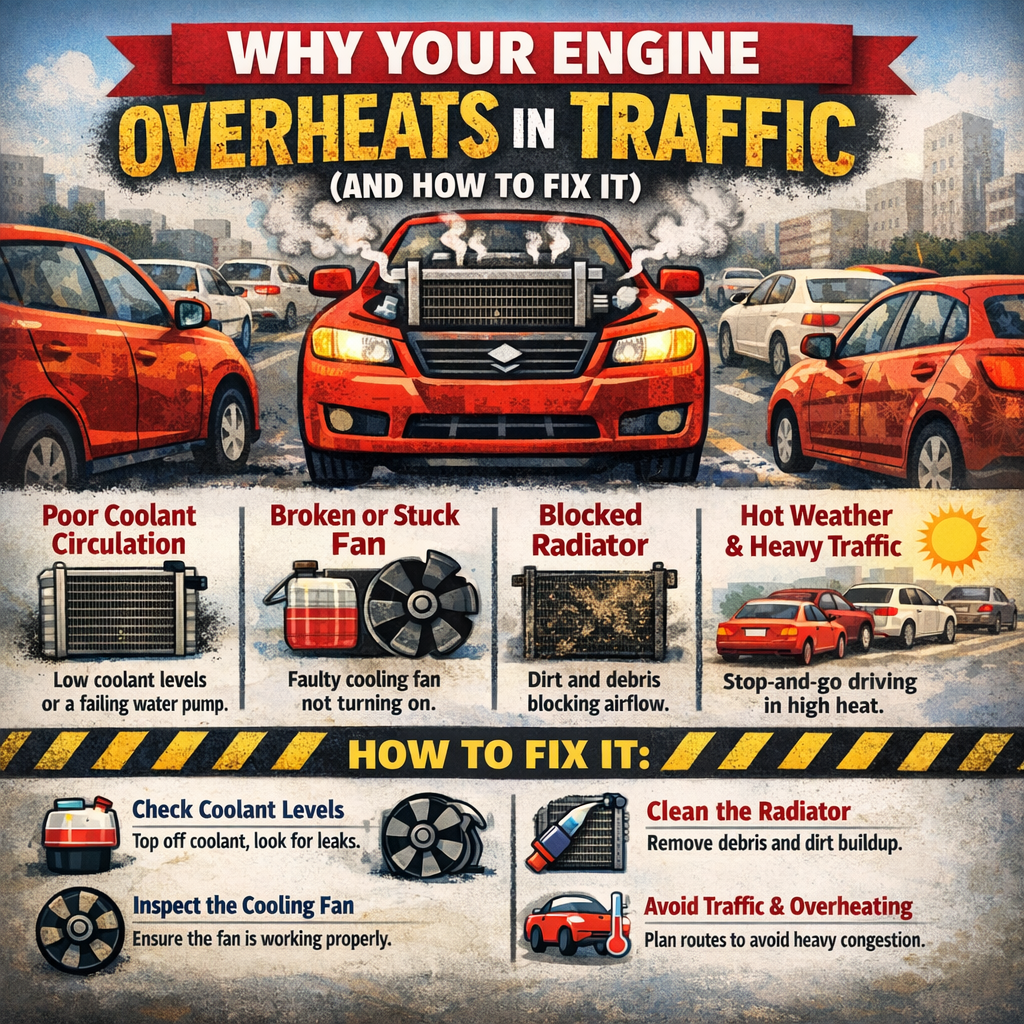
An engine that runs fine on the highway but starts creeping toward “hot” in stop-and-go traffic is a common (and stressful) problem. Traffic creates the perfect conditions for overheating: low vehicle speed, limited airflow through the radiator, frequent idling, and higher under-hood temperatures. The good news is that many causes are straightforward, and some fixes are simple enough for an everyday car owner to handle safely.
Recommended Tool: Professional OBD2 Scanner
Recommended Tool: Cooling System Diagnostic Tools
🔧 Recommended Professional Tool
Cooling System Diagnostic ToolsProfessional coolant tester and infrared thermometer for accurate overheating diagnosis.
✔ Recommended by automotive technicians ✔ Suitable for BMW, Mercedes, VAG & JLR platforms ✔ Fast international shipping
2. Causes
Traffic-related overheating usually happens because the cooling system can’t shed heat fast enough at low speed. Here are the most common reasons.
Cooling fans not doing their job
At highway speeds, air naturally flows through the radiator. In traffic, the electric fans (or a belt-driven fan with a clutch) must move air.
- Blown fan fuse or relay
- Failed fan motor
- Bad fan temperature switch or sensor
- Fan wiring issues
- Weak or failed fan clutch (on some older vehicles)
Low coolant level or small coolant leaks
If coolant is low, the system can’t carry heat away efficiently, and hot spots form more easily at idle.
Recommended Tool: Professional OBD2 Scanner
Common leak points include:
- Radiator end tanks or seams
- Hoses (especially at clamps)
- Water pump weep hole
- Thermostat housing
- Heater core (may fog windows or smell sweet inside)
Thermostat sticking closed (or partially closed)
The thermostat regulates coolant flow. If it doesn’t open properly, coolant can’t circulate well, and overheating often shows up first in traffic.
Clogged radiator or restricted airflow
Even if coolant is full, heat still has to leave the radiator.
- Internal clogging from old coolant or deposits
- External blockage: bugs, leaves, dirt, bent fins
- Plastic bags or debris trapped between the A/C condenser and radiator
Weak radiator cap or air in the system
The radiator cap maintains pressure, which raises the boiling point of coolant. A weak cap can let coolant boil sooner. Air pockets can also stop coolant from circulating properly, especially after a recent coolant service.
Water pump issues
A worn pump may not circulate coolant effectively at idle. Sometimes the impeller is damaged or corroded, reducing flow without obvious noise.
Head gasket or combustion gas intrusion (less common, more serious)
If exhaust gases enter the cooling system, it can over-pressurize, push coolant out, or create overheating that’s worse at idle.
A/C use and high ambient temperatures
Running the air conditioner adds heat load at the front of the car (through the condenser) and can trigger overheating if the cooling system is marginal.
3. Symptoms
Overheating in traffic often gives warnings before the temperature gauge hits the red.
What you might notice
- Temperature gauge rises while idling, then drops once you start moving
- “Coolant temperature high” warning message or light
- A/C stops blowing cold at low speed
- Heater suddenly blows very hot air (or alternates hot/cold)
- Sweet smell (coolant) under the hood or inside the cabin
- Steam from the front of the car or overflow bottle bubbling
- Coolant reservoir level dropping over time
- Engine feels sluggish, pings/knocks, or the check-engine light appears
Urgent warning signs
- Gauge in the red zone
- Steam pouring out
- Coolant visibly leaking onto the ground
- Temperature warning plus loss of power or rough running
If any urgent sign appears, pull over safely and shut the engine off as soon as you can.
4. How to diagnose
You can do several checks at home with basic tools and a careful approach. Never open the radiator cap on a hot engine.
Step 1: Check coolant level (engine cold)
- Look at the coolant reservoir level against the “MIN/MAX” marks.
- If low, inspect for obvious leaks around hoses, radiator, and under the car.
Tip: If you need to top off in a pinch, use the correct coolant type if possible. If not, distilled water is a better temporary choice than tap water.
Step 2: Confirm the cooling fans run
With the engine warmed up and idling:
- Watch for the electric radiator fans turning on as the gauge climbs.
- Turn the A/C on; many cars command the fans on with A/C.
If the gauge rises but the fans never start, suspect a fan circuit issue.
Step 3: Look for airflow blockages
With the engine off:
- Check the grille area and the front of the radiator/condenser for debris.
- Shine a light through the fins; if you can’t see light well, airflow may be restricted.
Step 4: Check for thermostat clues
A thermostat problem can show up as:
- Slow warm-up followed by sudden overheating
- Upper radiator hose staying cool while the engine is hot (use caution—hot parts burn)
Step 5: Watch for signs of pressure problems
- Coolant overflowing from the reservoir after a normal drive
- Hoses becoming rock-hard quickly
- Bubbles in the reservoir (especially repeatedly)
Step 6: Scan for trouble codes (optional but helpful)
An inexpensive OBD-II scanner can reveal codes related to coolant temperature sensors, fan control circuits, or misfires triggered by overheating.
5. How to fix
Fixes range from simple clean-up to replacing worn parts. Always prioritize safety: overheating engines can cause burns and engine damage.
Immediate steps if you’re overheating in traffic
- Turn off the A/C.
- Turn the heater to full hot and fan high (uncomfortable, but it can pull heat from the engine).
- If safe, shift to neutral/park and lightly raise idle for short periods (some cars circulate coolant better slightly above idle).
- If the gauge keeps climbing, pull over and shut the engine off.
Common DIY-friendly fixes
Top off coolant and address small leaks
- If coolant is low, topping off may stop the immediate overheating, but it’s not a complete fix.
- Replace cracked hoses or loose clamps if you can identify them.
- If you see coolant residue around a hose end, tighten or replace the clamp.
Clean the radiator/condenser fins
- Remove debris by hand (engine off).
- Use gentle water flow from a hose to rinse bugs and dirt.
- Avoid high-pressure washers that can bend fins.
Replace a radiator cap
- A weak cap is inexpensive and can cause boil-over in traffic.
- Use the correct pressure rating specified for your car.
Repairs that are often straightforward but may require tools
Replace a failed cooling fan or fan relay
- Relays and fuses are usually easy to replace.
- Fan motors can be more involved but are manageable on many vehicles.
Thermostat replacement
- A stuck thermostat is a common culprit for traffic overheating.
- It requires draining some coolant and bleeding air afterward.
Repairs best left to experienced DIYers or a shop
- Water pump replacement (often labor-intensive)
- Radiator replacement (especially on newer, tightly packaged engine bays)
- Cooling system pressure testing and professional bleed procedures
- Head gasket diagnostics and repair
6. Prevention tips
A little maintenance goes a long way, especially before summer.
- Check coolant level monthly (engine cold) and look for slow changes.
- Use the correct coolant type and mixture; mixing types can cause deposits and reduced protection.
- Replace coolant on schedule (your owner’s manual lists an interval). Old coolant loses corrosion protection.
- Keep the front of the radiator clean and clear leaves/debris from the grille area.
- Watch the temperature gauge occasionally, especially during heat waves and long idles.
- Fix small leaks early; low coolant today can become overheating tomorrow.
- Don’t ignore fan behavior: if your A/C isn’t cold at idle and improves while moving, check fans sooner rather than later.
7. When to see a mechanic
You should book a visit promptly if any of the following are true:
- The car overheats repeatedly, even after topping off coolant
- Cooling fans do not turn on, and you’re not comfortable testing relays/sensors
- You see coolant leaks you can’t easily access or identify
- The engine overheats quickly (within minutes) or spikes suddenly
- There are bubbles in the reservoir, persistent coolant loss, or hoses over-pressurize
- The oil looks milky, the exhaust is unusually white for extended periods, or the engine misfires after overheating
- The temperature warning light comes on along with reduced power (many cars enter a protection mode)
Overheating can warp engine components and turn a moderate repair into a major one. If your gauge climbs toward hot in traffic more than once, treat it as a real warning and address it before the next commute.