1. Introduction
If your car drifts or tugs to the left or right when you’re trying to drive straight, it’s more than just an annoyance. A pulling sensation can make driving tiring, reduce control in emergency situations, and point to problems that may cause uneven tire wear or unsafe braking. Sometimes the fix is simple—like adjusting tire pressure—but other times it signals wear in steering, suspension, or braking components. Understanding the most common causes helps you decide what you can check yourself and when it’s time to get professional help.
Recommended Tool: Professional OBD2 Scanner
Recommended Tool: Premium Brake Pads
Recommended Tool: Cooling System Diagnostic Tools
🔧 Recommended Professional Tool
Cooling System Diagnostic ToolsProfessional coolant tester and infrared thermometer for accurate overheating diagnosis.
✔ Recommended by automotive technicians ✔ Suitable for BMW, Mercedes, VAG & JLR platforms ✔ Fast international shipping
2. Causes
Tire pressure differences
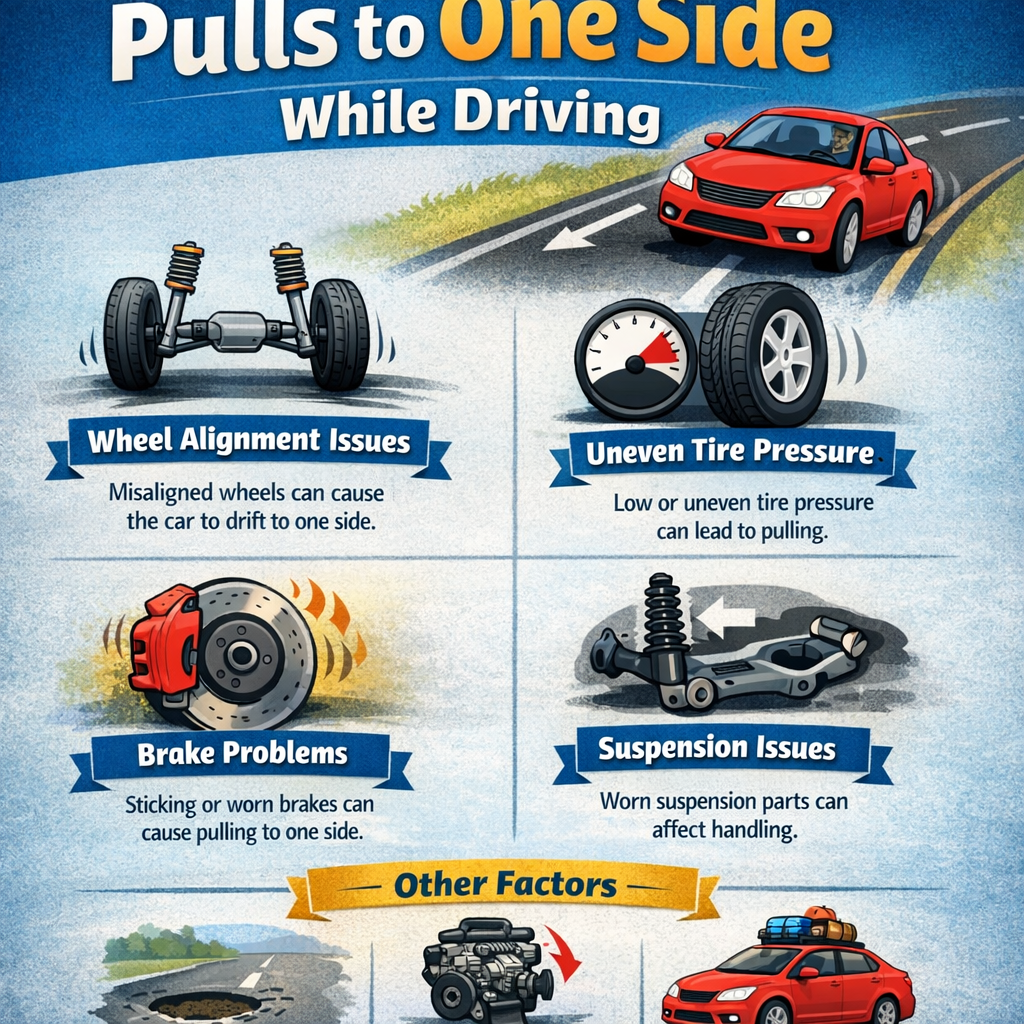
A small difference in tire pressure side-to-side can make a car drift. Underinflation increases rolling resistance, and the car may pull toward the lower-pressure tire.
Uneven tire wear or mismatched tires
Tires that are worn unevenly (or a different brand/model on one side) can have different traction and rolling characteristics.
Common triggers include:
- Uneven tread depth left vs. right
- “Cupping” or scalloped wear from suspension issues
- A tire with internal belt separation (can pull strongly and suddenly)
- Mixing tire types (different tread patterns, sizes, or construction)
Wheel alignment issues
Alignment settings—especially toe and camber—affect whether the car tracks straight. Misalignment can happen gradually from wear or suddenly after:
- Hitting potholes or curbs
- Minor collisions
- Suspension work without a follow-up alignment
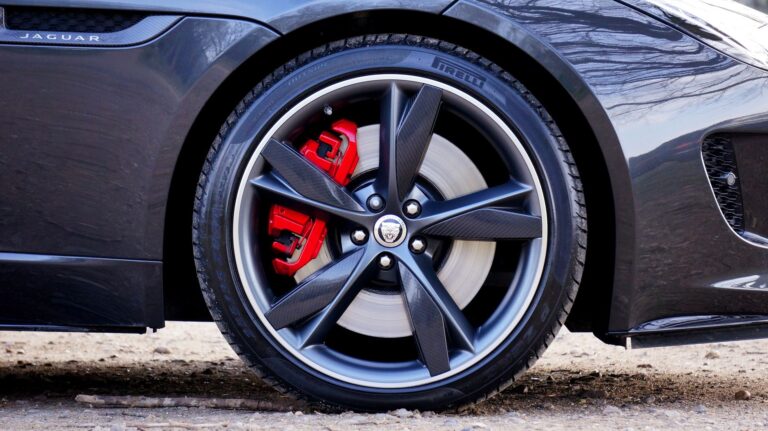
Brake drag (sticking caliper or hose issues)
If a brake caliper sticks or a brake hose collapses internally, one wheel may brake slightly all the time. That can cause a pull while driving and often becomes more noticeable during braking.
Suspension or steering wear
Loose or worn parts can let the wheels shift under load, causing a drift or pull.
Common culprits:
- Worn tie rod ends
- Ball joints with play
- Control arm bushings cracking or separating
- Struts/shocks worn unevenly side-to-side
- Wheel bearings with excessive play
Road crown and crosswinds
Many roads are built higher in the center to shed water, which naturally encourages a slight drift to the right. Strong crosswinds can also create a temporary pull. These factors shouldn’t require you to fight the steering wheel on normal roads, but they can contribute.
Load imbalance
Heavy cargo on one side or uneven passenger load can alter suspension height slightly and affect tracking—especially on smaller vehicles.
3. Symptoms
What pulling feels like
- The steering wheel needs constant correction to keep the car centered
- The car drifts when you briefly loosen your grip (on a flat, straight road)
- The steering wheel may not return to center smoothly after a turn
Clues that point to specific causes
- Pull is worse during braking: likely brake drag, uneven pads/rotors, or a sticking caliper
- Pull started after tire replacement or rotation: possible tire pressure issue, mismatched tires, or a “radial pull” from a tire
- Steering wheel is off-center but car still goes straight: alignment issue (often toe)
- Vibration plus pull: tire balance issue, tire damage, or a wheel problem
- Burning smell or excessive heat from one wheel: brake drag or bearing issue
- Rapid or uneven tire wear: alignment or suspension wear
4. How to diagnose
Start with quick, safe checks at home
-
Check tire pressures cold
- Use a reliable gauge when tires are cold (parked for a few hours).
- Inflate to the vehicle’s recommended pressure on the driver’s door jamb sticker (not the tire sidewall).
- Make sure left and right tires on the same axle match.
-
Inspect tires visually
Look for:- Uneven wear across the tread (inner/outer edge wear)
- Bulges, bubbles, or cracks
- Objects stuck in the tread
- One tire that looks noticeably different (tread pattern or size)
-
Confirm tire sizes and types match
- Ensure the same size on the same axle.
- Ideally use matching brand/model tires in pairs, especially on the front axle.
Try a simple test drive (in a safe area)
- On a straight, relatively flat road, note whether the pull is constant or varies with speed.
- Test gentle braking from moderate speed:
- If the car darts left or right only when braking, suspect brakes or front suspension.
Rule out a tire-related pull with a rotation test (if you’re comfortable)
- Swap the front tires left-to-right (only if your tires are non-directional and your vehicle setup allows it).
- If the pull direction changes after the swap, a tire is likely causing the pull (tire conicity/radial pull or internal defect).
- If the pull stays the same, look more toward alignment, brakes, or suspension.
Check for brake heat (carefully)
After a short drive without heavy braking:
- Park safely and hover your hand near each wheel (do not touch hot surfaces).
- A wheel that’s much hotter than the others can indicate a dragging brake or bearing issue.
Know when not to DIY
Avoid lifting the vehicle or checking suspension play if you’re not experienced and properly equipped. Improper jacking can be dangerous.
5. How to fix
Adjust tire pressure and re-test
This is the simplest fix and often the most overlooked. After setting pressures correctly, drive again on the same type of road to confirm improvement.
Rotate or replace problematic tires
- If rotation changes the pull direction, have the tires inspected.
- A shop can measure road force variation and identify a tire that causes pull.
- Replace tires that show belt separation, bulges, or abnormal wear.
Get a professional wheel alignment
A proper alignment typically includes:
- Checking and adjusting toe, camber, and caster where applicable
- Centering the steering wheel
- Verifying alignment angles are within spec
Important: If suspension parts are worn, alignment alone may not “hold.” The worn parts need replacement first.
Repair brake issues
If a caliper is sticking or a hose is failing, repairs may include:
- Replacing or rebuilding the caliper
- Replacing flexible brake hoses
- Servicing slide pins and hardware
- Replacing pads/rotors if unevenly worn or heat-damaged
Brake problems should be addressed quickly because they can overheat components and reduce stopping performance.
Replace worn steering or suspension components
Common fixes:
- Tie rods or ball joints replaced, then aligned
- Control arm bushings or complete control arms replaced
- Struts/shocks replaced in pairs (left and right) for balanced handling
6. Prevention tips
- Check tire pressure monthly and before long trips.
- Rotate tires on schedule (often every 5,000–8,000 miles, or as your manual recommends).
- Keep tires matched in size and, ideally, model on the same axle.
- Avoid hard impacts with potholes and curbs when possible; slow down on rough roads.
- Address vibration or odd noises early before they turn into tire wear or larger steering issues.
- Have alignment checked after suspension work, significant impacts, or if you notice uneven tire wear.
7. When to see a mechanic
Schedule a professional inspection promptly if:
- The car pulls strongly or suddenly, especially at highway speeds
- The pull happens primarily during braking
- You smell burning, see smoke, or notice one wheel area is much hotter
- The steering feels loose, wandering, or unstable
- You see a bulge in a tire or suspect tire belt separation
- Tire wear is uneven or rapid even after correcting pressure
- The steering wheel is off-center after you’ve recently hit a pothole or curb
A consistent pull is a sign something isn’t right. Catching it early can save tires, prevent brake damage, and keep your car predictable and safe on the road.