1. Introduction
A healthy brake pedal should feel firm and predictable. If yours feels soft, spongy, or sinks closer to the floor than it used to, it’s a sign that something in the braking system isn’t working as efficiently as it should. Because brakes are your car’s most important safety system, a change in pedal feel is never something to ignore. The good news is that many common causes are straightforward to understand, and some are relatively simple to address once properly diagnosed.
Recommended Tool: Professional OBD2 Scanner
Recommended Tool: Premium Brake Pads
Recommended Tool: Cooling System Diagnostic Tools

🔧 Recommended Professional Tool
Cooling System Diagnostic ToolsProfessional coolant tester and infrared thermometer for accurate overheating diagnosis.
✔ Recommended by automotive technicians ✔ Suitable for BMW, Mercedes, VAG & JLR platforms ✔ Fast international shipping
2. Causes
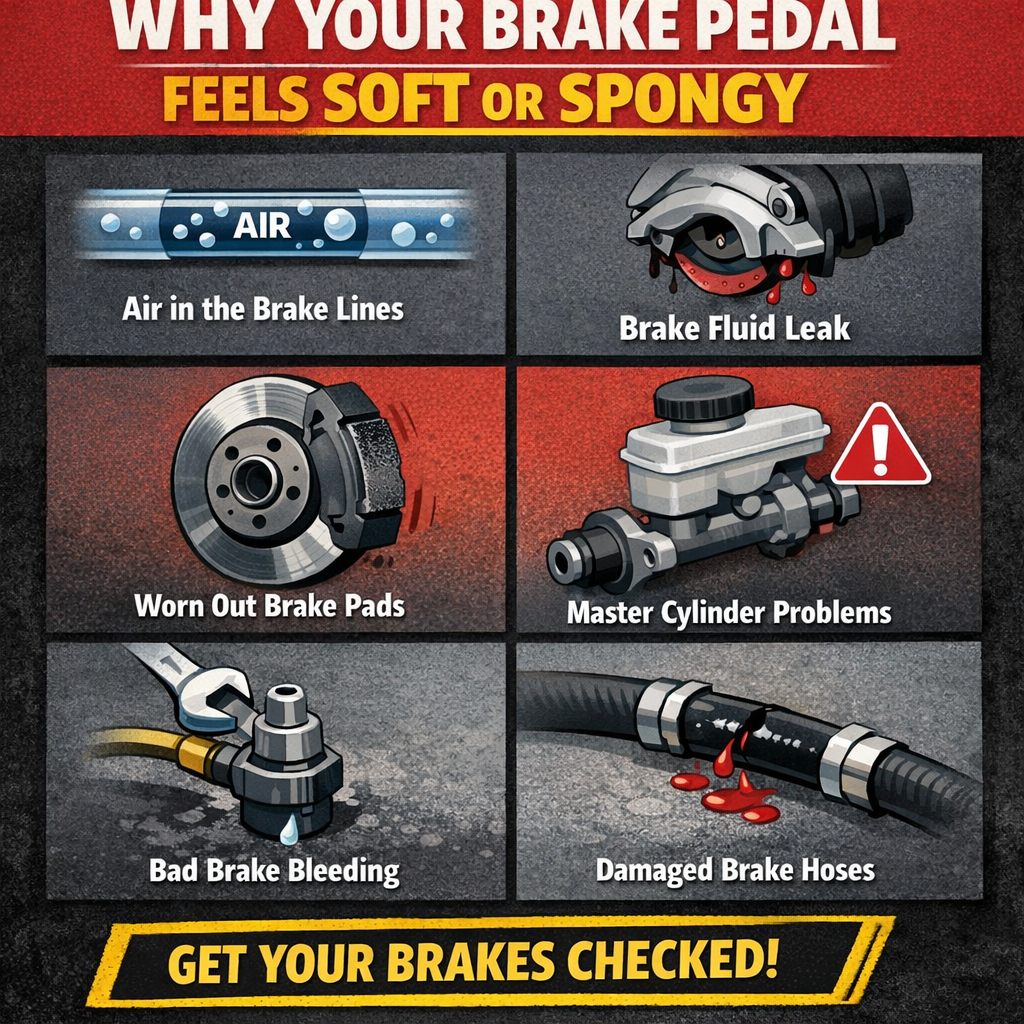
A soft or spongy brake pedal usually points to one of two issues: air or compressible fluid in the hydraulic system, or a mechanical/hydraulic component that isn’t holding pressure the way it should. Common causes include:
Air in the brake lines
Brake systems rely on hydraulic pressure. Brake fluid doesn’t compress, but air does. If air gets into the lines, pressing the pedal first compresses the air bubble, which feels spongy.
Old or moisture-contaminated brake fluid
Brake fluid absorbs moisture over time (it’s hygroscopic). Water lowers the fluid’s boiling point and can lead to vapor bubbles under heavy braking. Vapor compresses, creating a soft pedal—especially after repeated braking or driving downhill.
Brake fluid leak
A leak can reduce pressure and introduce air. Leaks may occur at:
- Brake hoses or hard lines
- Calipers or wheel cylinders
- Master cylinder seals
- Bleeder screws (loose or damaged)
- ABS hydraulic unit fittings
Worn brake pads or out-of-adjustment drum brakes
Worn pads alone don’t usually cause a spongy pedal, but they can increase pedal travel. Rear drum brakes that are out of adjustment can also cause a low or long-travel pedal.
Flexible brake hose swelling
Rubber brake hoses can deteriorate internally. Under pressure, a weak hose may expand slightly, absorbing some of the force that should be clamping the brakes, leading to a softer feel.
Master cylinder problems
The master cylinder creates hydraulic pressure when you press the pedal. Internal seal wear can cause pressure to “bypass” inside the cylinder, sometimes making the pedal slowly sink while you hold it.
ABS-related issues (less common, but possible)
Some ABS hydraulic unit problems can affect pedal feel. Also, after certain repairs, air can be trapped in the ABS module and may require a special bleeding procedure.
3. Symptoms
A soft brake pedal can show up in different ways. Pay attention to what you feel and when it happens.
What you might notice
- Pedal feels spongy or springy instead of firm
- Pedal travels farther than normal before braking strongly
- Pedal slowly sinks while you’re stopped with steady pressure
- Braking power feels reduced, especially in emergency stops
- Brakes feel worse after hard braking or long downhill driving
- You need to “pump” the brakes to get a firmer pedal
Other clues that often come with it
- Low brake fluid level in the reservoir
- Wet spots near wheels or along brake lines
- Burning smell or smoke after aggressive braking (possible overheating)
- Brake warning light or ABS light on the dashboard
4. How to diagnose
If your brake pedal suddenly becomes soft, drive as little as possible until you understand what’s happening. If stopping distance is increased, don’t drive the vehicle—arrange a tow.
Step 1: Check the brake fluid level (engine off, car parked)
Open the hood and locate the brake fluid reservoir.
- If the fluid is below the “MIN” line, that’s a major red flag.
- If the fluid looks very dark or murky, it may be overdue for replacement.
Important: Use only the brake fluid type listed on the reservoir cap or in your owner’s manual (DOT 3, DOT 4, etc.). Mixing types can cause problems.
Step 2: Look for obvious leaks
Check:
- Around each wheel (behind the tire) for wetness
- Along visible brake lines under the car (as safely as you can)
- Under the master cylinder (where it meets the brake booster/firewall area)
Brake fluid often feels slick and looks clear-to-amber when fresh, darker when old.
Step 3: Note when the problem happens
This helps narrow the cause:
- Soft all the time: air in lines, leak, master cylinder issue
- Soft after repeated braking: fluid boiling due to moisture or overheated brakes
- Soft then improves with pumping: air in system or drum brakes out of adjustment
- Pedal sinks slowly while holding at a stop: master cylinder internal leak is likely
Step 4: Pay attention to warning lights
- A brake warning light can indicate low fluid, hydraulic imbalance, or parking brake issues.
- An ABS light suggests ABS faults; it may not cause a soft pedal by itself, but it’s relevant.
Step 5: Consider recent work
If the issue started after brake pad/rotor replacement, caliper work, or any line opened:
- Air may not have been fully bled out
- A fitting or bleeder screw may be leaking slightly
- Air may be trapped in the ABS module
5. How to fix
Brake repairs vary from simple maintenance to safety-critical component replacement. If you’re not comfortable working with brakes, skip to the final section and book a professional inspection.
Bleed the brakes (removing air)
If air is in the lines, the solution is bleeding the system to push air out and replace it with fluid.
- This is often done after brake component replacement or if air entered due to low fluid.
- Some vehicles (especially with ABS) may require a scan tool procedure to bleed the ABS module properly.
Replace or flush brake fluid
If the fluid is old or moisture-contaminated, a brake fluid flush can restore a firm pedal and improve braking consistency.
- A proper flush replaces most of the old fluid, not just the reservoir portion.
- This is especially important if the pedal gets soft after heavy braking.
Fix leaks and replace worn components
If there’s any leak, it must be repaired before bleeding will hold.
Common repairs include:
- Replacing leaking calipers or wheel cylinders
- Replacing cracked or corroded brake lines
- Replacing degraded rubber hoses
- Tightening or repairing fittings/bleeder screws (only if threads and seats are sound)
Address master cylinder issues
If the pedal slowly sinks under steady pressure and no external leaks are found, the master cylinder may be bypassing internally.
- Replacement is common, followed by proper bleeding.
- It’s crucial to confirm the diagnosis because other issues can mimic similar symptoms.
Adjust rear drum brakes (if equipped)
If your car has rear drums, they may need adjustment. Poor adjustment can increase pedal travel and create a low pedal feel.
- Some vehicles self-adjust, but the mechanism can fail or stick.
6. Prevention tips
A soft pedal is often preventable with basic upkeep and awareness.
Keep up with brake fluid service
- Follow your manufacturer’s interval when available.
- As a general guideline, many cars benefit from a brake fluid flush every 2–3 years, depending on driving conditions and climate.
Inspect brakes during tire rotations or oil changes
Ask for (or perform) a quick visual check:
- Pad thickness
- Rotor condition
- Any signs of wetness near calipers/hoses
- Brake fluid level and color
Avoid overheating the brakes
- Use lower gears on long downhill grades when possible
- Don’t ride the brakes; use steady, controlled braking
- If you smell brakes burning, pull over safely and let them cool
Use the correct brake fluid
- Only use the DOT rating specified for your vehicle.
- Keep brake fluid containers sealed; opened fluid absorbs moisture quickly.
7. When to see a mechanic
Seek professional help immediately if any of the following applies:
- The brake pedal suddenly becomes soft or goes close to the floor
- Stopping distance has increased or braking feels unpredictable
- The brake warning light is on, especially with low fluid
- You see brake fluid leaking anywhere
- The pedal sinks while you hold pressure at a stop
- The issue started after brake work and you’re not certain it was bled correctly
- You have an ABS light along with a noticeable change in pedal feel
Brakes are not a “wait and see” system. If your pedal feel changes, the safest approach is to diagnose it promptly and fix the underlying cause before it becomes a dangerous failure.