1. Introduction
A steering wheel should turn smoothly and quietly. So when you start hearing clunks, squeals, grinding, or popping as you steer, it’s a signal that something in the steering, suspension, or braking system may be worn, loose, or low on fluid. Some noises are minor annoyances, but others can point to safety issues—especially if the sound is getting worse or the car feels different while turning. Understanding the most common causes helps you decide what you can check at home and when it’s time to book service.
Recommended Tool: Professional OBD2 Scanner
Recommended Tool: Premium Brake Pads
Recommended Tool: Portable Jump Starter
🔧 Recommended Professional Tool
Automotive Battery TesterCheck battery health and charging system performance with precision.
✔ Recommended by automotive technicians ✔ Suitable for BMW, Mercedes, VAG & JLR platforms ✔ Fast international shipping
2. Causes
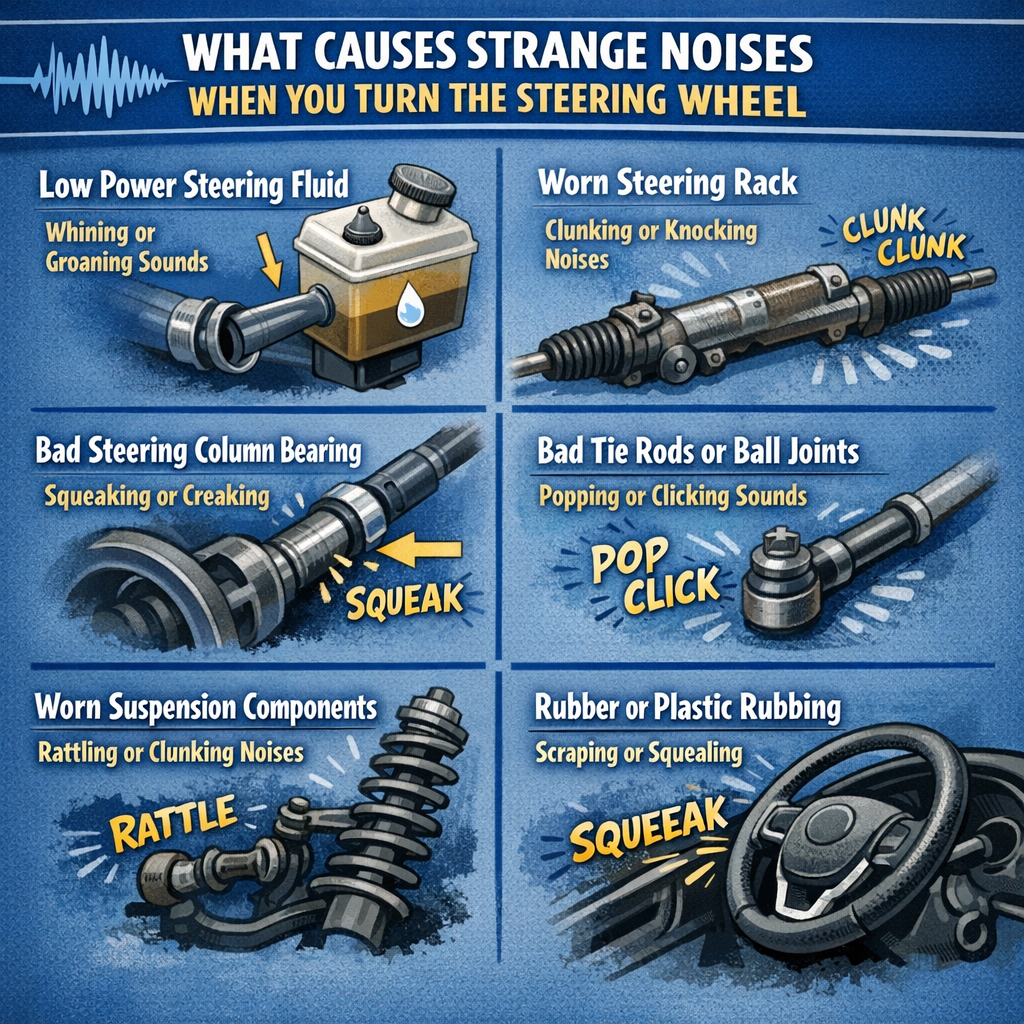
Low or contaminated power steering fluid (hydraulic systems)
Many vehicles use hydraulic power steering. If the fluid is low, aerated, or dirty, the pump can whine or groan when you turn, especially at low speeds or at full lock (wheel turned all the way).
Common reasons it gets low:
- A leak from a hose, clamp, or steering rack
- A worn seal at the pump or rack
- Old fluid that’s broken down and no longer lubricates properly
Worn power steering pump
A failing pump often makes a high-pitched whine or groan that increases as you turn the wheel. You may notice it most when parking or when the engine is cold. Pumps can wear from age, contaminated fluid, or running low on fluid for too long.
Electric power steering (EPS) issues
If your car has electric power steering, it doesn’t use hydraulic fluid. Noises can come from:
- The EPS motor or reduction gears
- Steering column components
- A weak battery or charging issue causing the system to struggle under load
EPS problems may be accompanied by a steering warning light.
Worn CV joints (front-wheel drive and many AWD vehicles)
Constant-velocity (CV) joints allow the front wheels to receive power while turning. A classic sign of a worn outer CV joint is a rhythmic clicking or popping when turning, especially during acceleration.
This often happens when:
- The CV boot tears and grease leaks out
- Dirt and water enter the joint and speed up wear
Worn tie rod ends, ball joints, or control arm bushings
These suspension and steering parts handle movement and keep wheels aligned. When they wear, you can get:
- Clunking over bumps and during turns
- A loose or vague steering feel
- Uneven tire wear
Strut mounts, bearings, or suspension springs
Many cars have strut assemblies up front. A worn strut mount or bearing can cause creaking, popping, or a “springy” binding sound as the strut rotates with steering input. This is common in cold weather and on higher-mileage vehicles.
Steering rack or steering column wear
A steering rack with internal wear, loose mounting bushings, or damaged components can clunk or knock. Steering columns can also develop noises from worn universal joints, bearings, or intermediate shafts.
Brake components shifting during turns
Sometimes the noise isn’t steering-related at all. Turning can load the suspension and brakes differently, making a loose brake pad, worn hardware, or a thin rotor shield rub and squeal.
Wheel bearing wear
A worn wheel bearing more often causes a humming or growling that changes with speed, but it can also change with turning as weight shifts from one side to the other.
Tire rubbing or wheel fitment issues
A rubbing sound when turning can come from:
- A torn inner fender liner
- Oversized tires or incorrect wheel offset
- A bent splash shield
- A loose undertray
3. Symptoms
Noises and what they often mean
- Whining or groaning while turning: low power steering fluid, power steering pump wear, EPS strain
- Clicking/popping on turns (often while accelerating): outer CV joint wear
- Clunking during turns or over bumps: tie rod ends, ball joints, control arm bushings, steering rack mounts
- Creaking or “binding” feel: strut mount/bearing issues, dry bushings
- Grinding or scraping: brake shield rubbing, severe bearing issues, metal-to-metal contact
- Squealing: belt slip (on some hydraulic pumps), brake pad movement, rubbing plastic liner
Driving changes to pay attention to
- Steering feels heavier or jerky
- Car pulls to one side
- Vibration in the steering wheel
- Steering wheel doesn’t return to center smoothly
- Power steering warning light or other dash lights
- Fluid spots under the front of the car
4. How to diagnose
Step 1: Note when the noise happens
Write down a few details:
- Does it happen only at low speed (parking) or also at higher speed?
- Does it happen when turning left, right, or both?
- Does it happen only while moving, or even while stationary?
- Does it change with engine speed (revving) or vehicle speed?
These clues quickly narrow the possibilities.
Step 2: Check power steering fluid (if applicable)
If your car has a power steering fluid reservoir:
- Check the level with the engine off (follow the cap dipstick marks or reservoir marks)
- Look at the fluid condition: very dark fluid or a burnt smell suggests it’s overdue for service
- If it’s low, topping up may reduce noise temporarily, but you still need to find the leak
If your car has EPS, skip this and look for warning lights and battery/charging health.
Step 3: Do a safe parking-lot test
In an empty lot:
- Turn the wheel fully left and right at slow speed and listen
- Drive slow circles in both directions
- Try light acceleration while turning (helps reveal CV joint clicking)
Step 4: Visual inspection around the wheels
With the car parked on level ground:
- Look behind each front wheel for torn CV boots or grease splatter
- Check for plastic liner rubbing on the tire
- Look for bent brake dust shields near the rotor
- Inspect tires for unusual wear or shiny rubbed spots
Step 5: Simple at-home checks (no special tools)
- With the engine running, turn the wheel slightly left/right and listen near the hood area (whine often points to pump/EPS)
- Check for obvious looseness: if the steering feels sloppy or clunks loudly, avoid highway driving until it’s inspected
5. How to fix
Low power steering fluid or leaks
- Top up with the correct fluid listed in your owner’s manual (wrong fluid can cause damage)
- If it’s low again soon, the real fix is repairing the leak (hose, clamp, pump seal, rack seal)
- Consider a fluid flush if the fluid is dirty, but only after leaks are addressed
Worn power steering pump or belt
- A noisy pump may need replacement
- On some vehicles, a slipping belt can squeal; the fix is belt replacement and/or tensioner service
CV joint or axle issues
- If the CV boot is torn but the joint isn’t clicking yet, sometimes you can replace the boot early
- If it’s already clicking, the typical repair is replacing the CV axle assembly
Tie rods, ball joints, bushings, strut mounts
These are wear items. Fix usually involves:
- Replacing the worn component(s)
- Getting a wheel alignment afterward (especially after tie rod or control arm work)
Brake-related rubbing or shifting
- Bend or secure a rubbing dust shield
- Replace worn pad hardware or caliper slides
- Address uneven pad wear or sticking calipers if present
Wheel bearing
A noisy bearing typically requires bearing/hub replacement. This isn’t a “wait and see” item for long—bearings can deteriorate quickly once noisy.
Tire rubbing
- Re-secure liners and undertrays
- Verify correct tire size and wheel offset
- Address suspension sag or damaged components causing contact
6. Prevention tips
- Check fluids regularly (oil changes are a good reminder); if you have hydraulic steering, glance at power steering level occasionally
- Listen for early changes: small creaks or light clicks are easier (and cheaper) to address early
- Inspect CV boots during tire rotations—catching a tear early can prevent axle replacement
- Keep tires properly inflated to reduce stress on steering and suspension parts
- Avoid hard impacts (potholes, curbs). Impacts speed up wear in ball joints, tie rods, and wheel bearings
- Don’t hold full lock (wheel turned all the way) for long periods; it strains pumps on hydraulic systems
7. When to see a mechanic
Schedule an inspection soon if:
- The noise is getting louder week to week
- You feel looseness, wandering, or clunking through the steering wheel
- The steering wheel doesn’t return to center smoothly
- You see uneven tire wear or the car pulls to one side
- You notice grease around a wheel (possible CV boot failure)
Stop driving and get help urgently if:
- Steering suddenly becomes very heavy or inconsistent
- You hear loud grinding or metal-on-metal sounds
- You see power steering fluid pouring onto the ground
- A steering warning light comes on and steering effort changes noticeably
- The car feels unstable during turns
Strange steering noises are often your car’s early warning system. A quick check and a targeted repair can restore quiet steering—and, more importantly, keep the vehicle safe and predictable every time you turn the wheel.