1. Introduction
Volkswagen cooling systems are generally well engineered, but they can be sensitive to neglect, the wrong coolant, and age-related wear in a few key components. When something goes wrong, the results can range from a small coolant smell in the driveway to overheating that risks serious engine damage. The good news is that many VW cooling system issues give early warnings, and with a little know-how you can spot problems before they become expensive repairs. This guide breaks down the most common causes, what you’ll notice as a driver, how to do basic checks at home, and what fixes and prevention steps make the biggest difference.
Recommended Tool: Professional OBD2 Scanner
Recommended Tool: Cooling System Diagnostic Tools

🔧 Recommended Professional Tool
Cooling System Diagnostic ToolsProfessional coolant tester and infrared thermometer for accurate overheating diagnosis.
✔ Recommended by automotive technicians ✔ Suitable for BMW, Mercedes, VAG & JLR platforms ✔ Fast international shipping
2. Causes
Coolant leaks (the most common issue)
Leaks can come from multiple places, and on many VW models they’re more likely at plastic parts and seals that age and become brittle.
Common leak points include:
- Radiator end tanks and seams
- Coolant expansion tank (reservoir) cracks or cap failure
- Water pump housing or gasket
- Thermostat housing (often plastic) and O-rings
- Coolant flanges and quick-connect fittings
- Heater core connections (sometimes noticed as damp carpet or sweet smell inside)
Water pump wear or failure
Many modern VW engines use water pumps with plastic impellers or integrated housings that can wear, leak, or lose pumping efficiency. On some engines the water pump is also packaged with the thermostat assembly, so a single failure may require replacing the whole unit.
Recommended Tool: Professional OBD2 Scanner
Thermostat problems
A thermostat stuck closed can cause quick overheating. A thermostat stuck open can cause slow warm-up, weak cabin heat, and poor fuel economy. Either condition can be triggered by age, debris, or a failing thermostat housing.
Cooling fan and fan control issues
Electric radiator fans are critical at low speeds, in traffic, or when the A/C is on. Problems may involve:
- Failed fan motor
- Blown fuse or relay
- Faulty fan control module
- Temperature sensor issues that prevent the fan from turning on when needed
Wrong coolant or mixed coolant types
Volkswagen specifies particular coolant types (often pink/purple VW-approved coolants such as G12/G13 or their approved successors depending on model year). Mixing incompatible coolants or topping off with the wrong type can cause:
- Sludge or gel formation
- Reduced corrosion protection
- Seal damage and leaks over time
Air trapped in the system after service
After coolant work, air pockets can remain if the system isn’t bled properly. Air reduces circulation, can cause temperature swings, and may trigger overheating warnings.
Radiator or heater core restriction
Internal buildup, corrosion, or debris can restrict flow. Externally, the radiator can be blocked by leaves, dirt, or road debris, reducing its ability to shed heat.
3. Symptoms
Signs you can notice while driving
- Temperature gauge climbing higher than normal or fluctuating
- Overheating warning light or message
- Heater suddenly blowing cold air at idle (often low coolant or air pocket)
- A/C performance dropping in traffic (fans not working can contribute)
- Sweet smell (coolant) around the car after driving
Signs you might see when parked
- Puddle or crusty residue under the front of the car
- White/pink crusty deposits around hoses, flanges, or the reservoir
- Coolant level dropping over days or weeks
- Wet passenger-side floor (possible heater core leak)
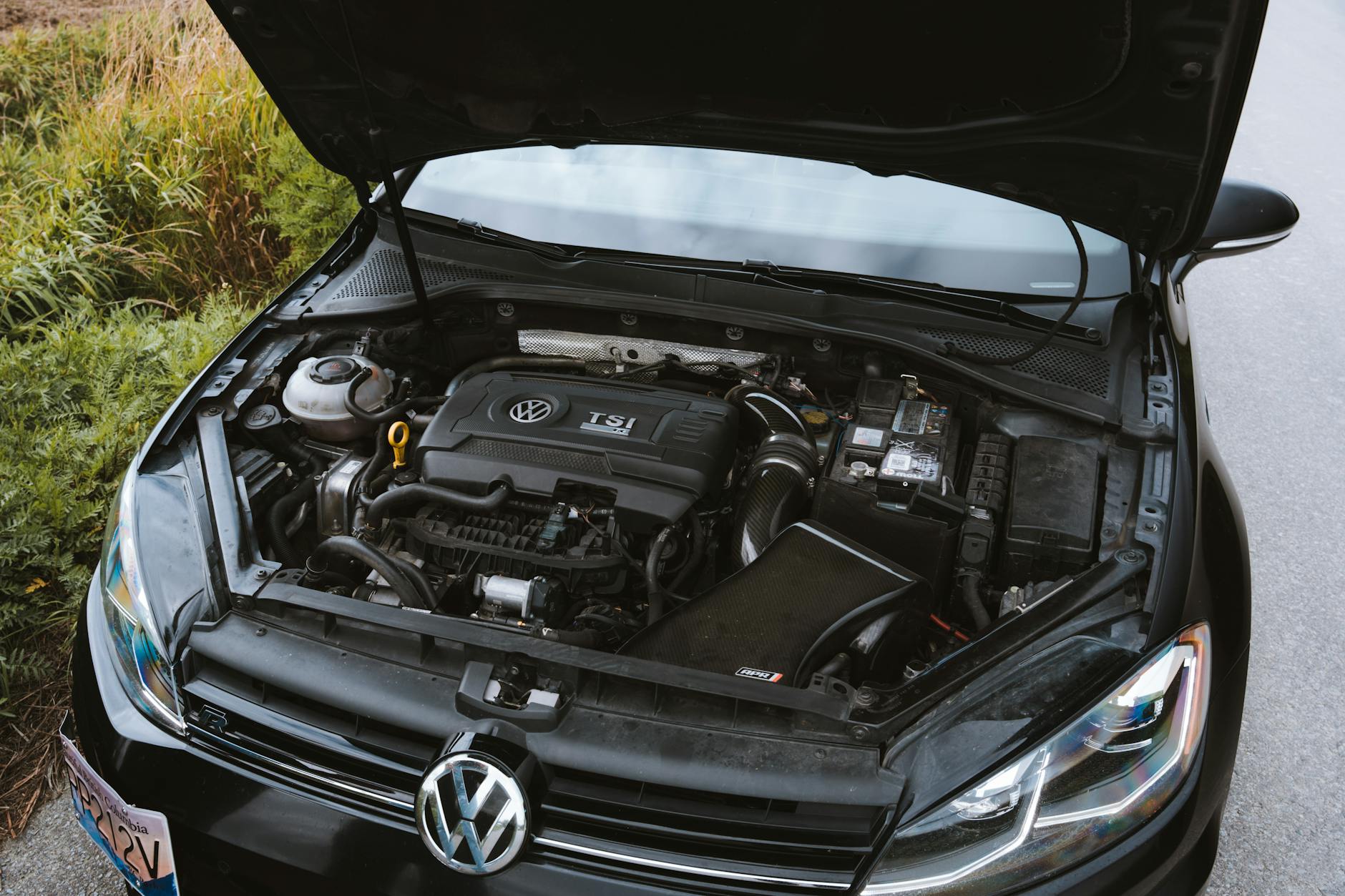
Under-hood clues
- Coolant stains around the water pump area (often near the belt side of the engine)
- Cracks in the expansion tank
- Hose swelling, soft spots, or seepage at clamps
4. How to diagnose
Start with safe, simple checks
Before opening anything, let the engine cool completely. Never open the coolant reservoir cap on a hot engine.
At home, you can check:
- Coolant level: Look at the expansion tank “MIN/MAX” marks when cold.
- Coolant condition: It should look like clean colored coolant, not brown, oily, or sludgy.
- Visible leaks: Use a flashlight to inspect hoses, the radiator corners, and around the thermostat housing and coolant flanges.
- Reservoir cap and tank: Look for cracks, staining, or dried deposits around the cap.
Basic operational checks (still DIY-friendly)
- Warm-up behavior: Start the car cold and note how long it takes to reach normal temperature. Extremely slow warm-up can suggest a thermostat stuck open.
- Cabin heat test: With the engine at operating temp, set heat to hot. Weak heat can point to low coolant, air in the system, or a heater core issue.
- Fan check: When the engine is warm and the A/C is on, the radiator fans should generally run. If they don’t, there may be a fan, fuse, relay, or control issue (exact behavior varies by model).
When a scan tool helps
If you have access to an OBD-II scanner (even a basic one), look for:
- Engine temperature sensor-related codes
- Cooling fan control codes
- Overheat or coolant temperature plausibility faults
A shop can go further with:
- Cooling system pressure test to reveal slow leaks
- UV dye test for hard-to-find seepage
- Combustion gas test (block test) if head gasket issues are suspected
- Thermostat and pump flow checks using temperature readings and hose temperature comparisons
5. How to fix
Top off coolant (only if correct type and no overheating)
If the level is slightly low and you’re not overheating:
- Use VW-approved coolant and the correct mix (often 50/50 with distilled water, unless using pre-mix).
- Add slowly to the reservoir when the engine is cold.
- Monitor the level for the next few days. If it drops again, you have a leak that needs addressing.
Repair leaks at the source
Common fixes include:
- Replacing the expansion tank or cap if cracked or not holding pressure
- Replacing leaking hoses, clamps, O-rings, or coolant flanges
- Radiator replacement if it’s seeping at seams or end tanks
- Heater core replacement if coolant is entering the cabin (this is usually a more involved job)
Replace thermostat and/or water pump
If temperature regulation is unstable, overheating occurs without an obvious leak, or there’s coolant loss at the pump area, the thermostat/water pump assembly may be the culprit. On many VW engines, replacing these components is not a simple “bolt-on” job and may require special procedures, tight-access work, or belt/chain considerations.
Fix fan and electrical control problems
Repairs may involve:
- Replacing the fan assembly or fan control module
- Replacing fuses/relays (after confirming the root cause)
- Replacing faulty temperature sensors if they’re giving incorrect readings
Proper bleeding after any coolant work
Air in the system can mimic bigger problems. Correct bleeding procedures vary by model. If you’re not confident, this is one area where professional help can prevent repeat issues and overheating.
6. Prevention tips
Use the right coolant and service habits
- Stick with VW-approved coolant for your model year and engine.
- Don’t mix coolant types unless you’re certain they’re compatible and approved.
- Use distilled water for mixing (not tap water).
Check levels and look for early seepage
- Glance at the reservoir level every few weeks.
- Watch for dried coolant residue around fittings and housings.
- Address small leaks early—coolant loss rarely fixes itself.
Keep airflow to the radiator clear
- Remove leaves and debris from the radiator area if accessible.
- Avoid blocking the front grille with accessories that restrict airflow.
Don’t ignore warning lights or temperature changes
A single overheat event can damage a head gasket or warp components. If the temperature gauge rises above normal, reduce load, turn off A/C, and pull over safely to investigate.
7. When to see a mechanic
You should book service promptly if:
- The car overheats, even once
- Coolant level drops repeatedly or you see a puddle
- You smell coolant in the cabin or see fogging/greasy film on windows
- The radiator fans don’t run when expected (especially with A/C on)
- The coolant looks sludgy, rusty, or oily
- You have warning messages like “Check coolant” or “Engine temperature” that return after topping off
Seek immediate help (or towing) if:
- The temperature gauge enters the red zone
- Steam comes from the engine bay
- The engine runs rough after overheating
- You must add coolant frequently just to drive normally
Cooling system problems are one of the few issues that can turn from minor to major in a very short time. Catching leaks early, using the correct VW coolant, and responding quickly to temperature changes will protect your engine and keep your Volkswagen running reliably.