1. Introduction
A healthy car battery is easy to ignore—until the day your engine won’t start in the grocery store parking lot. Most batteries don’t fail without warning. They usually give off small, easy-to-miss signs for days or even weeks. Knowing what to watch for can help you avoid getting stranded, protect your alternator and starter from extra strain, and save money by replacing the battery before it causes other problems.
Recommended Tool: Professional OBD2 Scanner
Recommended Tool: Portable Jump Starter

🔧 Recommended Professional Tool
Automotive Battery TesterCheck battery health and charging system performance with precision.
✔ Recommended by automotive technicians ✔ Suitable for BMW, Mercedes, VAG & JLR platforms ✔ Fast international shipping
2. Causes
Car batteries wear out for predictable reasons. Understanding the common causes helps you connect the dots between your driving habits, local climate, and the symptoms you notice.
Battery age and normal wear
Most car batteries last about 3–5 years, though some fail sooner and some last longer. Over time, the internal plates degrade and the battery can’t hold as much energy.
Heat and cold stress
- Heat speeds up chemical reactions inside the battery, which can shorten its life and increase water loss (especially in hot climates).
- Cold slows the chemical reactions, reducing available power right when the engine needs more effort to start.
Short trips and infrequent driving
If you mostly drive short distances, the alternator may not have enough time to fully recharge the battery after starting the engine. Over months, this can leave the battery undercharged and weaker.
Recommended Tool: Professional OBD2 Scanner
Parasitic drain (power draw when the car is off)
Some electrical draw is normal (clock, security system), but a glovebox light stuck on, an aftermarket accessory wired incorrectly, or a failing module can drain the battery overnight or over a few days.
Charging system issues
A battery can appear “bad” when the real problem is that it isn’t being charged properly:
- Weak or failing alternator
- Loose, corroded, or damaged battery cables
- Slipping serpentine belt (on many vehicles)
Vibration and poor mounting
If the battery isn’t held down securely, vibration can damage internal components and shorten its life.
3. Symptoms
Battery trouble often shows up as intermittent issues at first—starting fine one day and struggling the next. Watch for these common signs.
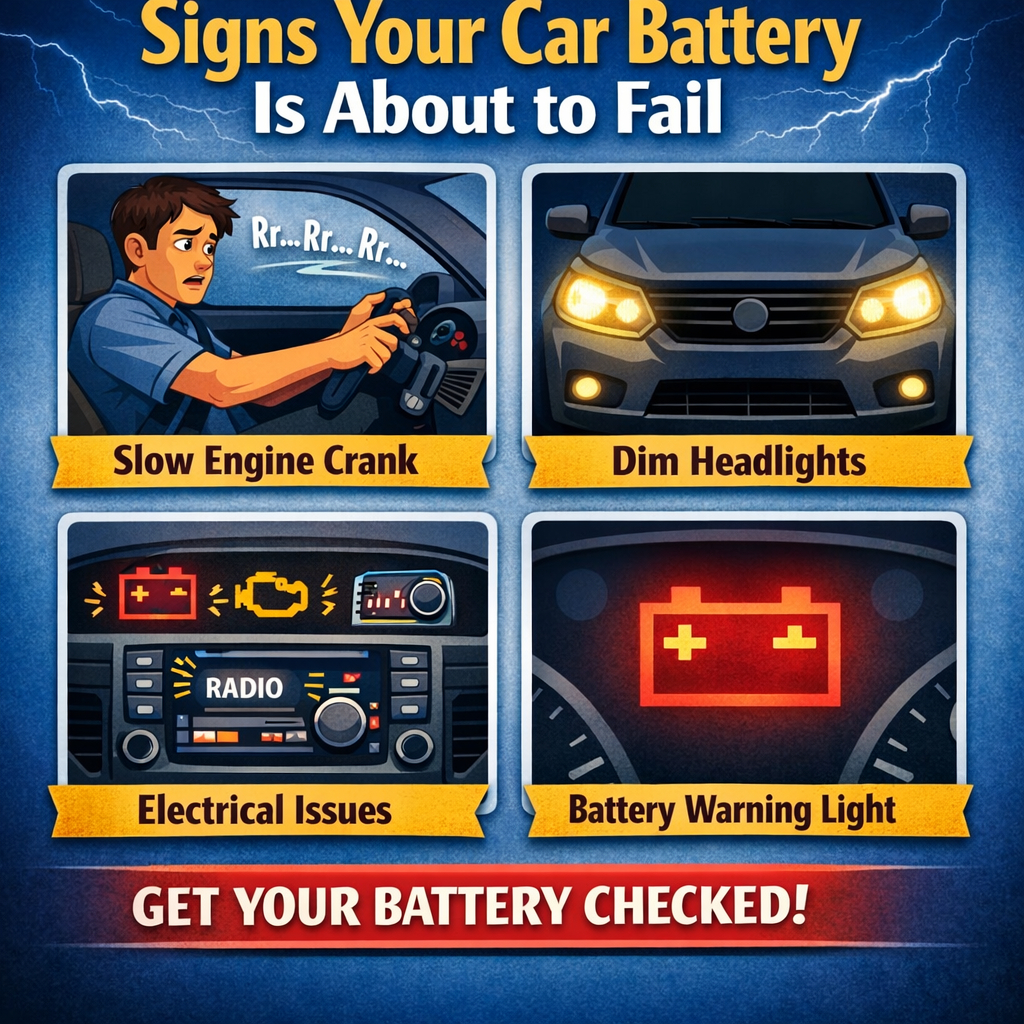
Slow or hesitant starting
The most classic symptom is a slow crank:
- The engine turns over more slowly than usual
- It takes longer to start, especially in the morning or after sitting
Clicking sound or no crank
If you turn the key (or press Start) and hear rapid clicking, the battery may not have enough power to engage the starter. Sometimes you’ll get lights on the dashboard but no engine cranking.
Dimming lights and electrical glitches
A weakening battery can cause:
- Headlights dimming at idle
- Interior lights that fade when you start the car
- Flickering dashboard lights
- Infotainment system resets or unusual error messages
Warning light on the dash
Some cars show a battery-shaped icon. This often indicates a charging system issue, not always the battery itself. Still, it’s a serious clue that your battery may be running low and not getting replenished.
Corrosion on battery terminals
White, blue, or green crusty buildup around the terminals can interfere with charging and starting. Corrosion doesn’t always mean the battery is failing, but it can cause the same symptoms.
Swollen or leaking battery case
A battery case that looks bulged or misshapen can be a sign of internal damage, overcharging, or heat stress. Leaks or a strong sulfur smell (like rotten eggs) are urgent warnings.
Battery repeatedly needs a jump-start
One jump-start may be due to leaving a light on. Repeated jump-starts usually mean:
- The battery is worn out
- There is a drain while parked
- The charging system isn’t doing its job
4. How to diagnose
You can do several checks at home with basic tools. If anything feels unsafe or unclear, skip ahead to the last section and have it checked professionally.
Step 1: Check the battery age
Look for a date code sticker on the battery. If it’s over 3 years old and you’re seeing symptoms, it may be nearing the end of its life.
Step 2: Inspect the battery and connections
With the engine off:
- Check that the battery is firmly mounted
- Look for cracks, swelling, or leaks
- Check terminals for corrosion
- Ensure the cable connections are tight (not wiggling by hand)
Step 3: Use a multimeter (simple voltage check)
A basic digital multimeter can tell you a lot.
Engine off (resting voltage):
- Around 12.6V: fully charged and healthy (generally)
- Around 12.4V: partially charged
- Around 12.2V or below: low charge or weak battery
Engine running (charging voltage):
- Typically 13.7V–14.7V
- If you see under ~13.5V, the alternator or wiring may not be charging properly
- If you see over ~15V, the system may be overcharging, which can damage the battery
Step 4: Try a battery load test
Many auto parts stores will test your battery for free. A load test is more reliable than a simple voltage reading because it checks how the battery performs under demand.
Step 5: Check for parasitic drain (if the battery dies while parked)
If the car starts fine daily but dies after sitting:
- Remove aftermarket accessories temporarily (phone chargers, dash cams, etc.)
- Make sure lights are turning off (trunk, glovebox)
- A proper parasitic draw test with a meter is best done by a shop if you’re not comfortable working around electrical systems
5. How to fix
The “fix” depends on whether the battery is simply discharged, has poor connections, or is actually worn out.
Clean and tighten connections
If corrosion is present:
- Turn the car off
- Disconnect negative (-) first, then positive (+)
- Clean terminals with a battery terminal brush (or appropriate cleaner)
- Reconnect positive (+) first, then negative (-)
Poor connections can mimic a dead battery, so this step can make a big difference.
Recharge the battery
If the battery is low but not necessarily bad:
- Use a quality battery charger (a smart/automatic charger is easiest)
- Avoid relying on long idling to recharge; driving or charging is more effective
If the battery won’t hold a charge after being fully charged, replacement is likely.
Jump-start safely (as a temporary measure)
A jump-start can get you going, but it doesn’t solve the underlying issue. If you need frequent jumps, plan for a test and likely replacement.
Replace the battery when it’s failing
If the battery fails a load test, is older, or shows swelling/leaking, replacement is the safest option. When replacing:
- Buy the correct group size and required cold cranking amps (CCA) for your vehicle and climate
- Make sure the hold-down bracket is secure
- Some modern cars may require battery registration or reset procedures; check your owner’s manual or ask the parts store or shop
Address charging system problems
If tests suggest low or high charging voltage, replacing the battery alone may not help. Alternator, belt, wiring, or fuse issues must be addressed to prevent the new battery from failing early.
6. Prevention tips
Small habits can extend battery life and reduce surprise failures.
Drive patterns that help
- Combine errands into one longer trip when possible
- If you rarely drive, use a battery maintainer (trickle charger) to keep it topped up
Keep terminals clean and secure
- Check terminals a few times a year
- Clean minor corrosion early before it causes starting issues
Manage electrical accessories
- Don’t leave chargers, lights, or accessories running with the engine off
- Be cautious with aftermarket installations; poor wiring can cause parasitic drain
Protect against extreme temperatures
- Park in a garage or shade when possible in extreme heat
- In very cold climates, ensure your battery meets or exceeds recommended CCA
Test the battery proactively
If your battery is approaching 3 years old, consider testing it once or twice a year—especially before winter or before a road trip.
7. When to see a mechanic
You should schedule professional help if any of the following apply:
- The battery warning light is on and stays on while driving
- The car frequently needs jump-starts
- You see a swollen battery case, leaking fluid, or smell sulfur
- Voltage readings suggest overcharging or undercharging
- You suspect a parasitic drain but can’t easily identify the source
- Starting problems continue even after cleaning terminals and fully charging the battery
A mechanic can run a full battery and charging system test, check starter draw, and confirm whether the issue is the battery, alternator, wiring, or an electrical drain. Catching the problem early often prevents a simple battery issue from turning into a no-start situation at the worst possible time.