1. Introduction
If your Range Rover Evoque cooling fan keeps running after shutdown, it can feel alarming—especially when you’ve just parked, locked the car, and you can still hear a fan whirring away under the bonnet. For many Evoque owners (particularly in urban European driving, short trips, or stop-start traffic), this behaviour can be completely normal. In other cases, it can point to a cooling system fault, a sensor reading that’s out of range, or an electrical issue that prevents the fan control system from “going to sleep.”
Recommended Tool: Professional OBD2 Scanner
Recommended Tool: Portable Jump Starter
Recommended Tool: Cooling System Diagnostic Tools
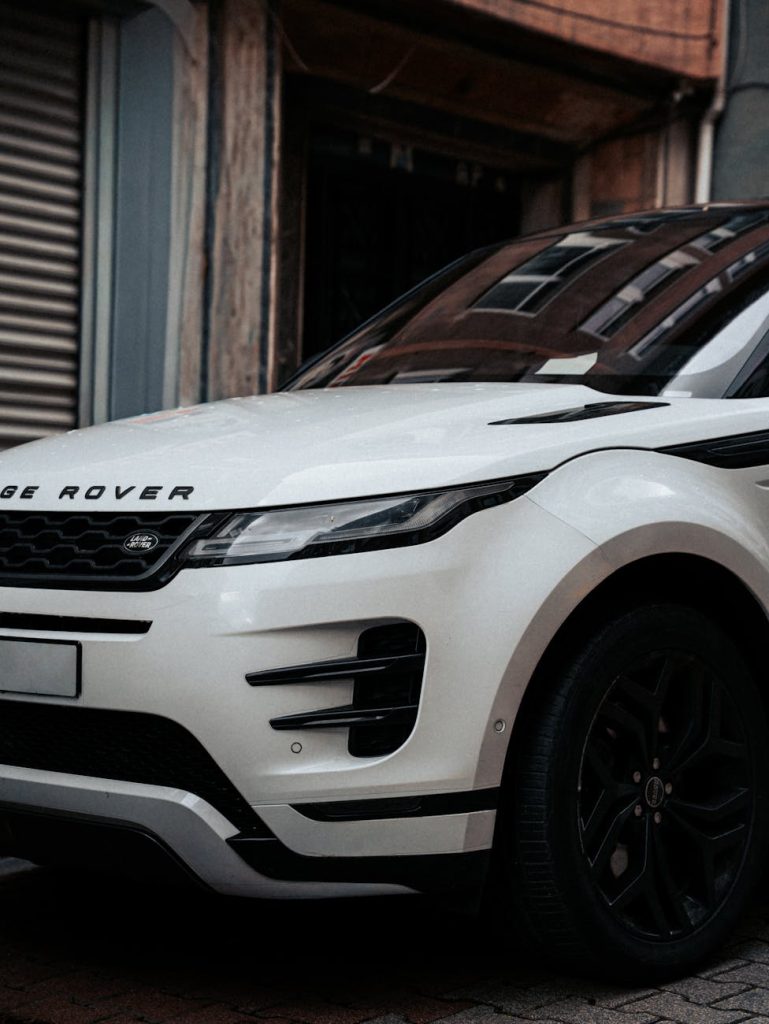
The Evoque spans multiple powertrains (commonly 2.0 Si4 petrol and 2.2/2.0 diesel variants, depending on year/market), and the fan logic differs slightly across generations and engine management calibrations. The good news: the right diagnosis is usually straightforward with the correct checks and, when needed, JLR-level diagnostics such as Pathfinder or SDD.
🔧 Recommended Professional Tool
Cooling System Diagnostic ToolsProfessional coolant tester and infrared thermometer for accurate overheating diagnosis.
✔ Recommended by automotive technicians ✔ Suitable for BMW, Mercedes, VAG & JLR platforms ✔ Fast international shipping
2. Causes
A cooling fan running after shutdown typically happens for one of these reasons:
Normal post-shutdown heat management
- After a hot drive, heat “soaks” into the engine bay, raising coolant and under-bonnet temperatures even after the engine stops.
- The fan may run briefly to prevent hotspots, protect turbo components (where fitted), and reduce thermal stress.
High coolant or oil temperature at shutdown
- Hard driving, towing, long motorway climbs, or a hot day can trigger a timed fan run-on.
- On some calibrations the fan will run longer if temperatures were near the upper range when you switched off.
A sensor reporting implausible temperatures
- Coolant temperature sensor or cylinder head temperature estimation errors can trigger a precautionary fan command.
- Intake air temperature or ambient temperature sensor faults can also influence fan strategy.
Cooling system efficiency problems
- Low coolant level, trapped air, partially blocked radiator, or a sticking thermostat can cause higher temperatures than normal.
- On some Evoque models, a weak water pump (or early signs of failure) can lead to heat management issues.
Fan control module / fan assembly faults
- Many modern vehicles integrate fan control electronics into the fan assembly.
- A failing control module can “latch” the fan on, run at incorrect speeds, or ignore sleep commands.
Electrical issues preventing sleep mode
- A relay sticking (where applicable), wiring chafing, water ingress in connectors, or a CAN/LIN communication fault can keep the fan energized.
- Battery voltage issues can cause odd fan behaviour, especially if the vehicle has been standing.
3. Symptoms
The fan running after shutdown can show up in a few distinct ways:
- Fan runs for 1–5 minutes, then stops (often normal after hot operation).
- Fan runs 10–20 minutes repeatedly even after gentle driving (more suspicious).
- Fan runs at high speed immediately after key-off regardless of temperature.
- Battery drain: slow cranking or “low battery” warnings after the car sits overnight.
- Temperature gauge fluctuations, heater output inconsistent, or a “coolant temperature high” message.
- Check engine light and stored fault codes related to cooling, temperature sensors, or fan control.
4. How to diagnose
You can do some useful checks at home, then confirm with proper diagnostics if needed.
Basic owner checks (no tools)
- Note the context: Was it a hot day, heavy traffic, towing, or a motorway run?
- Time it: If it reliably stops within a few minutes, it’s often normal.
- Check coolant level (only when cold): Low coolant can raise operating temps and trigger longer fan run-on.
- Listen to the fan speed: A gentle run-on is different from full-speed “jet engine” operation.
Scan for fault codes
A simple OBD reader can help, but for Evoque-specific accuracy, a specialist will use:
- Pathfinder (newer JLR platforms) or SDD (many earlier models)
Ask for:
- Stored and pending DTCs related to coolant temperature, fan control, thermostat performance, or sensor plausibility.
- Live data: coolant temp, ambient temp, requested fan speed vs actual fan speed, and battery voltage.
Cooling system checks
A workshop can quickly confirm:
- Cooling system pressure integrity (leaks)
- Thermostat operation and warm-up curve
- Radiator airflow issues (debris, damaged fins)
- Water pump function (flow and any noise/play where accessible)
Electrical and module checks
If the fan runs excessively or randomly:
- Inspect fan connector and harness for corrosion/water ingress
- Check for communication faults
- Verify whether the fan control module is receiving a “run” command or is stuck on
5. How to fix
The fix depends on whether the behaviour is normal or fault-driven.
If it’s normal run-on
- No repair is needed.
- Ensure the coolant level is correct and the radiator area is clean (leaves and road debris can reduce efficiency).
If coolant level is low or there’s air in the system
- Top up with the correct JLR-approved coolant mix (don’t mix random types).
- Properly bleed the system (often requires a vacuum fill tool to avoid air pockets).
- If coolant is low, find the leak—topping up is not a solution.
If a thermostat is sticking or slow
- Replace the thermostat assembly as required.
- A thermostat that doesn’t regulate correctly can cause higher temps at shutdown and longer fan operation.
If a temperature sensor is faulty
- Replace the relevant sensor and clear codes.
- Confirm with live data that readings are plausible from cold start through warm-up.
If the fan assembly/control module is failing
- Replace the fan assembly (common modern solution).
- Confirm correct operation: commanded speed tracks actual speed; fan shuts down after the correct time.
If electrical issues are preventing sleep
- Repair wiring, connectors, or any damaged insulation.
- Address battery condition (weak batteries can trigger a cascade of odd behaviour on modern vehicles).
- Ensure software updates are applied if JLR bulletins indicate revised cooling/fan strategies.
6. Repair costs
European repair pricing varies by region and labour rate, but these are realistic ballparks (parts + labour):
- Coolant top-up and basic inspection: €40–€120
- Cooling system pressure test + diagnostic scan: €120–€250
- Thermostat replacement: €350–€750
- Coolant temperature sensor replacement: €180–€400
- Radiator replacement (if blocked/leaking): €600–€1,200
- Water pump replacement (where applicable): €500–€1,100
- Cooling fan assembly (with integrated control module): €550–€1,400
- Electrical diagnosis and harness repair: €150–€600 (can rise if damage is extensive)
- Battery replacement + registration/coding (if needed): €200–€450
If you’re comparing brands: BMW owners may be familiar with ISTA-guided test plans, Mercedes with Xentry, and VW Group with ODIS. The Evoque equivalent is Pathfinder/SDD—the key is guided diagnostics and live data rather than guesswork.
7. Prevention tips
- Keep coolant at the correct level and use the correct specification fluid.
- Clean debris from the radiator/intercooler area (carefully; fins bend easily).
- Avoid repeated short trips where possible; short cycling can increase moisture and deposit buildup, raising thermal stress.
- Watch the heater performance: weak cabin heat in winter can hint at low coolant or air pockets.
- Replace the battery proactively if it’s weak; undervoltage causes control modules to behave unpredictably.
8. When to see a mechanic
Book a professional inspection if:
- The fan runs more than 10–15 minutes after most drives, especially gentle ones.
- The fan runs at full speed with no clear reason (cool day, short trip).
- You notice coolant loss, sweet smells, damp undertrays, or repeated top-ups.
- There are temperature warnings, poor heater output, or limp-home behaviour.
- You have battery drain symptoms (slow start, warning messages, repeated low-voltage faults).
A competent independent JLR specialist with Pathfinder/SDD can usually pinpoint whether the fan is being commanded on (a “real” thermal request) or stuck on due to hardware/electrical faults.
9. Frequently Asked Questions
Frequently Asked Questions
Is it normal for the Evoque cooling fan to run after the engine is turned off?
Yes, it can be normal after a hot drive because heat soak raises temperatures once coolant circulation stops. The fan may run briefly to reduce hotspots and protect components. If it stops within a few minutes and there are no warnings, it’s usually not a problem.
How long is “too long” for the fan to keep running after shutdown?
If the fan regularly runs longer than about 10–15 minutes after normal driving, it’s worth investigating. Consistent long run-times can indicate a cooling efficiency issue, incorrect sensor readings, or a fan control fault. Also pay attention to repeated overnight battery weakness.
Can this drain my battery?
Yes, especially if the fan runs for extended periods or switches on repeatedly after the vehicle is parked. A healthy system typically won’t drain a good battery, but an aging battery can be pushed over the edge. If you notice slow cranking, have the battery tested and check for stored cooling/fan faults.
What’s the most common repair if the fan won’t stop?
A failing fan assembly with an integrated control module is a common culprit on modern vehicles, including the Evoque. However, low coolant, a thermostat issue, or a sensor fault can also keep the fan commanded on. Proper diagnosis with Pathfinder or SDD helps avoid replacing parts unnecessarily.
Should I stop driving the car if the fan keeps running after shutdown?
If there are no temperature warnings, no coolant loss, and the fan run-on is brief, you can usually keep driving. If the temperature warning light appears, coolant level drops, or the fan runs at high speed for long periods, reduce driving and get it checked promptly. Overheating can cause expensive damage if ignored.