1. Introduction
Brake judder at highway speed on a Mercedes W177 A200 is one of those problems that can make an otherwise refined car feel nervous and “worn out” in seconds. You’ll typically notice it most when braking from 90–130 km/h, where the steering wheel, brake pedal, or even the whole cabin seems to vibrate. Because the W177 is sensitive to wheel balance and brake condition—and because many A200s spend their lives doing mixed city and motorway driving—this issue is common enough to deserve a clear, owner-friendly explanation.
Recommended Tool: Professional OBD2 Scanner
Recommended Tool: Premium Brake Pads
Recommended Tool: OEM Suspension Components
The key point: brake judder is not always “warped discs.” On modern cars (including the W177), it’s often caused by uneven friction material transfer onto the disc surface, minor runout amplified by installation errors, or suspension/wheel issues that only show up during braking. The good news is that a correct diagnosis usually leads to a straightforward fix.
🔧 Recommended Professional Tool
Brake System UpgradePremium brake pads and diagnostic tools for vibration and braking issues.
✔ Recommended by automotive technicians ✔ Suitable for BMW, Mercedes, VAG & JLR platforms ✔ Fast international shipping
2. Causes
Brake judder at highway speed generally comes from one or more of the following:
Brake disc and pad-related causes
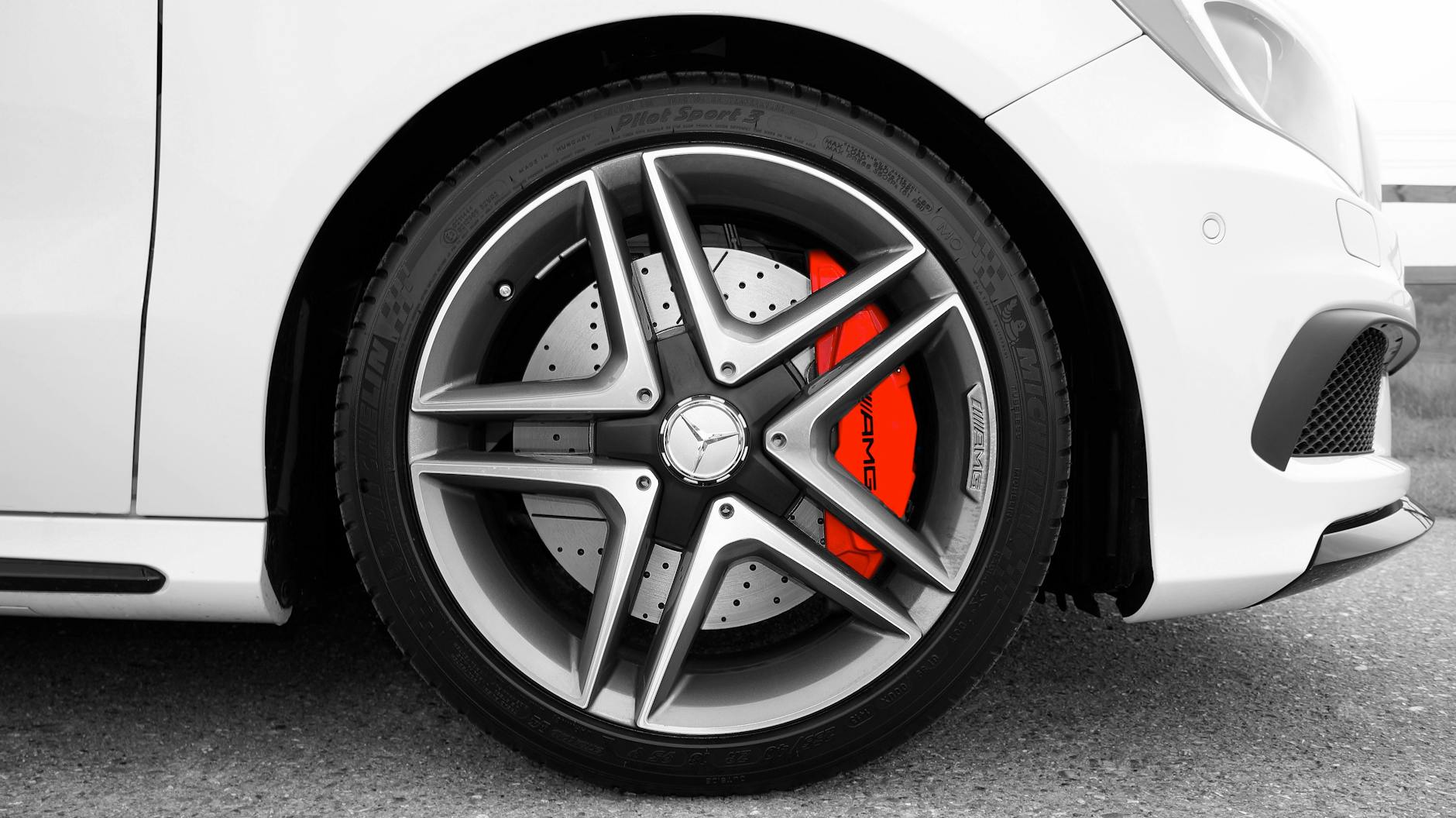
- Disc Thickness Variation (DTV): The disc isn’t uniformly thick due to uneven wear or deposits, causing the caliper to move in and out as the wheel rotates.
- Uneven pad material transfer (often called “pad deposits”): Hot braking followed by holding the pedal at a standstill can imprint pad material onto one spot on the disc.
- Disc runout (not sitting true): Rust, dirt, or incorrect wheel bolt tightening can prevent the disc from sitting perfectly flat on the hub.
- Low-quality or mismatched parts: Cheap discs/pads or mixing aggressive pads with standard discs can create vibration and noise.
Hub, wheel, and installation causes
- Corrosion on the hub face: Even a thin layer of rust can cause measurable runout.
- Incorrect wheel bolt torque or sequence: Uneven clamping forces can distort the disc or create runout over time.
- Wheel imbalance or bent wheel: Often misdiagnosed as brake issues because vibration feels similar, but braking makes it more noticeable.
- Tyre defects (flat spots, separation, uneven wear): Can mimic brake judder, especially at motorway speeds.
Chassis-related causes (less common but important)
- Worn front control arm bushes or ball joints: Braking loads expose play, causing shake.
- Loose or worn wheel bearings: Can allow the disc/wheel assembly to wobble under braking.
- Caliper slider issues: Sticky slider pins or uneven caliper movement can lead to uneven pad wear and DTV.
3. Symptoms
Owners usually report a combination of these:
- Steering wheel shake during braking, strongest between 90–130 km/h
- Brake pedal pulsation (a rhythmic “push back” under your foot)
- A shudder felt through the seat/floor under medium braking
- Braking feels fine at low speed but rough at motorway speed
- Sometimes a brief squeal or scraping after heavy braking
- In some cases, the issue appears shortly after new discs/pads were fitted (often an installation/run-in problem)
Note: If the ABS warning light is on, or you feel vibration only during emergency braking on poor grip, that may be ABS operation—not judder.
4. How to diagnose
A good diagnosis avoids replacing parts unnecessarily. You can do some checks at home, but a workshop can confirm with measurements.
Quick owner checks (no special tools)
- Road test carefully: Does the vibration happen only when braking, or also when cruising?
- Cruising vibration suggests wheels/tyres.
- Braking-only vibration suggests brakes or front suspension.
- Check wheel bolt torque history: If wheels were recently removed (tyres, puncture repair), incorrect torquing is a common trigger.
- Visual inspection through the wheel:
- Look for heavy lip on the disc edge, blue heat spots, or patchy disc face.
- Uneven pad wear can sometimes be seen without removing the wheel.
Workshop diagnosis (recommended)
A competent workshop will typically:
- Measure disc runout with a dial gauge at the disc face.
- Measure disc thickness variation with a micrometer at multiple points around the disc.
- Inspect hub face for corrosion and check the disc seating surface.
- Check caliper sliders and piston movement for sticking.
- Check suspension joints and bushes for play under braking loads.
Using Mercedes diagnostics
Judder is usually mechanical, but it’s still worth scanning:
- Xentry can check for stored brake/ESP faults, brake pressure sensor plausibility issues, or steering angle calibration problems that may confuse the feel of braking.
- If the car has driver assistance features sensitive to wheel speed signals, a scan can rule out sensor or module faults.
5. How to fix
The correct fix depends on what the measurements show.
If disc runout is the main issue
- Remove the disc and clean the hub face thoroughly (rust scale is a common culprit).
- Ensure the disc mating surface is clean and flat.
- Refit using correct procedure and torque settings.
- In some cases, a workshop may index-match the disc to the hub (rotating the disc position) to minimise runout.
If DTV or pad deposits are the issue
- If discs/pads are still within spec and deposits are mild, a workshop may attempt a proper bed-in procedure or controlled “cleaning” drive cycle.
- If vibration persists, the reliable solution is new discs and pads (front axle most commonly).
- Avoid mixing unknown pad compounds with standard discs; use reputable OEM-quality parts.
If calipers or sliders are sticking
- Remove, clean, and lubricate slider pins with correct high-temperature brake grease.
- Replace damaged slider boots and, if necessary, rebuild/replace the caliper.
- Sticky calipers often cause one pad to wear faster and can quickly ruin new discs.
If wheels/tyres or suspension are contributing
- Balance wheels and check for bends or out-of-round tyres.
- Consider a road force balance if available.
- Replace worn control arm bushes/ball joints if there’s play. A W177 with tight suspension components should brake smoothly even with firm inputs.
Important installation details (often missed)
- Always tighten wheel bolts in a star pattern and torque to spec.
- Avoid holding the brake pedal hard after a very hot stop; use the parking brake carefully or let the car creep slightly to avoid imprinting pads.
- Perform a correct pad/disc bed-in after replacement.
6. Repair costs
Costs vary by country, parts choice (OEM vs quality aftermarket), and workshop rates. Typical European ranges:
- Front discs + pads (quality OEM-equivalent): €350–€650 parts + labour
- Front discs + pads (genuine Mercedes parts): €550–€900 fitted
- Clean hub faces + measure runout (diagnosis + refit): €80–€180
- Caliper slider service (per axle): €120–€250 (more if parts needed)
- Replace one front caliper (if seized): €350–€700 fitted
- Wheel balance (set of 4): €40–€90
- Front control arm/bush replacement (if worn): €300–€700 depending on scope + alignment
- Wheel alignment (after suspension work): €90–€180
If you’ve already replaced discs and pads and the judder remains, insist on runout/hub checks before buying more brake parts.
7. Prevention tips
- Bed in new brakes properly: Follow the pad/disc manufacturer guidance; avoid hard stops immediately after fitting.
- Avoid “hot stop clamping”: After a heavy motorway stop, don’t sit with the pedal firmly pressed for long—this can cause deposits.
- Torque wheels correctly: Especially after tyre changes. Uneven torque can introduce runout.
- Keep hubs clean at brake service: A few minutes cleaning can prevent months of vibration.
- Use good parts: Reputable brands and correct pad type for your driving style reduce the chance of deposits and noise.
- Don’t ignore early signs: Light vibration often becomes heavier and can accelerate pad/disc wear.
8. When to see a mechanic
Book a professional inspection if:
- The steering wheel shakes noticeably under braking from motorway speeds
- The brake pedal pulses strongly (and ABS isn’t activating)
- The car pulls left/right under braking
- You smell burning, notice excess brake dust on one wheel, or suspect a sticking caliper
- You recently fitted new brakes and the judder started immediately (often a runout or bedding issue)
A workshop with the right tools can measure runout and DTV quickly, and a scan with Xentry can rule out brake/ESP anomalies.
9. Frequently Asked Questions
Frequently Asked Questions
Is brake judder on a W177 A200 always caused by “warped discs”?
Not always. Many cases are caused by disc thickness variation from uneven deposits rather than the disc physically warping. Incorrect installation, hub corrosion, or wheel bolt torque can create similar symptoms.
Why did the vibration start soon after I replaced discs and pads?
This often points to disc runout from a dirty hub face, uneven bolt tightening, or poor bedding-in. New parts can still judder if they aren’t seated flat or if pad material transfers unevenly during early use.
Can wheel balance problems feel like brake judder?
Yes, especially at highway speed, but wheel imbalance usually causes vibration even when you’re not braking. If the vibration only appears when braking, brakes or front suspension components are more likely.
Will machining (skimming) the discs fix the issue?
Sometimes, but it depends on disc thickness and the underlying cause. If the hub face is corroded or a caliper is sticking, skimming may only provide a temporary improvement before the judder returns.
Is it safe to keep driving with brake judder?
Light judder may not be immediately dangerous, but it can increase stopping distances and worsen wear over time. If the vibration is strong, accompanied by pulling, or you suspect a sticking caliper, have it checked promptly.