1. Introduction
A clunking noise from the front suspension is one of those issues that can make a modern European car feel suddenly “old,” even if it drives fine otherwise. On BMW, Mercedes, Audi, VW Group (VW, Audi, SEAT, Škoda), and JLR models, the front end is packed with joints, bushings, links, and mounts designed to sharpen handling while isolating bumps. The downside is that wear in any one component can create a knock, thud, or rattle that seems to come from everywhere at once.
Recommended Tool: Professional OBD2 Scanner
Recommended Tool: Premium Brake Pads
Recommended Tool: OEM Suspension Components
This guide is written for everyday owners—not mechanics—so you can understand the most common causes, what to look for, how diagnosis is done (including when dealer-level diagnostic tools like ISTA, Xentry, ODIS, Pathfinder, or SDD help), and what realistic repairs typically cost.
🔧 Recommended Professional Tool
BMW N20 Diagnostic & Timing ToolsProfessional tools for BMW N20 engine service
✔ Recommended by automotive technicians ✔ Suitable for BMW, Mercedes, VAG & JLR platforms ✔ Fast international shipping
2. Causes
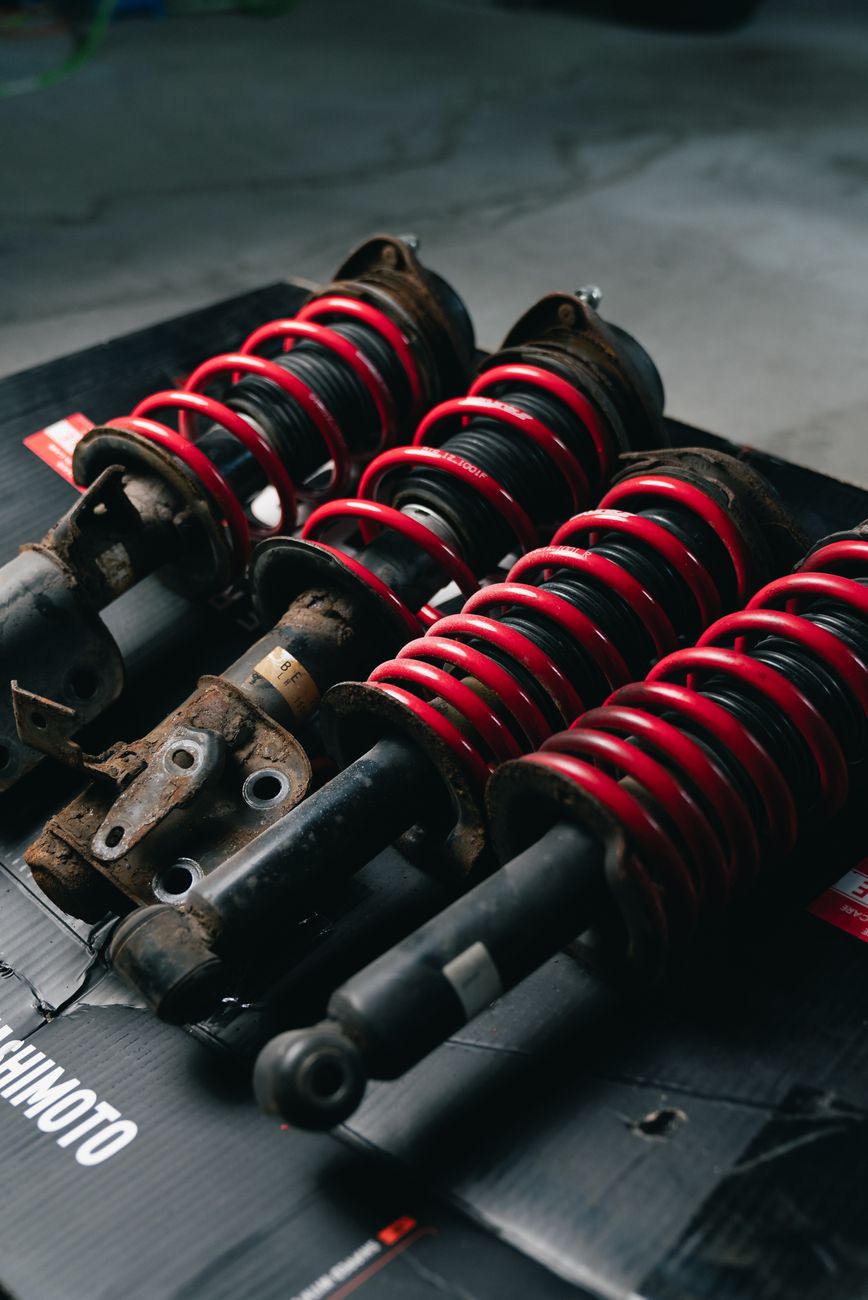
Front suspension clunks usually come from “play” (movement) where there shouldn’t be any. Common causes across these brands include:
- Anti-roll bar (sway bar) drop links
Ball joints inside the link wear and knock over small bumps. - Control arm bushings and ball joints
BMW front thrust arms, Audi/VW multi-link arms, and JLR lower arms commonly develop bushing cracks or ball joint play. - Top mounts / strut mounts and bearings
A worn mount can clunk on steering input or sharp compression. - Loose or shifting subframe hardware
Less common, but critical: loose subframe bolts, worn subframe bushes, or movement after accident repairs. - Steering rack or tie-rod play
Inner tie rods, outer tie rods, or rack mounts can knock, especially at parking speeds. - Shock/strut internal wear
A damper can develop internal play; adaptive dampers (e.g., Audi Magnetic Ride, BMW EDC, Mercedes ADS) can also rattle when worn. - Brake-related noises mistaken for suspension
Loose caliper carrier bolts, worn pad clips, or shifting pads can create a “clunk” that feels like suspension. - Drivetrain mounts (sometimes misdiagnosed as suspension)
A worn engine mount (e.g., BMW N20/N55 cars) or gearbox mount (ZF 8HP, DSG) can cause a thud on load changes that owners describe as “front suspension.”
3. Symptoms
A true suspension clunk has patterns. Note when it happens:
- Clunk over small sharp bumps (pothole edges, cobbles): often drop links, top mounts, or loose hardware.
- Clunk on slow steering or parking manoeuvres: often top mount bearing, tie rods, or rack play.
- Single “thud” when braking or pulling away: often control arm rear bushings (movement under load), sometimes engine/gearbox mounts.
- Noise worse in cold weather: rubber bushes and mounts can stiffen and reveal play.
- Steering wander or vague turn-in, uneven tyre wear: points toward control arms, alignment, or ball joints.
4. How to diagnose
You can do a surprising amount at home, but the best results come from a structured check and, if needed, a workshop lift inspection.
Owner checks (safe, basic)
- Recreate the noise: drive the same road at the same speed. Note if it happens on compression, rebound, braking, or steering.
- Bounce test: push down firmly on each front corner. A clunk suggests top mounts or internal damper issues (not definitive).
- Visual tyre check: look for cupping/scalloping or inside-edge wear (common on worn control arms).
- Listen at low speed: windows down over a rough car park surface—drop links often show up here.
Workshop checks (typical process)
A good independent specialist will usually:
- Road test to reproduce noise and isolate left/right.
- Lift inspection with pry bar to check for play in:
- Drop links
- Ball joints
- Control arm bushings
- Tie rods
- Rack movement
- Check torque and witness marks on subframe bolts and suspension fasteners.
- Inspect top mounts for cracking, collapsed rubber, or bearing roughness.
- Rule out brakes: confirm caliper carrier bolts are tight and anti-rattle hardware is intact.
Where diagnostic tools help
Clunks are mostly mechanical, but scan tools matter when adaptive systems are involved:
- BMW ISTA: checks for EDC/Adaptive M Suspension faults, steering angle sensor issues, and can guide test plans.
- Mercedes Xentry: useful for AIRMATIC/ADS diagnostics, ride height sensors, and chassis fault codes.
- VAG ODIS: helps with DCC (Dynamic Chassis Control), steering rack basic settings, and guided functions.
- JLR SDD/Pathfinder: for adaptive dampers, air suspension, and ride height calibration.
If your car has adaptive dampers and you replace a component, calibration or basic settings may be required to prevent warning lights or mismatched damping.
5. How to fix
Fixes depend on the confirmed source. Avoid guessing—replacing random parts can easily cost more than doing one correct repair.
Common, high-success repairs
- Replace drop links (pair recommended)
Quick win if the noise is light and repetitive over small bumps. Use quality parts; cheap links often fail early. - Replace worn control arms or bushes
Many modern arms are replaced as complete units (arm + ball joint + bush). On some BMWs, front thrust arm bushings are frequent culprits; on Audi/VW multi-link, one arm can knock while others look fine—many owners choose a matched set for consistent handling. - Replace top mounts / strut bearings
Often paired with new shocks if mileage is high. If you’re already paying for strut removal, it can be cost-effective to refresh mounts and bearings at the same time. - Tighten/replace hardware and correct installation issues
Suspension bolts must often be torqued at “ride height.” If bushes were tightened while the suspension hung down, they can bind and fail early, causing knocks and poor ride. - Address steering components
Tie rods are straightforward; steering racks are not. If rack play is confirmed, ensure it’s truly internal rack wear and not loose mounts or a subframe issue.
Alignment matters
After control arm, subframe, or steering work, get a proper 4-wheel alignment. On cars with driver-assist systems, some models require steering angle calibration or ADAS checks after alignment—especially VAG and JLR.
6. Repair costs
Prices vary by country and labour rates, but these ranges are realistic for many European markets (parts + labour):
- Drop links (front pair): €120–€280
- Single control arm (one side): €250–€600
- Front control arm kit (both sides, multiple arms on multi-link cars): €700–€1,600
- Top mounts + bearings (both sides): €250–€650 (more if combined with shocks)
- Front shocks/struts (pair, standard): €500–€1,200
- Adaptive damper (each): €700–€1,800 (plus programming/calibration if needed)
- Tie rods (inner + outer on one side): €200–€450
- Steering rack replacement: €1,200–€2,800 (can be higher on some models)
- Wheel alignment: €80–€180
- Subframe bushing replacement: €600–€1,800 (labour heavy)
Tip: If your car uses a ZF 8HP or DSG and you feel a “thud” on take-off, don’t assume it’s the gearbox—mounts or suspension bush movement can mimic drivetrain issues and cost far less to fix.
7. Prevention tips
You can’t prevent all wear, but you can slow it down and catch it early:
- Avoid kerb impacts and deep potholes where possible; a single hit can damage a ball joint or bend an arm.
- Maintain correct tyre pressures; underinflation increases bushing and joint stress.
- Don’t ignore early noises—a small drop-link rattle can mask a developing ball joint problem.
- Get alignment checked after tyre changes or suspension knocks; poor alignment accelerates bushing wear.
- Use quality parts (OEM or reputable OEM-equivalent). Cheap rubber and joints often fail quickly.
8. When to see a mechanic
Book a workshop visit promptly if:
- The clunk is accompanied by steering pull, wandering, or vibration
- You notice uneven tyre wear or the steering wheel is no longer centred
- The noise worsens rapidly or appears after a pothole strike
- There’s any sensation of the wheel “shifting” on braking or turning
- A warning light appears for adaptive suspension, steering, or stability control (scan with ISTA/Xentry/ODIS/Pathfinder/SDD as appropriate)
Suspension play is a safety issue. A worn ball joint or tie rod can progress from noisy to dangerous.
9. Frequently Asked Questions
Frequently Asked Questions
Why does the clunk only happen at low speed over small bumps?
This pattern commonly points to drop links, top mounts, or brake hardware rather than major control arm failure. Small, sharp inputs make looseness “tap” repeatedly. A lift inspection usually confirms it quickly.
Can worn control arm bushings cause a clunk when braking?
Yes. When the bushing tears or softens, the wheel can shift fore/aft under braking, creating a single thud and sometimes a brief steering wobble. Many BMW and VAG models show this clearly during a pry-bar test.
Will a diagnostic scan show what’s clunking?
Not usually, because most clunks are mechanical wear without an electronic fault. Scans become useful when adaptive dampers, air suspension, or steering modules are involved, or when calibration is needed after repairs. Tools like ISTA, Xentry, ODIS, Pathfinder, or SDD help confirm related system status.
Is it okay to replace only one side (one drop link or one arm)?
You can, but it depends on the part and the car. Drop links are often best replaced in pairs because the other side is usually close behind and the labour overlap is small. For control arms, replacing one worn arm is acceptable if the rest are confirmed tight, but handling can feel uneven on higher-mileage cars.
Could the noise be from the engine or gearbox mounts instead of suspension?
Yes, especially if the noise happens during take-off, gear changes, or on/off throttle rather than over bumps. Cars with engines like BMW N20/N55 or diesels like Mercedes OM651 can transmit mount knocks into the front structure. A mechanic can differentiate mount movement from suspension play during an inspection.