1. Introduction
A rough idle combined with a check engine light on a Mercedes with the M274 petrol engine can be alarming—especially when the car still drives “mostly fine” once you’re moving. For many everyday owners, this issue shows up as a shaky idle at traffic lights, occasional misfires, or a sudden drop in smoothness when the engine is warm. One of the most common real-world causes on the M274 is a failing PCV (Positive Crankcase Ventilation) valve system.
Recommended Tool: Professional OBD2 Scanner
Recommended Tool: Cooling System Diagnostic Tools
Recommended Tool: Transmission Diagnostic Tools
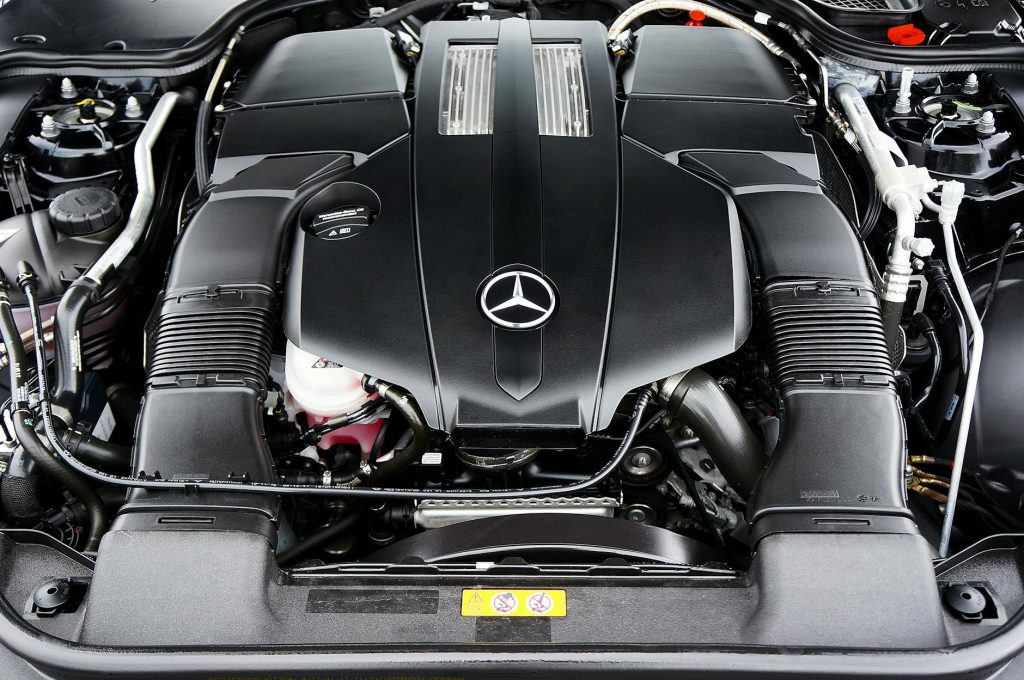
The PCV system controls crankcase pressure and routes blow-by gases back into the intake to be burned cleanly. When it fails, the engine can start pulling in unmetered air or experience incorrect crankcase pressure, which upsets the fuel mixture. On modern Mercedes engines, that quickly triggers fault codes and drivability problems. The good news: it’s usually diagnosable without guessing, and repairs are often straightforward compared with deeper fuel or timing issues.
🔧 Recommended Professional Tool
Cooling System Diagnostic ToolsProfessional coolant tester and infrared thermometer for accurate overheating diagnosis.
✔ Recommended by automotive technicians ✔ Suitable for BMW, Mercedes, VAG & JLR platforms ✔ Fast international shipping
2. Causes
On the M274, PCV-related rough idle issues typically come from a few specific failure points:
- Failed PCV valve/diaphragm (commonly integrated into a cover/assembly)
A torn diaphragm or stuck valve can create a vacuum leak and incorrect crankcase ventilation. - Cracked or leaking breather hoses
Rubber and plastic lines harden with heat cycles, especially on turbocharged engines. - Leaking intake system connections
When the crankcase ventilation line connects into the intake, a poor seal can behave like a vacuum leak. - Oil separator issues (part of the ventilation system on some versions)
Excess oil mist can contaminate sensors and hoses, and pressure regulation can drift out of spec. - Secondary effects: fouled spark plugs or coils stressed by misfires
A PCV fault can cause lean running and misfires that accelerate wear on ignition parts.
While other problems can mimic these symptoms (injectors, intake valves, MAF/MAP issues), PCV failure is a high-probability culprit on the M274 when rough idle and mixture-related fault codes appear together.
3. Symptoms
A PCV-related fault on an M274 often shows up in a consistent pattern. Common symptoms include:
- Rough idle, especially when warm or when stopping after a drive
- Check engine light (MIL) with stored mixture, misfire, or air leak codes
- Idle speed fluctuations (hunting up and down slightly)
- Whistling or honking noise from the engine bay (vacuum leak/diaphragm noise)
- Increased oil consumption or oily residue near breather connections
- Stumble on light throttle or when engaging Drive/Reverse on automatic gearboxes (e.g., 7G‑TRONIC) due to load at idle
- Fuel smell or poorer fuel economy as the ECU corrects mixture excessively
If the problem is severe, the car may go into a limited-power mode, but most owners notice it first at idle and low-speed transitions.
4. How to diagnose
You can approach diagnosis in a way that avoids unnecessary parts swapping. If you have access to Mercedes diagnostics (or a specialist does), Xentry is the reference tool, but good aftermarket scanners can also read key data.
Step-by-step checks (owner-friendly)
- Scan for fault codes and freeze-frame data
- Using Xentry, look for mixture adaptation faults, air leak indicators, and misfire counts per cylinder.
- Pay attention to whether faults appear at idle vs under load.
- Check fuel trim values at idle
- High positive trims at idle often point to unmetered air (vacuum leak/PCV issue).
- If trims improve as RPM rises, that’s another vacuum-leak clue.
- Listen for abnormal noises
- A failed diaphragm can make a distinct whistle. Noise that changes when you remove the oil cap is a hint.
- Oil cap test (quick sanity check)
- With the engine idling, carefully loosen the oil filler cap.
- If the cap is extremely hard to lift off and the idle changes dramatically, crankcase vacuum may be excessive—often linked to PCV regulation problems. (A mild change can be normal.)
- Visual inspection
- Look for split hoses, oil sweating around the breather connections, or disconnected lines.
- Smoke test (best confirmation)
- A smoke test of the intake and crankcase ventilation circuit can reveal leaks that are invisible. This is a common workshop step before authorizing parts.
What not to assume
Misfire codes do not automatically mean coils or plugs. If the underlying cause is a vacuum leak from the PCV system, replacing ignition parts may only mask the symptom temporarily.
5. How to fix
The correct repair depends on what failed, but most fixes fall into a few categories.
Common repairs
- Replace the PCV valve/diaphragm assembly (or related cover/vent module)
- On many M274 configurations, the PCV function is integrated into an assembly rather than a simple standalone valve.
- Use OEM-quality parts; cheap copies often fail early or cause incorrect crankcase pressure.
- Replace cracked breather hoses and seals
- Any brittle hose should be replaced as a set if others are the same age and heat exposure.
- Clean up oil contamination
- If oil has migrated into intake pipes, cleaning helps protect sensors and reduces future leak risk at joints.
- Reset adaptations and verify
- After repairs, a workshop using Xentry can clear codes and, if needed, reset mixture adaptations so the ECU relearns with correct airflow.
- Address collateral wear
- If the engine has been misfiring for a while, consider inspecting spark plugs (and coils if needed). The M274 is sensitive to correct ignition performance.
After repairs, a short road test with live data (fuel trims, misfire counters) is the best way to confirm the fix.
6. Repair costs
Costs vary across Europe depending on labour rates and model packaging, but these are realistic ranges (parts + labour):
- PCV/ventilation assembly replacement: €250–€700
(Parts €80–€300, labour 1.0–2.5 hours depending on access) - Breather hose(s) replacement: €120–€350
(Parts €30–€150, labour 0.5–1.5 hours) - Smoke test / diagnostic time: €60–€180
(Often billed as 0.5–1.0 hour diagnostic) - Spark plugs (if misfires persisted): €180–€450
(Parts €60–€180, labour 0.7–1.5 hours) - Ignition coils (only if confirmed faulty): €250–€700 for a set
(Parts vary widely; labour usually modest)
Dealer pricing can run higher, but independent Mercedes specialists with Xentry access often offer better value while still following correct diagnostic steps.
7. Prevention tips
PCV issues are not always preventable, but you can reduce the likelihood and catch problems early:
- Stick to high-quality oil and correct service intervals
Clean oil helps reduce sludge and diaphragm stress from contamination. - Warm the engine gently
Short trips and repeated cold starts increase moisture and blow-by load on the ventilation system. - Inspect hoses during routine servicing
Ask the garage to check breather lines for brittleness and oil seepage. - Don’t ignore early rough idle
Fixing a small leak early can prevent prolonged lean running and misfire damage. - Use quality parts
Cheap ventilation parts can create ongoing drivability issues even if they “fit.”
8. When to see a mechanic
You should book a professional diagnosis if:
- The check engine light is flashing (active misfire risk to the catalyst)
- The engine runs rough enough to shake the cabin or stall
- You smell fuel, or fuel economy drops sharply
- Fault codes return immediately after clearing
- You can’t identify the leak visually and need a smoke test
A Mercedes specialist with Xentry can quickly validate whether the issue is PCV-related or something else (injector imbalance, intake leak elsewhere, sensor plausibility). This avoids spending money on parts that don’t address the root cause.
9. Frequently Asked Questions
Frequently Asked Questions
Can I drive with a failing PCV valve on the M274?
You can often drive short distances, but it’s not advisable to ignore it. A faulty PCV can cause lean running and misfires, which can overheat and damage the catalytic converter over time. If the engine runs very rough or the light flashes, stop driving and get it checked.
What fault codes usually appear with an M274 PCV problem?
Commonly you’ll see mixture adaptation or “system too lean” type codes, sometimes paired with random/multiple misfire codes. The exact code numbers vary by model year and ECU software, which is why reading freeze-frame data with Xentry is helpful. Misfire counters often show higher activity at idle.
How do I know it’s the PCV system and not spark plugs or coils?
If the engine is rough mainly at idle and fuel trims are strongly positive at idle, that pattern points to unmetered air rather than weak ignition. A smoke test and crankcase pressure behavior can confirm PCV involvement quickly. Plugs and coils should be tested, not guessed, especially if misfires persist after fixing the leak.
Is the PCV valve a separate part on the M274?
On many M274 variants, the PCV function is integrated into a ventilation/cover assembly rather than a simple screw-in valve. That means repairs may involve replacing a larger component and associated seals or hoses. A parts lookup by VIN is the safest way to confirm what your specific engine uses.
Do I need to reset adaptations after replacing the PCV parts?
Often the car will relearn on its own after a few drive cycles, but a reset can speed up stabilization. A workshop using Xentry can clear learned mixture corrections and verify trims return to normal. This is especially useful if the car has been driving with the fault for weeks or months.