Introduction
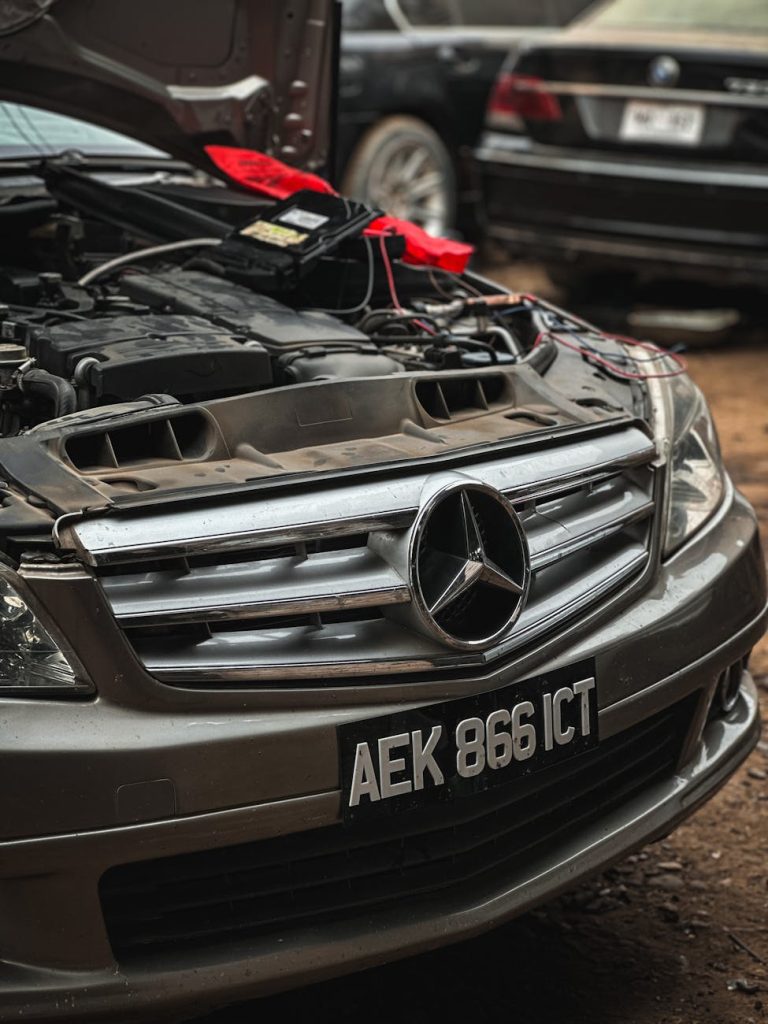
If your Mercedes C300 (W205) suddenly feels shakier at stoplights or you notice an annoying vibration through the steering wheel at idle, worn engine mounts are a common (and often overlooked) reason. Engine mounts are the parts that physically support the engine and help isolate vibration so it doesn’t transfer into the cabin. When they weaken or fail, the engine can shift slightly and the car may feel rough even if it still drives “fine.”
Recommended Tool: Professional OBD2 Scanner
Recommended Tool: Premium Brake Pads
Recommended Tool: Transmission Diagnostic Tools
For everyday owners, this issue can be confusing because the car may not throw a check-engine light, and the symptoms can mimic rough running, tire problems, or transmission issues. Understanding why vibration happens at idle—and how engine mounts fit into the picture—can help you make smarter decisions about diagnosis, repairs, and timing.
🔧 Recommended Professional Tool
Brake System UpgradePremium brake pads and diagnostic tools for vibration and braking issues.
✔ Recommended by automotive technicians ✔ Suitable for BMW, Mercedes, VAG & JLR platforms ✔ Fast international shipping
Causes
Engine mounts on the W205 C300 can wear out for several reasons. Some are simple age-related deterioration, while others are accelerated by driving conditions or secondary problems.
Normal wear and aging
Over time, the rubber and internal damping materials in the mounts degrade from:
- Heat from the engine bay
- Oil and road grime exposure
- Constant load changes as you accelerate, brake, and shift
Hydraulic mount failure (if equipped)
Many modern Mercedes models use hydraulic or fluid-filled mounts designed to absorb vibration more effectively. If the internal fluid leaks or the mount collapses, vibration isolation drops sharply—often most noticeable at idle.
Oil leaks contaminating the mounts
An oil leak from the engine (or sometimes a seep from nearby components) can soften rubber and shorten mount life. Even a slow leak can accelerate deterioration over months.
Aggressive driving and harsh road impacts
Frequent hard acceleration, abrupt stops, potholes, and curb strikes add stress to mounts. The mounts’ job is to manage movement; repeated shock loads can cause tearing or internal separation.
Misfires or rough idle stressing the mounts
If the engine isn’t running smoothly due to spark plugs, ignition coils, or fuel issues, the extra shaking can wear out mounts faster. In some cases, a worn mount can also make normal engine pulses feel worse than they really are.
Symptoms
Engine mount problems often show up most clearly when the car is stopped or transitioning between loads. Common C300 W205 symptoms include:
Vibration at idle
- Noticeable shaking in the seat, steering wheel, or floor when stopped in Drive
- Vibration that improves when you shift to Neutral or Park (less load on the mount system)
Thumps or clunks during gear changes
- A dull “thud” when shifting from Park to Drive/Reverse
- Clunking when coming to a stop or taking off
Engine movement feels excessive
- The car may feel like it “rocks” slightly on startup or shutdown
- More movement is felt when you blip the throttle
Increased cabin noise or harshness
- A droning or buzzing sensation at certain RPMs
- More vibration felt through the dashboard and pedals
Uneven vibration pattern
Mount-related vibration often feels consistent and “physical,” not like a sputter. If the vibration comes and goes dramatically or feels like the engine is stumbling, that can point more toward an engine running issue—but mounts can still be part of the problem.
How to diagnose
You don’t need to be a mechanic to gather useful clues before booking service. The goal is to confirm whether the vibration is likely mount-related and rule out obvious alternatives.
Step 1: Observe when the vibration happens
Note the exact conditions:
- Only at idle, or also while driving?
- Worse in Drive with the brake held, and better in Neutral?
- Better when the A/C is off? (A/C load can change idle characteristics and mount loading.)
Step 2: Listen and feel during start/stop
Pay attention when:
- Starting the engine: does the car shudder more than it used to?
- Shutting it off: do you feel a pronounced “shake” as the engine stops?
These can indicate the engine is moving more than it should.
Step 3: Quick visual checks (safe and simple)
With the engine off and hood open:
- Look for obvious oil leaks around the engine bay
- Check for cracked rubber or collapsed mount appearance if visible (mounts can be partially hidden)
Avoid putting hands near belts, fans, or moving components.
Step 4: Compare with engine-running symptoms
Mount vibration is often steady and tied to load. If you also have:
- Rough running, hesitation, or fluctuating idle RPM
- A check-engine light
- Fuel smell or popping sounds
…then you may have an engine performance problem that should be addressed alongside (or before) mount replacement.
Step 5: Professional confirmation
A shop can confirm mount failure by:
- Inspecting mounts for collapse or leaks (hydraulic mounts)
- Checking excessive engine movement under controlled load
- Verifying there isn’t a misfire or drivetrain issue causing similar symptoms
How to fix
Once engine mounts are confirmed as the cause, the fix is straightforward: replacement. The details matter, though, because mount quality and installation affect how the car feels afterward.
Replace the failed mount(s)
On many vehicles, if one mount has failed, the other is often not far behind. Many owners choose to replace mounts in pairs to restore balanced support and avoid paying labor twice.
Check the transmission mount as well
A worn transmission mount can create similar symptoms or amplify engine mount vibration. Replacing engine mounts while leaving a collapsed transmission mount can lead to disappointing results.
Use quality parts
Mounts are not all created equal. Poor-quality mounts can:
- Transmit more vibration even when “new”
- Fail prematurely
- Cause inconsistent idle feel
For a Mercedes C300 W205, many owners prefer OEM or high-quality OEM-equivalent parts for the best refinement.
Address contributing issues
If there’s an oil leak or an engine misfire, fix it. New mounts won’t stay “new” for long if they’re soaked in oil or constantly hammered by a rough-running engine.
Prevention tips
While mounts are wear items, you can often extend their life with a few habits and periodic checks.
- Fix oil leaks early: even minor seepage can degrade rubber over time.
- Keep up with tune-ups: spark plugs, ignition coils (when needed), and proper fuel/air service help prevent excessive engine vibration.
- Avoid repeated hard launches: smooth acceleration reduces sudden torque loading.
- Slow down for potholes and speed bumps: harsh impacts can stress mounts and surrounding components.
- Pay attention to early warning signs: mild vibration at idle can progress gradually—catching it early can prevent secondary wear and improve comfort.
When to see a mechanic
Make an appointment if you notice any of the following:
- Vibration at idle that’s getting worse over weeks or months
- Clunking when shifting into Drive or Reverse
- A strong shudder on startup or shutdown
- Any sign of leaking fluid from a hydraulic mount (or oil dripping nearby)
- A check-engine light or noticeable performance issues alongside vibration
Also seek help quickly if the car feels like the engine is moving excessively or if you hear metallic contact sounds. In severe cases, a collapsed mount can allow the engine to shift enough to stress hoses, wiring, exhaust components, or drivetrain parts.
Frequently Asked Questions
Can bad engine mounts on a Mercedes C300 W205 cause vibration only at idle?
Yes. At idle, the engine’s natural pulses are most noticeable, and worn mounts can’t isolate them effectively. Many owners feel it most when stopped in Drive with the brake held.
Will shifting from Drive to Neutral reducing vibration confirm it’s the engine mounts?
It’s a strong clue, but not a guarantee. Reduced vibration in Neutral often means the vibration is load-related, which points toward mounts or drivetrain loading. A proper inspection is still recommended to rule out rough idle causes.
Is it safe to drive with failing engine mounts?
It may be drivable for a while, but it isn’t ideal. Continued driving can worsen the mount failure and increase stress on exhaust joints, hoses, and other components. If you hear clunks or feel strong movement, get it checked soon.
Should I replace both engine mounts if only one is bad?
Often, yes. If one mount has collapsed, the other has usually aged similarly and may not be far behind. Replacing both helps restore balanced support and typically gives a smoother, more consistent feel.
Why does the vibration sometimes feel worse with the A/C on?
The A/C compressor adds load to the engine and can change idle behavior. That extra load can make weak mounts feel noticeably worse, especially at stoplights or in parking lots.