1. Introduction
A complete brake service on a Mercedes C‑Class W203 C220 CDI is one of the most worthwhile maintenance jobs you can do for safety, comfort, and long-term running costs. The W203 is now firmly in “everyday classic” territory: solid, usable, and often covering high mileages with the OM611/OM646 diesel engines. Brakes on these cars are simple compared with modern electronic systems, but age, corrosion, and mixed-quality parts can cause issues that drivers misread as “just old car behavior.”
Recommended Tool: Professional OBD2 Scanner
Recommended Tool: Premium Brake Pads
Recommended Tool: Cooling System Diagnostic Tools
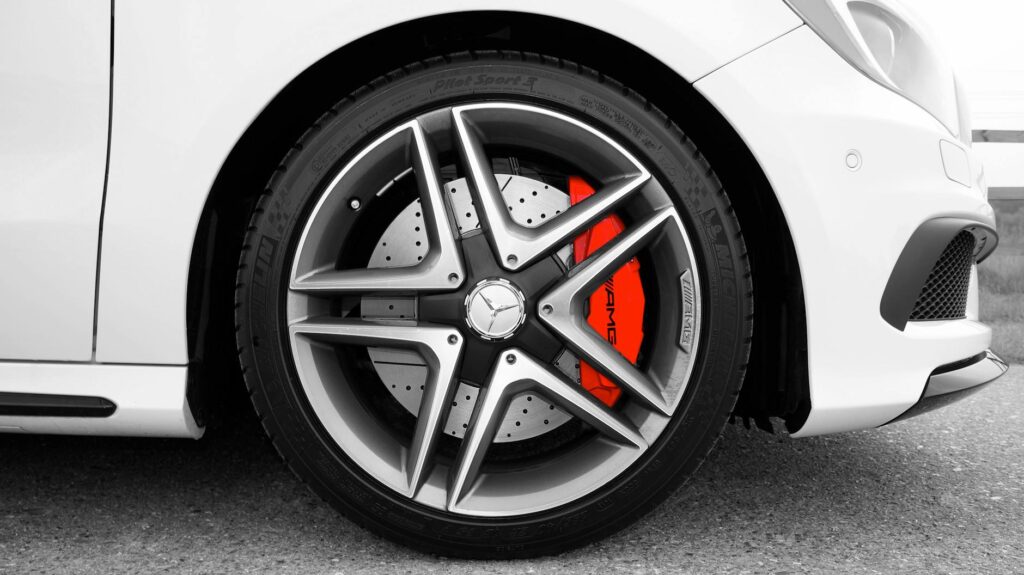
This guide is written for normal owners—not mechanics—and focuses on what a complete brake service actually involves, what commonly goes wrong on W203s, how you can diagnose problems sensibly, and what you should expect to pay in Europe for parts and labour.
🔧 Recommended Professional Tool
Cooling System Diagnostic ToolsProfessional coolant tester and infrared thermometer for accurate overheating diagnosis.
✔ Recommended by automotive technicians ✔ Suitable for BMW, Mercedes, VAG & JLR platforms ✔ Fast international shipping
2. Causes
Brake problems on the W203 usually come from wear, heat, and time rather than complex electronics. Common underlying causes include:
- Normal friction wear: pads and discs wear down with mileage, especially with city driving or towing.
- Corrosion and sticking hardware: caliper slider pins and pad carriers seize when grease dries out or water/salt gets in.
- Brake fluid aging: fluid absorbs moisture over time, reducing boiling point and increasing internal corrosion risk.
- Uneven braking loads: seized rear calipers, neglected handbrake shoes (if equipped), or mismatched parts can cause imbalance.
- ABS/ESP sensor contamination: rust on tone rings or debris near wheel speed sensors can trigger warning lights.
- Incorrect or low-quality parts: cheap discs can warp, and budget pads may squeal or dust heavily.
3. Symptoms
You don’t need to be a technician to spot early signs. Look for:
- Squealing or scraping when braking (especially at low speed)
- Vibration through the steering wheel under braking (often front disc runout or uneven pad deposits)
- Longer pedal travel or a soft/spongy pedal (air in system, old fluid, or internal seal issues)
- Car pulls to one side when braking (sticking caliper or uneven pad wear)
- Burning smell or excessive heat from one wheel after a drive (stuck caliper or handbrake issue)
- ABS/ESP warning light (wheel speed sensor, tone ring corrosion, or wiring)
- Visible lip on discs or pads close to minimum thickness
4. How to diagnose
A complete brake service starts with a structured check. You can do a lot at home with a torch, basic tools, and common sense, but always prioritize safety.
Visual and physical checks (wheel off)
- Disc condition: check for heavy rust, cracks, deep scoring, or a pronounced outer lip.
- Pad thickness: if pads are down near 3–4 mm, plan replacement soon; uneven wear suggests sticking.
- Caliper slider movement: sliders should move smoothly; seized sliders cause uneven pads and overheating.
- Brake hoses: look for cracking, swelling, or dampness near fittings.
- Leaks: check around calipers, hard lines, and the master cylinder area for wetness.
Road test clues
- Do a gentle brake test from 50–80 km/h on a quiet road. Note vibration, pulling, or pedal feel.
- After a normal drive, carefully check if one wheel area feels significantly hotter than the others (do not touch the disc).
Fluid and warning light checks
- Brake fluid age: if you don’t know when it was last changed, assume it’s overdue (many W203s are).
- If ABS/ESP lights are on, a scan tool helps. A Mercedes-capable diagnostic like Xentry/DAS can read wheel speed sensor faults and live data. Generic OBD readers often show only limited brake system information.
5. How to fix
A “complete brake service” can mean different things depending on condition, but for a W203 C220 CDI it typically includes pads, discs, fluid, and a full clean-and-lube of hardware. If there are issues, it may also include caliper rebuild/replacement, hoses, or ABS sensor work.
Standard complete service (most common)
- Replace front and rear pads and discs as needed (many owners do them as axle sets).
- Clean the pad carriers, remove rust, and fit new anti-rattle clips if applicable.
- Remove, clean, and re-grease slider pins with the correct high-temperature brake grease.
- Inspect caliper dust boots; replace if torn.
- Bleed and replace brake fluid (DOT 4 is typical; use a quality brand).
If you have vibration under braking
- Fit quality discs and pads and ensure hub faces are perfectly clean before installing discs.
- Check for hub corrosion; rust here can cause disc runout that feels like “warped discs.”
- Torque wheel bolts correctly and evenly.
If a caliper is sticking
- Free off sliders and check piston movement. If the piston is stiff or the boot is damaged:
- Replace the caliper with a quality remanufactured unit, or
- Rebuild the caliper (more labour, not always cost-effective).
- Consider replacing flexi hoses if they’re old; an internally collapsed hose can mimic a sticking caliper.
If ABS/ESP warnings appear
- Read codes with Xentry/DAS and confirm which wheel is affected.
- Inspect the wheel speed sensor wiring and the sensor seating area for corrosion.
- Clean or replace sensors as required; sometimes the real issue is rust on the tone ring or debris buildup.
6. Repair costs
Prices vary by country and parts brand, but these ranges are realistic for much of Europe (parts + labour). Costs assume an independent specialist rather than a dealer.
- Front pads + discs (one axle): €250–€450
(Quality discs/pads €120–€250, labour €120–€200) - Rear pads + discs (one axle): €220–€420
(Rear often similar labour; parts vary by brand and spec) - Brake fluid change/bleed: €70–€140
(More if seized bleed nipples or extra work needed) - Caliper replacement (one corner): €180–€350
(Reman caliper + labour + fluid top-up/bleed) - Brake hoses (pair on one axle): €120–€250
(Parts are usually modest; labour can add up) - ABS wheel speed sensor replacement: €120–€250
(Diagnosis matters—avoid guesswork)
A genuine “complete” refresh (pads, discs all round + fluid + proper cleaning) typically lands around €550–€1,000 depending on parts choice and local labour rates.
7. Prevention tips
Keeping W203 brakes healthy is mostly about preventing corrosion and catching small issues early.
- Change brake fluid every 2 years regardless of mileage.
- Wash wheels and arches in winter to reduce salt buildup.
- Avoid very cheap discs/pads; mid-range quality parts usually perform better and last longer.
- If you drive gently, do occasional firm stops (when safe) to reduce glazing and keep surfaces clean.
- After any brake work, re-check wheel bolt torque and listen for early signs like squeal or clicking.
8. When to see a mechanic
Book a professional inspection if:
- The brake pedal is soft, sinks, or changes suddenly.
- The car pulls sharply under braking or one wheel runs noticeably hotter.
- You see fluid leaks or the warning light comes on.
- You have persistent vibration even after replacing discs/pads—this may need runout measurement and hub checks.
- ABS/ESP lights stay on and you don’t have access to Xentry/DAS for proper fault tracing.
Brakes are not the system to “wait and see” on—small faults can become expensive quickly, and safety is the priority.
9. Frequently Asked Questions
Frequently Asked Questions
Should I replace pads and discs together on my W203 C220 CDI?
If discs are near minimum thickness, heavily lipped, or scored, replacing them with pads as a set is the best option. New pads on old discs can reduce performance and increase noise. If the discs are in excellent condition and within spec, pads alone can be acceptable.
Why do my new brakes squeal after a service?
Squeal is often caused by missing/incorrect anti-rattle hardware, glazed pads, or lack of proper bedding-in. Cheap pad compounds can also be noisy. A workshop can re-check fitment, apply correct brake grease to contact points (not friction surfaces), and confirm everything moves freely.
What brake fluid should I use, and how often should it be changed?
Most W203 models use DOT 4 brake fluid; stick to a reputable brand and correct specification. Fluid should typically be replaced every two years because it absorbs moisture. Old fluid can lead to a softer pedal and higher risk of brake fade under repeated braking.
Can a sticking caliper damage new discs and pads?
Yes—one seized caliper can overheat and ruin a new pad/disc set quickly, sometimes within a few hundred kilometres. It can also cause the car to pull and increase fuel consumption. If you suspect sticking, fix the caliper and check the hose and sliders before fitting new friction parts.
Do I need diagnostic tools like Xentry for brake work?
For basic pad/disc replacement and fluid changes, you can manage without diagnostics. However, if the ABS/ESP warning light is on, Xentry/DAS is extremely helpful to identify the exact sensor or circuit at fault and to verify live wheel speed data. This prevents unnecessary parts swapping.