1. Introduction
Few things are more frustrating than turning the key (or pressing the start button) and realizing your car won’t start—especially in the morning when you’re trying to get to work, school, or an appointment. The good news is that many no-start problems come from a handful of common causes. Understanding what’s happening, what symptoms to watch for, and what you can safely check yourself can save time, reduce stress, and help you decide when it’s time to call for help.
Recommended Tool: Professional OBD2 Scanner
Recommended Tool: Premium Brake Pads
Recommended Tool: Portable Jump Starter

🔧 Recommended Professional Tool
Cooling System Diagnostic ToolsProfessional coolant tester and infrared thermometer for accurate overheating diagnosis.
✔ Recommended by automotive technicians ✔ Suitable for BMW, Mercedes, VAG & JLR platforms ✔ Fast international shipping
2. Causes
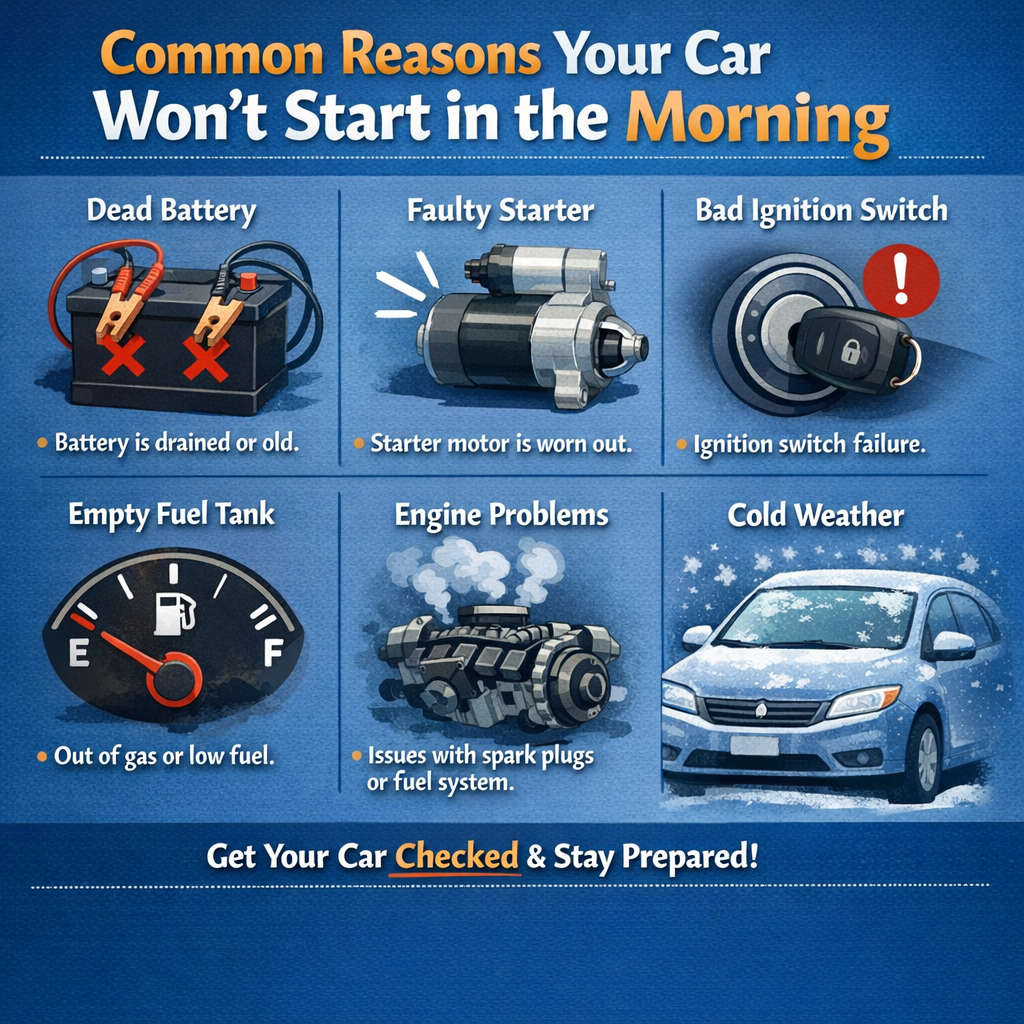
Weak or dead battery
A battery can lose charge from age, cold temperatures, lights left on, or short trips that don’t recharge it fully. Most car batteries last about 3–5 years, sometimes less in extreme climates.
Corroded or loose battery connections
Even a good battery can’t deliver power if the terminals are corroded or the cables aren’t tight. Corrosion often looks like white, green, or bluish buildup on the battery posts.
Faulty starter motor or starter relay
The starter is the electric motor that cranks the engine. Over time it can wear out. Sometimes the relay or solenoid that sends power to the starter is the real issue.
Alternator problems
The alternator charges the battery while the engine runs. If it’s weak or failing, the battery may not recharge properly. The car might drive fine one day and fail to start the next morning.
Fuel delivery issues
If fuel isn’t reaching the engine, it won’t start. Common culprits include:
- Low fuel (including inaccurate fuel gauge issues)
- Failing fuel pump
- Clogged fuel filter (more common on older designs)
- Fuel injector issues
Ignition system trouble (spark-related)
Gasoline engines need spark. Problems can include worn spark plugs, bad ignition coils, or moisture in the ignition system (more common in older vehicles).
Key, fob, or immobilizer problems
Modern cars often have anti-theft systems that require a recognized key or fob. A weak key fob battery or an immobilizer fault can prevent starting.
Safety switch or shifter/lockout issues
Automatic cars generally won’t start unless they’re in Park or Neutral. A worn neutral safety switch, shifter linkage issue, or brake pedal switch (in push-to-start cars) can stop the start command.
Extreme cold or thick engine oil
Cold weather slows battery output and makes engine oil thicker, so the starter has to work harder. Weak batteries often fail on the coldest mornings.
3. Symptoms
What you hear (or don’t hear)
- Rapid clicking: often low battery or poor battery connections
- Single click: starter relay/solenoid, starter issue, or weak battery
- No sound at all: dead battery, bad connection, ignition switch, or immobilizer issue
- Engine cranks but won’t start: fuel or spark problem is more likely than the battery
What you see on the dash
- Dim interior lights or dim headlights: battery/connection problem
- Security/immobilizer light flashing: key recognition or anti-theft issue
- Battery warning light previously on while driving: possible alternator issue
- Check engine light: could be many things, but can point toward fuel/ignition sensors
How the car behaves
- Starts with a jump, then dies later: alternator may not be charging
- Starts sometimes, not others: loose connections, starter beginning to fail, or intermittent relay/switch issue
- Strong crank but no start: fuel delivery, spark, or air-related issue
4. How to diagnose
Step 1: Check the basics safely
- Confirm the car is in Park (or Neutral for some situations) and you’re pressing the brake if required.
- Try a spare key/fob if you have one.
- Make sure you have fuel. If the gauge is near empty, add a small amount if possible.
Step 2: Look for obvious electrical clues
- Turn the headlights on. Are they bright or very dim?
- Turn the key to “On” (or press the button without starting if your car allows). Do dash lights come on normally?
Step 3: Listen carefully when you try to start
- Clicking points toward battery power issues or starter circuit issues.
- Cranking normally but no start points toward fuel/spark/immobilizer.
Step 4: Inspect the battery connections
With the engine off:
- Check for loose cables (they shouldn’t wiggle by hand).
- Look for corrosion on the terminals.
If you’re comfortable, you can gently try tightening the terminals with the correct tool.
Step 5: Try a jump start (if appropriate)
If the lights are dim or you hear rapid clicking, a jump start test can be very informative:
- If it starts with a jump, the issue is likely battery charge or battery connections.
- If it starts with a jump but later won’t restart, suspect the alternator or a battery that won’t hold a charge.
Step 6: Use a simple battery/charging test if available
Many auto parts stores will test a battery and alternator for free. A basic multimeter can also help:
- Engine off: a healthy battery often reads around 12.4–12.7V
- Engine running: charging system often reads around 13.7–14.7V
(Values vary by vehicle and conditions, but these ranges are useful for everyday checks.)
5. How to fix
If the battery is dead
- Jump start the car and drive long enough to recharge (often 20–30 minutes), but remember this may only be temporary.
- If the battery is old or repeatedly dies, replace the battery.
If battery terminals are corroded or loose
- Tighten loose terminals.
- Clean corrosion using proper battery terminal cleaner or a baking soda and water solution (avoid getting it inside the battery). Wear eye protection and gloves, and follow your owner’s manual guidance.
If the alternator is failing
- You may be able to drive briefly, but it can leave you stranded again quickly.
- The lasting fix is alternator replacement (and sometimes belt replacement), typically a shop job for most owners.
If the starter is failing
- Intermittent no-start with a click can become more frequent over time.
- The fix is usually starter motor or starter relay replacement.
If it cranks but won’t start (fuel/spark)
- If you’re out of fuel, add fuel and try again.
- For other fuel or ignition issues, repairs can range from simple (spark plugs) to more involved (fuel pump). These usually require diagnosis tools and are often best handled by a mechanic.
If the immobilizer or key/fob is the issue
- Replace the key fob battery (often a simple coin battery).
- Try your spare key.
- If the security light indicates a fault and it won’t recognize any key, it may need professional programming or repair.
6. Prevention tips
- Replace the battery proactively if it’s nearing 4–5 years old, especially before winter.
- Keep battery terminals clean and tight; check them a couple of times a year.
- If you drive short trips often, take an occasional longer drive to help recharge the battery.
- Don’t leave accessories on (lights, cabin lights, chargers) when parked.
- Address warning lights early, especially the battery/charging warning light.
- In cold climates, consider a battery blanket or parking in a garage when possible.
- Keep a compact jump starter in the car and learn how to use it safely.
7. When to see a mechanic
You should contact a mechanic (or roadside assistance) if:
- The car won’t jump start, or it starts and immediately dies.
- You smell burning, see smoke, or notice hot cables near the battery.
- You hear grinding or unusual noises during starting attempts.
- The engine cranks strongly but won’t start and you’ve confirmed fuel and tried a spare key.
- The security/immobilizer light suggests a lockout and you can’t resolve it with a fob battery or spare key.
- The problem is recurring (starts fine some days, fails others), which often points to a starter, relay, or charging issue that needs proper testing.
A no-start morning can come from something as simple as a weak battery or as complex as a fuel or anti-theft fault. The key is to observe the symptoms, perform a few safe checks, and avoid repeated long cranking attempts that can drain the battery further or overheat components. When in doubt, a quick professional diagnosis can prevent repeated breakdowns and protect the electrical system.