1. Introduction
If you’ve noticed you’re filling up more often than you used to, you’re not alone. Poor fuel economy can creep up gradually, making it easy to blame gas prices or “normal aging” of the vehicle. In reality, many common issues—some simple, some more involved—can cause your car to burn more fuel than necessary. The good news is that many of the biggest fuel-wasters are preventable or fixable with basic maintenance and a few habit changes.
Recommended Tool: Professional OBD2 Scanner
Recommended Tool: Premium Brake Pads
Recommended Tool: Cooling System Diagnostic Tools
🔧 Recommended Professional Tool
Cooling System Diagnostic ToolsProfessional coolant tester and infrared thermometer for accurate overheating diagnosis.
✔ Recommended by automotive technicians ✔ Suitable for BMW, Mercedes, VAG & JLR platforms ✔ Fast international shipping
2. Causes
Driving habits and conditions
Fuel economy is heavily influenced by how and where you drive.
- Short trips and cold starts: Engines run richer (use more fuel) until they warm up. Multiple short drives can keep your car in this less-efficient mode.
- Stop-and-go traffic: Frequent braking and accelerating wastes energy and fuel.
- High speeds: Drag increases sharply above highway speeds, and fuel economy usually drops noticeably once you’re consistently driving fast.
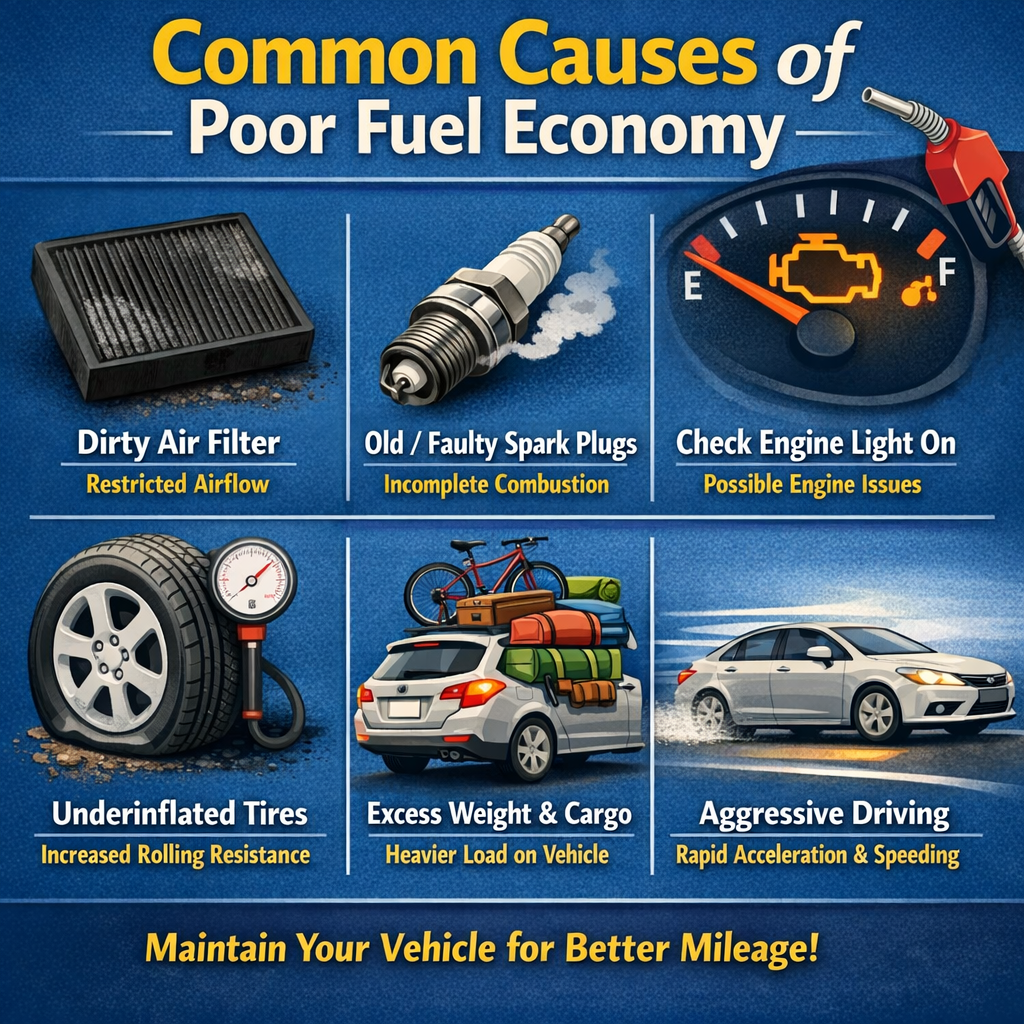
- Aggressive acceleration: Quick starts and hard passing require extra fuel.
- Long idling: Idling gets zero miles per gallon. Many modern engines don’t need long warm-ups.
Tire and alignment issues
Your tires are literally where fuel meets the road.
- Low tire pressure: Underinflated tires increase rolling resistance, forcing the engine to work harder.
- Poor alignment: If the wheels don’t point straight, the tires scrub against the road, wasting energy.
- Wrong tires or low-quality replacements: Some tires have higher rolling resistance than others, especially certain off-road or heavy-duty designs.
Engine air and fuel delivery problems
Your engine needs the right balance of air and fuel to run efficiently.
- Dirty air filter: Restricts airflow, which can reduce efficiency (especially in older vehicles) and contribute to sluggish performance.
- Faulty oxygen (O2) sensor: Helps the engine computer adjust fuel mixture. If it’s wrong, the car may run too rich (too much fuel).
- Failing mass airflow (MAF) sensor: Misreads incoming air, leading to incorrect fueling.
- Leaking fuel injectors or fuel system issues: Can waste fuel and cause rough running.
- Old spark plugs or ignition problems: Misfires and incomplete combustion reduce mileage and can damage other components.
Exhaust and emissions system faults
Modern cars use sensors and converters to keep emissions low and efficiency high.
- Catalytic converter problems: A clogged converter can restrict exhaust flow, hurting power and mileage.
- Evaporative emissions (EVAP) issues: Some faults can allow fuel vapors to escape or trigger the engine light, and in certain cases affect fuel trim.
Fluids, filters, and maintenance items
Small maintenance oversights can add up.
- Old engine oil or wrong viscosity: Oil that’s too thick creates more internal drag.
- Clogged fuel filter (if your vehicle has a serviceable one): Can reduce fuel flow, affecting performance and efficiency.
- Overdue services: Skipping routine inspections can allow minor issues to become bigger mileage drains.
Extra load and added drag
Your vehicle’s shape and weight matter.
- Carrying heavy items all the time: Extra weight requires extra fuel, especially in city driving.
- Roof racks and cargo boxes: Increase aerodynamic drag, often reducing highway mileage more than people expect.
- Windows down at speed: Can create drag; at highway speeds it may reduce efficiency.
3. Symptoms
Poor fuel economy usually comes with hints. Watch for:
- More frequent fill-ups or reduced distance per tank
- Rough idle or engine vibration at stops
- Sluggish acceleration or the car feeling “heavy”
- Check engine light (even if the car seems to run fine)
- Fuel smell around the car or in the cabin (treat as urgent)
- Uneven tire wear or the steering wheel not centered
- Higher RPM than usual at cruising speed (may relate to transmission or driving conditions)
- Black soot on tailpipe or unusually dirty exhaust (possible rich running)
4. How to diagnose
You don’t need to be a mechanic to narrow down the cause. A step-by-step approach helps.
Start with the basics you can check at home
- Track your fuel economy: Use the odometer and gallons purchased across two or three fill-ups. Apps can help, but a simple log works.
- Check tire pressure: Use a tire gauge when tires are cold. Inflate to the sticker in the driver’s door jamb (not the tire sidewall maximum).
- Look for obvious drag or load: Remove unnecessary heavy items, and consider temporarily removing roof accessories.
- Review driving patterns: Did your commute change? More traffic? More short trips? Colder weather?
Use simple observations
- Listen and feel: A rough idle, hesitation, or shudder can point to ignition or fueling issues.
- Look for tire wear patterns: Feathering, cupping, or rapid shoulder wear suggests alignment or suspension concerns.
- Smell for fuel: Any persistent fuel odor should be checked promptly.
Scan for trouble codes
An inexpensive OBD-II scanner or many auto parts stores can read codes.
- Codes related to O2 sensors, MAF, misfires, or EVAP can directly connect to mileage loss.
- Even without a check engine light, some scanners show fuel trims, which can hint if the engine is adding extra fuel to compensate for a problem.
Compare mileage changes logically
- If mileage dropped mainly on the highway, think aerodynamic drag, tire pressure, alignment, or sensor issues.
- If it dropped mainly in town, think short trips, idling, aggressive driving, or heavy loads.
5. How to fix
Fixes range from quick DIY steps to repairs best left to a shop.
Quick wins for most drivers
- Inflate tires properly and re-check monthly.
- Remove roof racks/cargo boxes when not needed.
- Clean out the trunk and remove unneeded weight.
- Reduce idling: Turn the engine off if you’ll be stopped for a while (when safe and allowed).
Maintenance items that often restore mileage
- Replace spark plugs at the recommended interval. Worn plugs can reduce efficiency even before noticeable misfires.
- Replace the engine air filter if it’s dirty. It’s inexpensive and easy for many cars.
- Use the correct engine oil viscosity and service interval per the owner’s manual.
- Perform a throttle body and MAF sensor cleaning only if appropriate for your vehicle and using the proper products; incorrect cleaning can cause damage.
Repairs that may require diagnosis
- Oxygen sensor replacement: A failing sensor can make the engine run rich and waste fuel.
- Fix vacuum leaks: Cracked hoses or intake leaks can confuse engine management and increase fuel use.
- Fuel injector service or replacement: Leaking or clogged injectors can harm economy and drivability.
- Address catalytic converter restrictions: If the converter is clogged, the underlying cause (misfires, rich running) must also be corrected.
Tire and alignment corrections
- Get an alignment if the car pulls, the wheel is off-center, or tires are wearing unevenly.
- Choose low rolling resistance tires when replacements are due, especially for commuter vehicles.
6. Prevention tips
Good fuel economy is easier to maintain than to recover.
- Check tire pressure monthly and before long trips.
- Follow the maintenance schedule for spark plugs, oil, filters, and inspections.
- Drive smoothly: Gentle acceleration and anticipating stops saves fuel and reduces brake wear.
- Combine errands to reduce cold starts and short trips.
- Keep speed reasonable on highways; small speed reductions can yield meaningful savings.
- Avoid carrying extra weight and remove unused roof accessories.
- Fix check engine lights early: Small sensor problems can turn into bigger, more expensive issues.
7. When to see a mechanic
Schedule professional help if you notice any of the following:
- Check engine light stays on or flashes (flashing suggests a serious misfire risk)
- Strong fuel smell, fuel leaks, or visible drips
- Rough running, stalling, or hesitation that doesn’t improve with basic maintenance
- Sudden, steep drop in mileage without an obvious change in driving conditions
- Persistent pulling, vibration, or rapid uneven tire wear
- Failed emissions test or repeated EVAP/emissions codes
- Overheating or temperature warnings, which can indirectly affect efficiency and engine health
A good shop can confirm the cause with scan data, smoke testing for leaks, fuel pressure testing, and a full inspection. The sooner you address poor fuel economy, the more you’ll save—and the less likely a small problem will turn into an expensive repair.