1. Introduction
Brake discs (also called rotors) on the Mercedes GLC are designed to deliver smooth, confident stopping power in everyday driving. But like any wear component, they can develop issues that affect braking feel, noise levels, and safety—often long before you expect it, especially on heavier, powerful SUVs. Whether you drive a GLC 220d with the OM651, a later GLC 300d with the OM654, or a petrol variant like the GLC 250/300 with engines such as the M274, the fundamentals are the same: discs need correct friction, correct thickness, and correct temperature management to work properly.
Recommended Tool: Professional OBD2 Scanner
Recommended Tool: Premium Brake Pads
Recommended Tool: Cooling System Diagnostic Tools
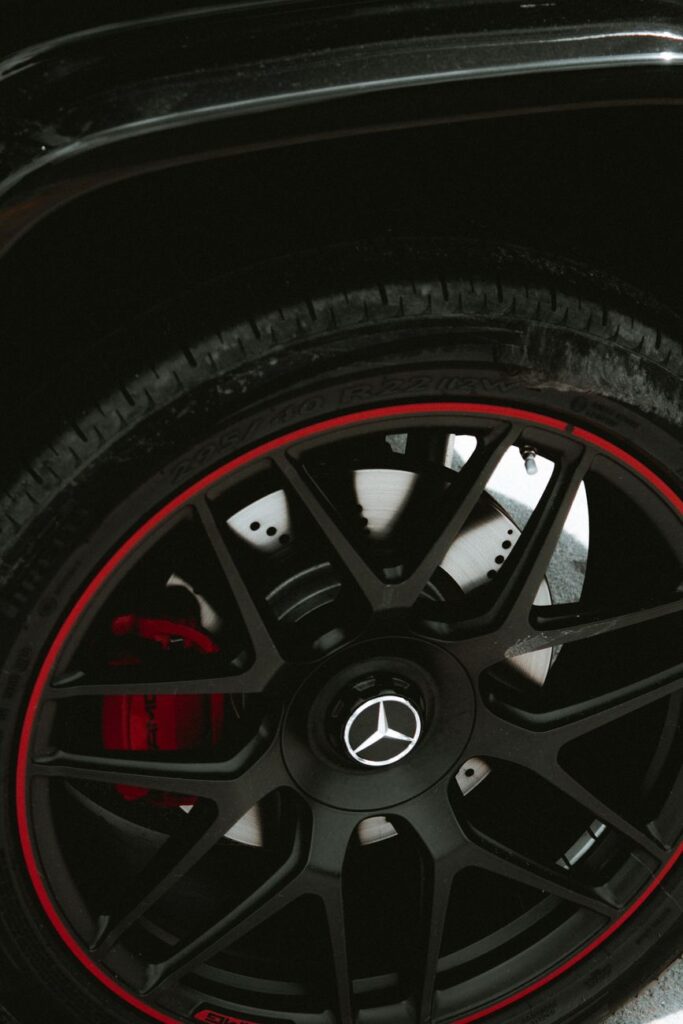
This guide is written for everyday European owners of Mercedes, BMW, Audi/VW Group, and JLR vehicles, so you’ll also see comparisons to common systems like BMW’s ZF 8HP-equipped models, Audi/VW DSG cars, and JLR platforms. The aim is practical: understand what’s going wrong, how to confirm it, what it typically costs, and how to prevent repeat problems.
🔧 Recommended Professional Tool
Mercedes OM651 Diesel ToolsAdvanced diesel diagnostic tools for OM651
✔ Recommended by automotive technicians ✔ Suitable for BMW, Mercedes, VAG & JLR platforms ✔ Fast international shipping
2. Causes
Brake disc problems usually fall into a few predictable categories. On the GLC, weight, wheel size, driving style, and corrosion patterns play a big role.
Common causes of GLC brake disc issues
- Normal wear and minimum thickness reached
Discs wear down over time; once below minimum thickness, they can overheat and distort more easily. - Disc runout (slight wobble) from installation or hub issues
Rust or dirt on the hub face, or uneven wheel bolt tightening, can create lateral runout that feels like “warped discs.” - Pad material deposits (often mistaken for warping)
Repeated heavy braking or holding the car stationary with hot brakes can transfer pad material onto the disc, causing vibration. - Corrosion and pitting
Common on cars that sit for days, do short trips, or are parked outside. Salted winter roads in Europe accelerate this. - Caliper slide pin or piston issues
A sticking caliper can overheat one disc, causing blue heat spots, cracking, and rapid wear. - Wrong parts choice (quality or specification mismatch)
Cheaper discs/pads may be more prone to noise, judder, or corrosion. Some trims also have different disc sizes and ventilation. - Driving conditions and load
Towing, frequent mountain descents, or repeated motorway braking from high speed pushes temperatures up quickly.
3. Symptoms
Disc issues can feel subtle at first. Pay attention to changes in pedal feel, steering, and noises.
Typical symptoms you may notice
- Vibration or steering wheel shimmy during braking (often at 80–120 km/h)
- Pulsing brake pedal that comes and goes depending on speed and brake pressure
- Grinding or scraping noise (can be disc edge corrosion, metal-to-metal pads, or debris)
- Squealing especially at light brake pressure (can be pad compound, glazing, or disc surface condition)
- Reduced braking confidence: longer stopping distances or inconsistent bite
- Uneven braking: car pulls slightly left/right under braking
- Visible disc surface issues: deep grooves, heavy rust lips, heat spots (blue/purple patches), or cracking
If you also see a brake warning on the dash, remember many cars trigger warnings primarily from pad wear sensors; discs can be worn or damaged without a specific “disc” warning.
4. How to diagnose
You can do a lot at home with simple checks, then confirm more precisely with measurements. Diagnostic tools help rule out related electronic issues but won’t “measure” disc condition directly.
At-home checks (safe, quick)
- Visual inspection through the wheel spokes
Look for a heavy rust lip on the outer edge, deep scoring, or patchy/shiny areas. - Feel for vibration patterns
Note whether vibration happens only when braking, and whether it’s worse at certain speeds. - Compare left vs right disc temperature (after a short drive)
Carefully hover your hand near the wheel (do not touch). One wheel much hotter can suggest a sticking caliper.
Measurement-based checks (best confirmation)
- Disc thickness
Measure with a micrometer in several spots around the disc. Compare to the minimum thickness stamped on the disc hat or listed in Mercedes documentation. - Runout check
A workshop can use a dial gauge to measure runout at the disc face. Excess runout often points to hub corrosion or installation issues. - Pad condition
Uneven pad wear (inner vs outer) often indicates caliper slide issues.
Using diagnostic tools (when relevant)
- Xentry (Mercedes) can check for related brake system faults (ABS/ESP), electronic parking brake issues (if equipped), and wheel speed sensor faults that can mimic braking irregularities.
- For comparison: ISTA (BMW), ODIS (Audi/VW), and SDD/Pathfinder (JLR) help confirm ABS/DSC faults, but disc judder is typically a mechanical diagnosis.
If the car has a driver-assistance system that uses brake interventions (e.g., stability control), you want to rule out stored faults that could cause odd brake behaviour—but most disc issues remain purely mechanical.
5. How to fix
The right fix depends on whether the problem is surface-related, installation-related, or true wear/damage.
Fix options (from simplest to most complete)
- Clean-up drive (light corrosion only)
If the car has light surface rust from sitting, a few controlled medium stops from 60–20 km/h can clean the discs. If pitting is deep, this won’t solve it. - Correct bedding-in of new pads/discs
Improper bedding can cause uneven deposits. New friction parts should be bedded per manufacturer guidance (several moderate stops, cooling periods, avoid holding the pedal hard when stopped). - Replace pads and discs as a matched set on the same axle
In most cases, judder/noise is best solved by replacing discs and pads together on the front or rear axle. - Address caliper binding
Clean and lubricate slide pins with correct high-temperature grease; replace pins/boots if seized. A sticking piston may require caliper rebuild or replacement. - Hub preparation and correct torque
Remove the disc, clean the hub face thoroughly (rust scale is a common culprit), and torque wheel bolts evenly to Mercedes spec. Uneven torque can introduce runout.
Machining (skimming) discs is less common now on many European cars due to minimum thickness limits and cost effectiveness. For a GLC, replacement is usually the smarter route.
6. Repair costs
Costs vary by country, parts brand, wheel size, and whether you choose Mercedes OEM parts or quality aftermarket (ATE, Brembo, Zimmermann, Textar, etc.). Below are realistic European independent-garage estimates for parts + labour.
Typical cost ranges (EUR)
- Front discs + pads (standard setup): €350–€700
- Rear discs + pads: €300–€650
- Higher-spec brakes / larger discs (often on more powerful variants): €500–€1,000 per axle
- Caliper service (clean/lube slide pins) added to brake job: +€50–€150
- Caliper replacement (one side): €250–€600 (plus brake fluid bleed if required)
- Brake fluid change (recommended every ~2 years): €70–€150
Main dealer pricing can be notably higher, especially if additional electronic procedures are included.
7. Prevention tips
Brake disc issues are often repeatable—especially corrosion and judder—so prevention is worth it.
Practical habits that help
- Avoid holding the car stationary with hot brakes after a hard stop (e.g., motorway exit). If safe, creep slightly or use the parking brake once brakes cool.
- Drive the car regularly or include occasional longer trips to dry and clean the braking surfaces.
- Rinse winter salt from wheels and brakes when possible (even a basic wash helps).
- Use quality matched pads and discs rather than mixing unknown brands.
- Torque wheel bolts correctly and avoid impact-gun tightening without final torqueing.
- Service caliper slide pins during pad changes to prevent uneven wear.
8. When to see a mechanic
You should book a professional inspection if:
- Vibration is strong enough to shake the steering wheel or the pedal significantly
- You hear grinding, or braking performance feels reduced
- The car pulls to one side when braking
- One wheel is noticeably hotter than the others after normal driving
- You see cracks, heavy scoring, or blue heat spots on the disc
- Warning lights for ABS/ESP appear (a workshop can scan with Xentry and perform targeted checks)
Brakes are safety-critical. If you’re unsure, it’s better to have a workshop measure thickness and runout properly.
9. Frequently Asked Questions
Frequently Asked Questions
Are “warped brake discs” on the GLC always actually warped?
Not always. Many cases are caused by uneven pad material deposits or disc runout from rust on the hub face. A proper runout and thickness check is the only way to confirm true disc distortion.
Can I replace only the discs and keep the old pads?
It’s possible, but it’s rarely a good idea. Old pads can be glazed or unevenly worn and may transfer the same pattern onto the new discs, bringing the judder back. Replacing pads and discs together on the same axle is usually the most reliable fix.
Why do my discs rust so quickly even though the car is relatively new?
Short trips, wet weather, and sitting for a few days can create surface rust quickly, especially in winter. Light rust is normal and often cleans off after a few stops, but repeated inactivity can lead to pitting that won’t fully clear.
Will Xentry tell me if my brake discs are bad?
Xentry won’t measure disc wear or runout directly. It can help rule out related problems like ABS/ESP faults, wheel speed sensor issues, or electronic parking brake errors. Disc condition is confirmed by visual inspection and measurements.
How long should GLC brake discs last in normal use?
It varies widely with driving style and conditions. Many owners see discs last anywhere from 40,000–90,000 km, but heavy urban driving, towing, or mountain use can reduce that. Regular inspection at tyre rotations or service intervals helps avoid surprises.