1. Introduction
A front strut failure on the BMW G20 330i can start as a mild annoyance and end as a real safety problem. The front strut is a key part of the suspension: it supports vehicle weight, controls wheel movement, keeps the tyre planted on the road, and works with the steering and stability systems (DSC). On European roads—speed bumps, uneven city surfaces, potholes, and fast motorway driving—struts take constant punishment, especially on cars with M Sport suspension, run-flat tyres, or larger wheels.
Recommended Tool: Professional OBD2 Scanner
Recommended Tool: OEM Suspension Components
Recommended Tool: Transmission Diagnostic Tools
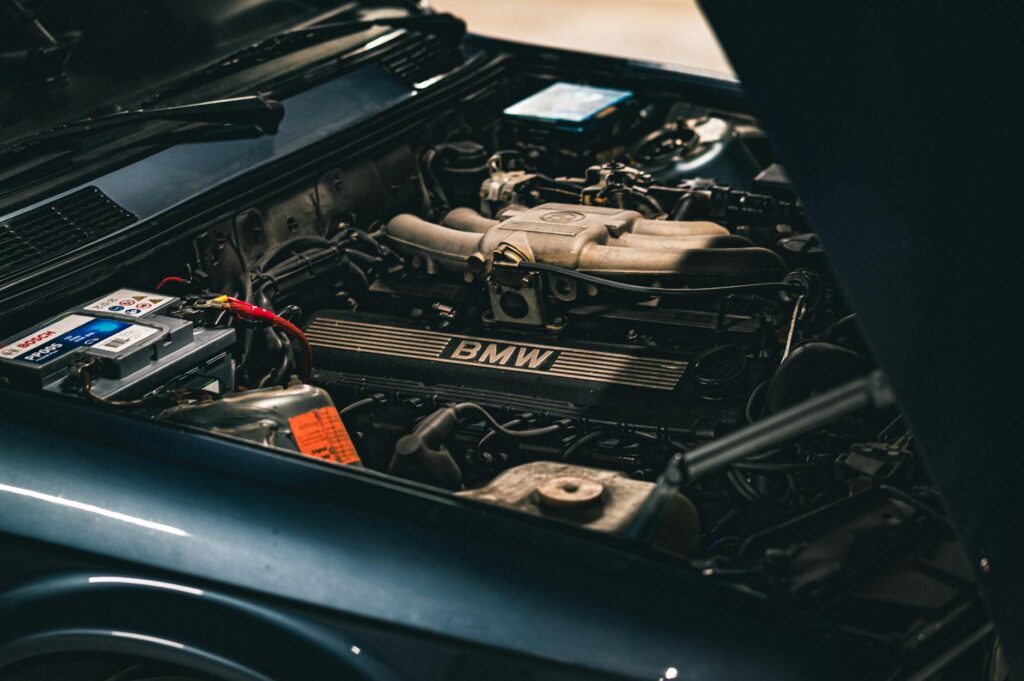
The G20 330i (commonly paired with the B48 petrol engine and ZF 8HP automatic gearbox) is generally robust, but early strut wear can occur depending on driving conditions, wheel/tyre setup, and component quality. Spotting the early warning signs saves money: if a strut is left to degrade, it can take out top mounts, bearings, bump stops, and tyres, and it can even affect braking and stability.
🔧 Recommended Professional Tool
BMW B48 Diagnostic ToolsRecommended tools for B48 engine diagnostics
✔ Recommended by automotive technicians ✔ Suitable for BMW, Mercedes, VAG & JLR platforms ✔ Fast international shipping
2. Causes
Front struts rarely “snap” without warning. Most failures are progressive, driven by wear, heat, and impact.
Common causes include:
- Seal wear and fluid leakage: The strut’s internal oil and gas damping relies on seals. Once seals wear, damping fades and leaks develop.
- Pothole/kerb impacts: A sharp hit can bend the strut shaft, damage the internal valve stack, or deform the strut housing.
- Worn top mounts and bearings: The strut mount and bearing carry load and allow steering rotation. If they bind or crack, the strut is stressed and noises start.
- Bump stop and dust boot deterioration: Torn boots allow grit to score the shaft; damaged bump stops lead to harsh bottoming-out that accelerates failure.
- Incorrect wheel alignment or suspension geometry: Excessive camber/toe loads the strut and can amplify tyre wear and vibration.
- Tyre and wheel choices: Run-flats, low-profile tyres, and 19–20" wheels reduce compliance, transmitting more shock into the strut.
- Aftermarket lowering springs: Increased preload and reduced travel can overwork standard dampers and cause early leakage.
3. Symptoms
Early warning signs are often subtle. Pay attention to changes in feel, sound, and tyre behaviour.
Typical symptoms include:
- Knocking or clunking over small bumps (often top mount/bearing or internal strut play)
- Squeaking or creaking when steering at low speed (mount/bearing binding)
- Front-end bounce after dips or speed bumps (weak damping)
- Unstable feel at motorway speed, especially over expansion joints (reduced damping control)
- Longer braking distances or nose dive under braking
- Uneven front tyre wear, such as cupping/scalloping
- Steering that feels vague or “floaty”
- Visible oil mist or wetness on the strut body or near the lower spring perch
- One corner sitting slightly lower (less common for struts, but can appear with spring issues or mount collapse)
On cars with adaptive suspension (where fitted), you may also notice inconsistent damping between modes (Comfort/Sport), though a warning light isn’t guaranteed.
4. How to diagnose
You can do a lot at home before booking in, but the safest approach is a combination of visual checks, road feel, and a professional inspection.
Quick owner checks (driveway + short test drive)
- Bounce test (limited but useful): Push down firmly on the front corner and release. Excessive rebound/bouncing suggests weak damping (though modern cars can mask this).
- Visual inspection: Turn the steering full lock and look behind the wheel:
- Oil leakage on the strut
- Torn dust boot
- Cracked top mount rubber (visible from engine bay on some setups)
- Listen carefully: Drive slowly over broken surfaces with the window slightly down. A dull thud often points to mounts/links; a sharper knock may indicate play.
Workshop-level checks (recommended)
A workshop can confirm the issue by:
- Checking for play in the strut top mount/bearing, drop links, control arm bushings, and ball joints (many noises mimic strut problems).
- Road test with chassis ears (microphones) to pinpoint the noise source.
- Measuring alignment and looking for abnormal camber/toe that can result from worn components.
- Suspension travel and damping assessment on a shaker plate or damper tester (where available).
Diagnostic tools (when relevant)
A failed strut often won’t set a fault code, but diagnostics help rule out related systems:
- BMW ISTA can check for stored chassis/DSC faults, steering angle calibration issues, and (if equipped) adaptive damping system faults.
- If you also own other marques in the household, the same logic applies: Xentry (Mercedes), ODIS (VW Group), and Pathfinder/SDD (JLR) help confirm whether warning lights or sensor issues are causing handling complaints rather than the strut itself.
5. How to fix
The correct fix depends on what’s actually worn. Replacing only the strut when mounts or bearings are failing can leave noises behind and force you to pay labour twice.
Best-practice repair approach
- Replace the strut(s): Ideally replace in pairs on the same axle (both fronts). A new strut on one side and a weak one on the other can cause uneven handling and braking.
- Replace associated wear parts:
- Top mount and bearing
- Bump stop and dust boot kit
- Self-locking nuts/bolts where specified (BMW often calls for one-time-use fasteners)
- Inspect related components: Drop links, front lower control arm bushings, and thrust arms can cause similar knocks. Replace as needed.
- Wheel alignment: A proper 4-wheel alignment after suspension work is essential to protect tyres and restore steering feel.
If your G20 has adaptive dampers, ensure the replacement struts match the option code. Coding is not always required, but correct part selection is critical; ISTA can verify the installed equipment and guide calibration checks.
6. Repair costs
Costs vary widely across Europe depending on labour rates, OEM vs aftermarket parts, and whether you replace mounts and alignment.
Typical European cost ranges (parts + labour):
- Single front strut replacement (one side only): €450–€900
(Not ideal unless the other strut is confirmed healthy.) - Both front struts (pair): €900–€1,700
- Add top mounts/bearings + bump stops/boots (recommended): +€200–€450
- Wheel alignment (4-wheel): €90–€180
- Adaptive damper struts (if equipped): Often €300–€700 more per side depending on brand and availability
A realistic “do it properly” figure for many owners is €1,100–€2,000 for both front corners including mounts and alignment. Premium dealers in major cities can exceed this, while independent specialists may come in lower with quality aftermarket options.
7. Prevention tips
You can’t eliminate wear, but you can slow it down and avoid premature failure.
- Avoid potholes and kerbs whenever possible; slow down for sharp edges.
- Keep tyres correctly inflated (under-inflation increases impact load and sidewall stress).
- Don’t ignore small suspension noises. Early mount or boot replacement can protect the strut shaft and seals.
- Choose sensible wheel/tyre setups for your roads. Extremely low-profile tyres increase shock loading.
- Clean winter grime off the suspension during washes. Road salt accelerates corrosion on fasteners and housings.
- Do alignment checks if you hit a pothole hard or notice steering pull/tyre wear.
8. When to see a mechanic
Book a professional inspection soon if you notice:
- Persistent knocking/creaking from the front suspension
- Visible oil leakage on the strut
- The car feels unstable at speed or bounces excessively
- Uneven tyre wear or steering vibration that develops quickly
- Any DSC/handling warning lights after a significant impact
Suspension faults can affect braking stability and emergency manoeuvres. If the front end feels unpredictable, reduce speed and get it checked before longer trips.
9. Frequently Asked Questions
Frequently Asked Questions
Can I drive with a leaking front strut on my BMW G20 330i?
You can sometimes drive short distances, but handling and braking control will gradually worsen as damping fades. A leaking strut can also accelerate tyre wear and put extra load on mounts and bushings. If the car feels unstable or the noise is severe, stop driving and book a repair.
Should I replace one front strut or both?
Replacing both front struts is usually the best choice because damping should be balanced across the axle. If you replace only one side, the car can feel uneven under braking and on rough roads. The only time one-side replacement makes sense is when the other strut is relatively new or measured to be in good condition.
What else can sound like a failed strut on the G20?
Drop links, control arm bushings, ball joints, and top mount bearings can all create knocks or creaks that mimic a bad strut. A workshop inspection is important because replacing the strut alone may not remove the noise. Uneven tyre wear can also create rumbling sounds that owners mistake for suspension failure.
Will ISTA show a fault code for a worn strut?
Usually not for a standard passive damper, because wear is mechanical rather than electronic. ISTA is still useful to check DSC/steering faults and, if the car has adaptive suspension, to look for related damper control errors. Diagnosis still relies heavily on physical inspection and road testing.
Do I need a wheel alignment after replacing front struts?
Yes, an alignment is strongly recommended because suspension geometry can shift when struts and mounts are removed and refitted. Correct alignment protects expensive tyres and restores steering precision. It’s one of the most cost-effective steps after suspension work.