1. Introduction
Suspension noise on an Audi A6 is one of those problems that starts as a mild annoyance and can gradually turn into a real comfort and safety issue. Because the A6 platform (C6, C7, C8) is shared with other VW Group models, many causes are familiar across Audi, VW, and even some Porsche applications—yet the A6’s weight, wheel sizes, and options like air suspension can make certain faults more common.
Recommended Tool: Professional OBD2 Scanner
Recommended Tool: Premium Brake Pads
Recommended Tool: OEM Suspension Components
The good news: most suspension noises have a logical cause that can be traced without guesswork. This guide explains the typical sounds, what they usually mean, how you (and a workshop) can diagnose them, and what repairs usually cost in Europe.
🔧 Recommended Professional Tool
ZF 8HP Transmission KitService tools for ZF 8HP automatic transmission
✔ Recommended by automotive technicians ✔ Suitable for BMW, Mercedes, VAG & JLR platforms ✔ Fast international shipping
2. Causes
Suspension noises generally come from play (looseness), dried-out rubber, worn bearings, or components contacting each other under load. On the Audi A6, the most common causes include:
Worn control arm bushes and ball joints
Multi-link front and rear suspension uses several arms with rubber bushes. Over time they crack, soften, and allow movement that creates knocks and creaks—especially on C6/C7 cars.
Anti-roll bar (sway bar) links and bushes
Drop links wear and develop play; anti-roll bar bushes can harden and squeak. These are classic sources of knocking over small bumps.
Top mounts and strut bearings
Front strut top mounts and bearings can creak or “clunk” when steering or going over uneven ground. If you hear noise while turning at low speed, this is a prime suspect.
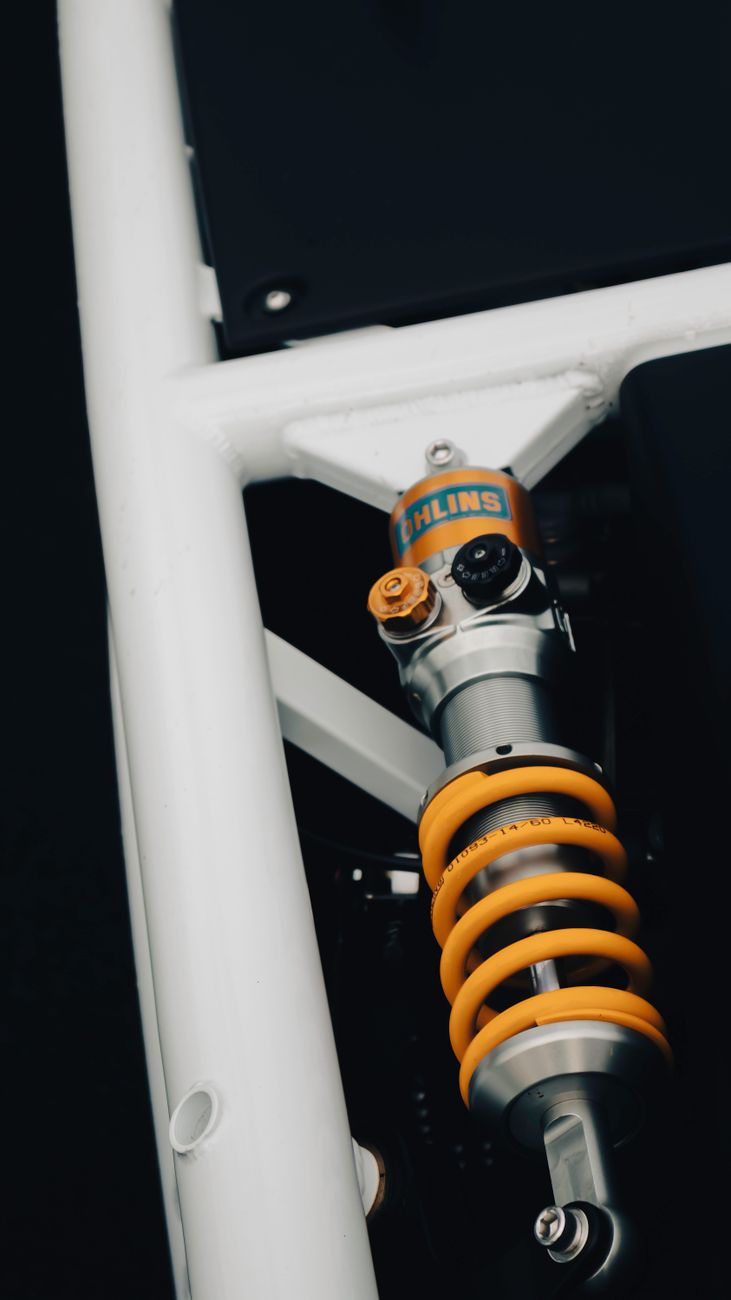
Shock absorbers (dampers) or air suspension components
- On steel-spring cars, leaking or internally worn dampers can knock or thud.
- On air-suspension A6 models, struts, mounts, or height sensor linkages can create noises, and a failing air strut can sound like a dull knock as it loses damping.
Wheel bearings
A humming or growling noise that changes with speed (and sometimes with steering direction) often points to a wheel bearing, not the suspension—but it’s commonly perceived as “suspension noise.”
CV joints or driveline issues (often mistaken for suspension)
If you have a quattro A6 and hear clicking while turning under power, an outer CV joint is possible. This isn’t suspension, but it’s frequently confused with it.
Loose undertrays, heat shields, or brake components
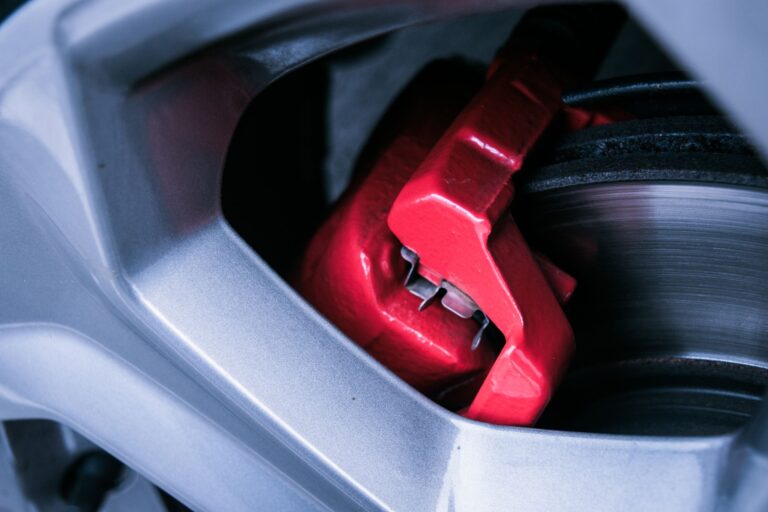
A loose splash guard, worn brake pad shims, or a stone trapped behind a dust shield can mimic suspension clunks—especially after recent work.
3. Symptoms
Different noises tend to point to different components. Listen for patterns:
- Single clunk over bumps: drop links, control arm ball joint play, loose fasteners
- Repeated knocking on rough roads: worn bushes, shocks losing damping
- Creaking at low speed (driveways/speed bumps): bushes drying out, top mounts
- Clunk when steering or parking manoeuvres: strut top mounts, steering joints, CV joints
- Humming/growling that rises with speed: wheel bearing
- Rattle at certain RPM/speeds: undertray, heat shield, brake backing plate
Also note whether the noise changes when:
- braking lightly,
- turning left vs right,
- the car is loaded (passengers/luggage),
- the weather is cold/wet (rubber noise can be worse in cold conditions).
4. How to diagnose
You can do a useful first check at home, then confirm with a proper inspection. Avoid crawling under a car supported only by a jack—use stands or leave under-car checks to a workshop.
At-home checks (safe, practical)
- Bounce test: push down firmly on each corner and release. Excessive bouncing can suggest weak dampers, though modern dampers can fail without dramatic bouncing.
- Steering test: with the car stationary, turn the steering wheel lock-to-lock slowly. Creaking/clunking can indicate top mounts or worn links.
- Visual look through the wheel: check for torn bushes, leaking damper oil, or a broken spring coil (springs can snap at the bottom).
- Listen by location: have someone drive slowly over a small bump while you stand a safe distance away to identify front vs rear.
Workshop diagnosis (what to expect)
A good independent VAG specialist or dealer will typically:
- Perform a road test to reproduce the noise.
- Put the car on a lift and check for play using a pry bar and wheel rocking tests.
- Inspect:
- control arm bushes and ball joints,
- anti-roll bar links and bushes,
- top mounts/strut bearings,
- spring seats and broken coils,
- wheel bearings and brake hardware.
- Use ODIS (VW Group diagnostic software) to check for chassis-related fault codes on cars with adaptive dampers or air suspension, and to calibrate ride height if components are replaced.
- On air suspension cars, run leak checks and review compressor duty cycle and level sensor data.
If your A6 has a gearbox like the ZF 8HP (common on many A6 variants), note that drivetrain mount wear can transmit knocks that feel suspension-related—so mounts may be checked too.
5. How to fix
The fix depends on what’s worn, but most solutions are straightforward replacements.
Control arms and bushes
- Replace the worn arm(s) or bush assemblies. Many owners choose to replace a full front arm kit on higher-mileage C6/C7 cars because once one arm is worn, others often follow.
- After replacement, a wheel alignment is strongly recommended.
Anti-roll bar links/bushes
- Replace drop links in pairs (left/right).
- Anti-roll bar bushes are inexpensive but can take time to access depending on engine and subframe layout.
Top mounts and bearings
- Replace mount and bearing together. If dampers are original and mileage is high, it can be cost-effective to replace dampers at the same time to avoid duplicate labour.
Dampers, springs, and air struts
- Replace leaking or weak dampers; replace broken springs promptly.
- For air suspension: replace the faulty air strut or mount, then run ODIS calibration if required. Address leaks early to avoid burning out the compressor.
Wheel bearings
- Replace the affected bearing/hub assembly. This is common wear on heavier cars with larger wheels.
“Not actually suspension” fixes
- Tighten/replace loose undertrays and fasteners.
- Correct brake hardware: fit missing anti-rattle clips, clean and refit dust shields.
6. Repair costs
Typical European price ranges (parts + labour), varying by country, workshop rate, and model generation:
- Anti-roll bar drop links (pair): €150–€320
- Anti-roll bar bushes: €120–€280
- Single control arm (one side): €250–€550
- Full front control arm set (both sides): €900–€1,800
- Top mounts/strut bearings (front pair): €350–€750
- Front dampers (pair, steel spring): €700–€1,400
- Air strut (one corner): €900–€1,800 (OEM can be higher)
- Wheel bearing (one corner): €300–€650
- Wheel alignment (after suspension work): €80–€180
Dealer pricing is often at the top end, especially for air suspension and adaptive damping components.
7. Prevention tips
- Avoid potholes where possible; slow down for speed bumps—big wheels and low-profile tyres increase impact loads.
- Keep tyres properly inflated; underinflation increases stress on bushes and bearings.
- Get an alignment check if you notice uneven tyre wear or after a hard pothole hit.
- Wash winter salt off the underbody when practical; corrosion can seize fasteners and accelerate wear.
- Fix small knocks early—continuing to drive with play can damage neighbouring parts.
8. When to see a mechanic
Book an inspection promptly if:
- the noise is getting worse week by week,
- the car feels unstable, wanders, or clunks under braking,
- you notice uneven tyre wear or steering wheel vibration,
- you have air suspension warnings or uneven ride height,
- there’s a metallic knock that could indicate a loose or failing joint.
A workshop with VAG experience and access to ODIS is especially helpful on A6 models with adaptive systems, where calibration and guided fault-finding can save time and prevent parts swapping.
9. Frequently Asked Questions
Frequently Asked Questions
Why does my Audi A6 clunk over small bumps but feel fine on smooth roads?
Small, sharp bumps are most likely to expose play in drop links, anti-roll bar bushes, and control arm ball joints. Smooth roads don’t load those parts in the same quick, repetitive way. A lift inspection usually finds the looseness quickly.
Can cold weather make suspension noises worse?
Yes. Rubber bushes stiffen in cold temperatures, which can increase creaking and make existing wear more noticeable. Moisture can also wash away residual lubrication in joints and mounts, making noises more obvious.
Do I need a wheel alignment after replacing suspension parts?
In most cases, yes—especially after control arm or subframe-related work. Even if the steering feels straight, small geometry changes can cause tyre wear and instability. An alignment is relatively inexpensive compared to tyres.
Is a humming noise definitely a suspension problem?
Not necessarily. A humming or growling that changes with speed is often a wheel bearing, and it can be mistaken for suspension noise. A mechanic can confirm by checking for play and listening for bearing roughness.
Are aftermarket control arm kits a good idea on an A6?
They can be, but quality varies widely. Cheaper kits may use softer rubber or less precise joints, leading to early noise return. Many owners choose OEM or well-known premium brands to avoid repeating labour costs.