1. Introduction
If your Jaguar E‑Pace (X540) 2.0D has started to feel a bit “clonky” over bumps, or you’re hearing a repetitive rattle from the front end on rough roads, the front stabilizer link (also called an anti-roll bar drop link) is a prime suspect. This small part connects the anti-roll bar to the suspension strut and helps control body roll in corners. When it wears prematurely, the car can feel noisier, less precise, and more tiring to drive—especially on Europe’s typical mix of city potholes, speed bumps, and uneven back roads.
Recommended Tool: Professional OBD2 Scanner
Recommended Tool: Premium Brake Pads
Recommended Tool: OEM Suspension Components
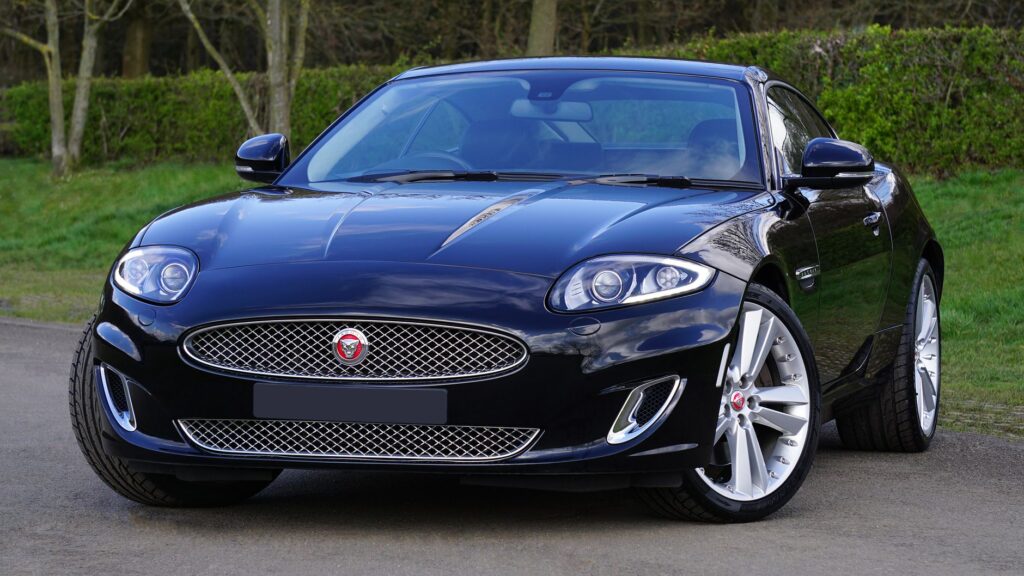
Premature stabilizer link wear isn’t unique to Jaguar Land Rover products; it’s a common issue across many European cars. BMW owners (often with M Sport suspension), Mercedes drivers (especially on larger wheels), and Audi/VW Group owners (with S line or R-line setups) may recognize the same pattern: a relatively inexpensive part causes surprisingly annoying symptoms. The good news is that diagnosis is usually straightforward, and the fix is not typically a major job.
🔧 Recommended Professional Tool
Brake System UpgradePremium brake pads and diagnostic tools for vibration and braking issues.
✔ Recommended by automotive technicians ✔ Suitable for BMW, Mercedes, VAG & JLR platforms ✔ Fast international shipping
2. Causes
Premature wear on the E‑Pace X540 front stabilizer links is usually down to a combination of environment, driving conditions, and component design. Common causes include:
- Worn ball joints inside the link: The link typically uses small ball-and-socket joints at each end. Once the grease degrades or moisture gets in, play develops quickly.
- Water and salt ingress: Wet climates, winter road salt, and repeated temperature changes can accelerate corrosion and damage the joint seals.
- Large wheels and low-profile tyres: Many E‑Pace trims run larger wheels. Less tyre sidewall means more impact energy transfers into suspension components.
- Frequent urban impacts: Speed bumps, cobblestones, potholes, and high kerbs create repeated shock loads that shorten link life.
- Incorrect installation or pre-load: If the link is tightened with the suspension hanging (not at normal ride height), the joint can sit under constant strain and wear faster.
- Other worn suspension parts: A tired top mount, control arm bush, or ball joint can change suspension geometry and increase stress on the stabilizer link.
3. Symptoms
A worn front stabilizer link often shows up as noise first, then handling changes. Typical symptoms include:
- Rattling or knocking at low speed over small bumps, rough tarmac, or cobbles
- Clunk when pulling away or changing direction (parking manoeuvres, tight turns)
- More body roll or a slightly “loose” feeling in quick lane changes
- Noise worse in cold or wet weather (when grease is thicker or joints are contaminated)
- Intermittent sound that disappears on smooth roads, which can make it hard to reproduce for a workshop
On many cars, this noise is easily mistaken for top mounts, control arm bushings, or even loose brake hardware—so a systematic check matters.
4. How to diagnose
You can do a basic check at home, but a proper diagnosis is best with the front end safely lifted and unloaded. Here’s a practical approach:
Initial checks (driveway-level)
- Listen for a repeatable rattle over a known rough patch at 20–40 km/h.
- Turn the steering wheel left/right at low speed and note any clunks.
- Visual inspection through the wheel: Look for torn boots on the link joints, rust dust, or grease leakage.
Hands-on checks (lifted safely)
If you have access to a jack and stands (and know safe lifting points), you can check for play:
- With the wheel off the ground, grab the stabilizer link and try to move it. Any clicking, looseness, or “tapping” suggests wear.
- Use a small pry bar carefully to apply light force at the joints; listen/feel for movement.
- Compare left vs right—often one side fails first, but if one is worn, the other is usually not far behind.
Workshop-level confirmation
A workshop can quickly isolate the noise using:
- Chassis ears (wireless microphones) clipped to suspension components
- A lift where the suspension can be loaded
- A technician rocking the wheel and suspension while observing the links
Diagnostic tools: what they will (and won’t) show
Tools like JLR SDD or Pathfinder are excellent for reading faults, calibrations, and steering/suspension-related modules, but stabilizer link wear usually won’t create fault codes. Still, it can be worth scanning if you also have warnings (ABS/DSC, steering angle issues), because those can point to other problems that mimic suspension noises.
5. How to fix
In most cases, the fix is replacement of the stabilizer links—ideally as a pair.
Replacement approach
- Replace both front stabilizer links (left and right). Even if only one is noisy, matching wear and balanced handling are important.
- Choose quality parts (OEM or reputable aftermarket). Very cheap links can develop play quickly.
- Ensure the installer tightens the link fasteners at normal ride height (or with the suspension supported) to avoid twisting the joint.
- After replacement, test drive on the same rough road used to reproduce the noise.
Related items worth checking
While the links are off, it’s smart to check:
- Anti-roll bar bushes (can also creak or knock)
- Front lower control arm bushes/ball joints
- Strut top mounts and bearings
- Loose undertray/arch liners (can mimic rattles)
A wheel alignment is not usually required just for stabilizer links, but if other suspension parts are replaced at the same time, alignment is advisable.
6. Repair costs
Costs vary by country, labour rates, and part quality. Realistic European estimates for an E‑Pace X540:
- Parts (pair of front stabilizer links): €60–€180
- Budget aftermarket: €30–€70 each
- OEM-quality: €50–€90 each
- Labour: €80–€220
- Typically 0.7–1.5 hours depending on corrosion and access
- Total typical cost (parts + labour): €140–€400
If bolts are seized or additional components are worn (anti-roll bar bushes, control arms), the total can rise:
- With extra parts and time: €350–€900 (especially if multiple front suspension items are renewed together)
Dealership pricing often lands at the higher end; independent JLR specialists can be more cost-effective while still using good parts.
7. Prevention tips
You can’t fully prevent wear, but you can slow it down and reduce the chance of early failure:
- Avoid hitting potholes and kerbs where possible, especially with larger wheels.
- Slow down for speed bumps and take them square-on when safe.
- Keep tyre pressures correct (underinflation increases impact loads).
- Rinse winter salt from the wheel arches when possible, especially after snow/ice periods.
- During other suspension work, ask the shop to inspect links and anti-roll bar bushes proactively—catching play early can prevent secondary noises.
- If you frequently drive on rough roads, consider sticking with OEM or premium aftermarket links rather than the cheapest option.
8. When to see a mechanic
See a mechanic (or a trusted independent JLR specialist) if:
- The noise is getting worse quickly, or you hear heavy clunks rather than light rattles
- The car feels unstable in corners or during braking
- You notice uneven tyre wear or steering pull (may indicate broader suspension issues)
- You have dashboard warnings (ABS/DSC) that require scanning with Pathfinder/SDD
- You can’t safely lift the car or you’re unsure about diagnosing play
Suspension noises can overlap. A good shop can distinguish a stabilizer link rattle from a worn control arm bush or top mount, saving you from replacing parts by guesswork.
9. Frequently Asked Questions
Frequently Asked Questions
Can I keep driving with a worn front stabilizer link on my Jaguar E‑Pace?
Usually yes for short periods, but it’s not ideal. The car may feel less controlled in corners, and the extra play can make the front end noisier and more tiring to drive. If the link is severely worn, handling predictability can suffer.
Will a worn stabilizer link cause an MOT/TÜV failure?
It can. If there is noticeable play in the joint or it’s knocking during an inspection, it may be flagged as a safety-related suspension defect. Replacing the links beforehand is often the simplest way to avoid an inspection surprise.
Do I need a wheel alignment after replacing front stabilizer links?
Normally no, because stabilizer links don’t set camber or toe. However, if the technician finds worn control arms, track rod ends, or other geometry-related parts during the job, alignment becomes important. If the steering feels off afterward, get it checked.
Why did the noise disappear for a while and then come back?
Stabilizer link wear can be intermittent early on. Temperature, moisture, and how the joint is loaded can temporarily change the noise level. As the internal joint loosens further, the rattle typically becomes consistent.
Should I replace just one link or both?
Replacing both is strongly recommended. Even if only one side is currently noisy, the other link has usually experienced similar conditions and may fail soon. Pair replacement also helps keep handling balanced left-to-right.