1. Introduction
If you own a Jaguar F-Pace or Jaguar E-Pace in Europe, you’ve probably noticed that brake parts can be confusing. Both are “Pace” SUVs, both share some JLR DNA, and many online listings claim broad compatibility. In reality, brake part compatibility between F-Pace and E-Pace is sometimes possible, often model-year and spec dependent, and frequently wrong when you rely on generic web catalogues.
Recommended Tool: Professional OBD2 Scanner
Recommended Tool: Premium Brake Pads
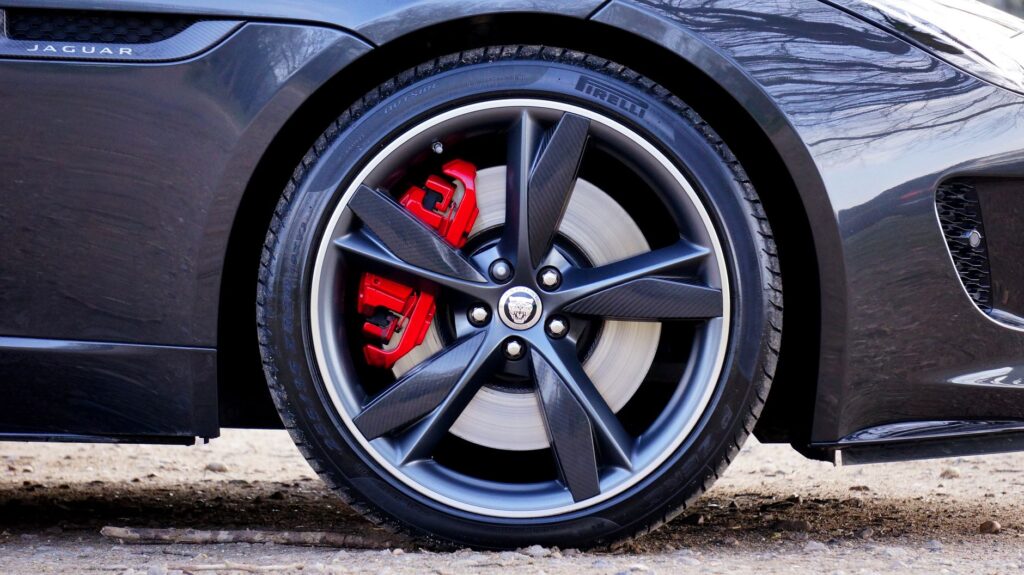
This guide is written for everyday owners—not mechanics—who want to buy the correct pads, discs (rotors), wear sensors, calipers, and parking-brake parts the first time. It also explains where compatibility myths come from (platform differences, engine output, axle weights, optional brake packages), how to confirm what your car actually has, and what realistic replacement costs look like across Europe.
Recommended Tool: Professional OBD2 Scanner
🔧 Recommended Professional Tool
JLR Ingenium Engine ToolsRecommended tools for Ingenium engine diagnostics
✔ Recommended by automotive technicians ✔ Suitable for BMW, Mercedes, VAG & JLR platforms ✔ Fast international shipping
2. Causes
Brake parts don’t interchange between F-Pace and E-Pace as often as you’d expect, mainly due to engineering differences and option packages.
Platform and drivetrain differences
- Jaguar F-Pace (X761) is generally larger and heavier, with higher axle loads and more brake variants.
- Jaguar E-Pace (X540) is a smaller platform with different hubs, knuckles, and brake package options.
Engine power and vehicle weight drive brake sizing
Bigger output and higher curb weight usually means larger discs and different calipers. For example:
- F-Pace models with higher outputs (including some 3.0 V6, 5.0 V8, or higher-spec diesels) often use larger front discs and different calipers than most E-Pace variants.
- E-Pace models (including common Ingenium petrol/diesel variants) tend to use smaller disc diameters and different carriers.
Brake “packages” and trim levels
Even within the same model, brakes can differ based on:
- R-Sport / Dynamic / S / performance brake options
- Wheel size and factory brake upgrades
- Market-specific specs (UK/Ireland vs mainland EU variations)
Model year changes and supplier revisions
A mid-cycle update can change disc thickness, pad shape, wear sensor type, or rear parking brake setup. Parts sites may not reflect these changes correctly.
Electronic parking brake (EPB) and rear setup differences
Many JLR models use an EPB; compatibility can break down due to:
- Rear caliper motor design differences
- Different control strategies and calibration requirements
- Disc “drum-in-hat” dimensions for the parking brake shoes (where fitted)
3. Symptoms
If you’ve installed incompatible or incorrect brake parts—or you’re about to—these are common clues something isn’t right.
Driving and braking symptoms
- Vibration under braking (disc offset or incorrect thickness)
- Pulling left/right (caliper/carrier mismatch or uneven pad contact)
- Reduced braking performance, especially from motorway speeds
- Squeal or grinding soon after replacement
Fitment and assembly symptoms
- Pads don’t sit correctly in the carrier or bind
- Wear sensor connector doesn’t match the loom
- Disc won’t sit flush on the hub (wrong centre bore/offset)
- Rear EPB refuses to retract or re-calibrate after fitting
Warning lights and messages
- Brake pad warning stays on after replacement (sensor mismatch or not reset)
- EPB fault messages after rear brake work
- ABS/DSC warnings if wheel speed sensor wiring was disturbed during a poorly fitting job
4. How to diagnose
You can confirm compatibility without guessing. The goal is to identify exactly which brake system your car has.
Step 1: Use your VIN and build specification
The VIN is the starting point, but don’t rely solely on a parts website. Ask for parts “by VIN” from:
- A Jaguar specialist parts supplier
- A dealership parts counter (useful even if you don’t buy there)
Step 2: Measure what’s on the car (simple checks)
Before ordering, check:
- Front disc diameter (common ranges vary widely; even a 20–30 mm difference matters)
- Disc thickness (new thickness is critical; minimum thickness is stamped on the disc)
- Rear disc type (plain vented/solid, and whether there’s a drum-in-hat parking brake)
- Pad shape and number/position of anti-rattle clips
If you’re unsure, remove a wheel and take clear photos of the caliper and carrier casting, plus the disc.
Step 3: Identify caliper and carrier type
Compatibility often depends more on caliper carrier than caliper body. Two cars may use similar-looking calipers but different carriers, changing disc diameter compatibility.
Step 4: Use JLR diagnostic software when relevant
For rear brakes with EPB service mode or post-repair calibration, use:
- Pathfinder (newer JLR platforms and many later model years)
- SDD (older JLR coverage depending on year)
These tools help you:
- Put EPB into service mode for safe pad replacement
- Clear EPB-related faults after the job
- Confirm configuration items when brake modules are sensitive to component changes
5. How to fix
If you haven’t bought parts yet
- Order discs + pads + sensors specifically listed for your VIN and brake system.
- If upgrading (e.g., to larger discs), plan the full set: discs, pads, carriers, and sometimes splash shields.
If you already installed the wrong parts
Stop driving if braking is compromised. Common fixes include:
- Refit correct discs and pads matched to your carrier
- Replace wear sensors with the correct connector type
- For rear EPB issues, run EPB service/calibration in Pathfinder/SDD after correct fitment
Practical guidance for owners
- Don’t assume “F-Pace and E-Pace share brakes” even if bolt pattern matches.
- Avoid mixing brands/sizes across an axle.
- Replace pads and discs as an axle set (both sides) to prevent uneven braking.
6. Repair costs
Prices vary by country, labour rate, and whether you choose OEM, OEM-equivalent, or premium aftermarket (ATE, Brembo, TRW, Textar, Pagid).
Typical European cost ranges (parts + labour)
Front pads + discs (standard brakes):
- E-Pace: €350–€700
- F-Pace: €450–€900
Rear pads + discs (with EPB):
- E-Pace: €300–€650
- F-Pace: €350–€750
Wear sensors (where fitted):
- Parts: €15–€45 each
- Labour add-on: €0–€50 (often included with pad replacement)
Performance / larger brake packages:
- Front axle can reach €900–€1,600 depending on disc type and pad compound.
What drives the price up
- Larger discs and more complex calipers on higher-spec F-Pace variants
- EPB-related time and diagnostic steps
- Rusted or seized hardware (slide pins, carriers, backing plates)
- Needing correct carriers due to a wrong initial parts purchase
7. Prevention tips
- Always verify by VIN and confirm disc diameter/thickness before ordering.
- Buy from sellers who list PR/code equivalents or brake system identifiers, not just “fits F-Pace/E-Pace.”
- If your car has EPB, choose a workshop (or DIY approach) that can use Pathfinder or SDD to enter service mode.
- When changing discs, replace:
- Pad fitting kit/hardware if applicable
- Caliper slide pin grease and boots if worn
- After any brake job, do a careful bed-in procedure (gentle repeated stops) to reduce vibration and noise.
8. When to see a mechanic
See a professional if any of the following apply:
- You have an EPB fault after rear brake work or cannot retract the rear calipers properly.
- The car pulls under braking, the pedal feels spongy, or you suspect air in the system.
- You’ve bought parts and they don’t fit cleanly—forcing brake parts is unsafe.
- You hear grinding, feel strong vibration, or see warning lights that won’t clear.
A good independent Jaguar/Land Rover specialist will typically have Pathfinder/SDD access and experience with the brake system variations that cause compatibility mistakes.
9. Frequently Asked Questions
Frequently Asked Questions
Are Jaguar F-Pace and E-Pace brake pads interchangeable?
Sometimes, but only in specific cases where the brake system (caliper and carrier) is the same. The safest approach is to match parts to your VIN and confirm pad shape and sensor connector type. Even within one model, different trims and years can use different pads.
Can I fit F-Pace discs on an E-Pace to “upgrade” braking?
Not usually as a simple disc swap, because disc diameter and thickness must match the caliper carrier and wheel clearance. Proper upgrades typically require matching carriers, correct pads, and sometimes different splash shields. If done incorrectly, you can get vibration, poor pad contact, or unsafe braking.
Why does my parts website say the same discs fit both models?
Many catalogues group vehicles broadly and miss brake package splits, mid-year changes, or market-specific options. They may also list “fits” based on bolt pattern while ignoring offset, thickness, and caliper carrier differences. Always cross-check with VIN-based parts lookup and your existing disc measurements.
Do I need diagnostics to change rear brakes on these cars?
If your car has an electronic parking brake, it’s strongly recommended. Using Pathfinder or SDD to put the EPB into service mode helps avoid damaging the caliper motor and reduces the chance of EPB fault messages. After fitting, a calibration or fault clear may be needed.
What’s the biggest sign I bought incompatible brake parts?
The most obvious sign is poor fitment: pads that don’t sit correctly, discs that don’t sit flush, or caliper/carrier alignment problems. On the road, vibration, pulling, or unexpected noises shortly after installation are common. If anything feels off, stop and recheck before continuing to drive.