1. Introduction
Brake issues on the Audi Q5 are common enough that many owners will experience at least one “is this normal?” moment—whether it’s vibration when slowing from motorway speeds, squealing in stop-start traffic, or a brake warning message that appears earlier than expected. The Q5’s weight, wheel sizes, and typical driving patterns (urban commuting mixed with fast A-road or autobahn runs) put real demand on discs (rotors), pads, and calipers. Add in electronic parking brakes (on many models), ABS/ESC systems, and—in some versions—brake-by-wire style assistance, and it’s easy to see why symptoms can be confusing.
Recommended Tool: Professional OBD2 Scanner
Recommended Tool: Premium Brake Pads
Recommended Tool: Cooling System Diagnostic Tools
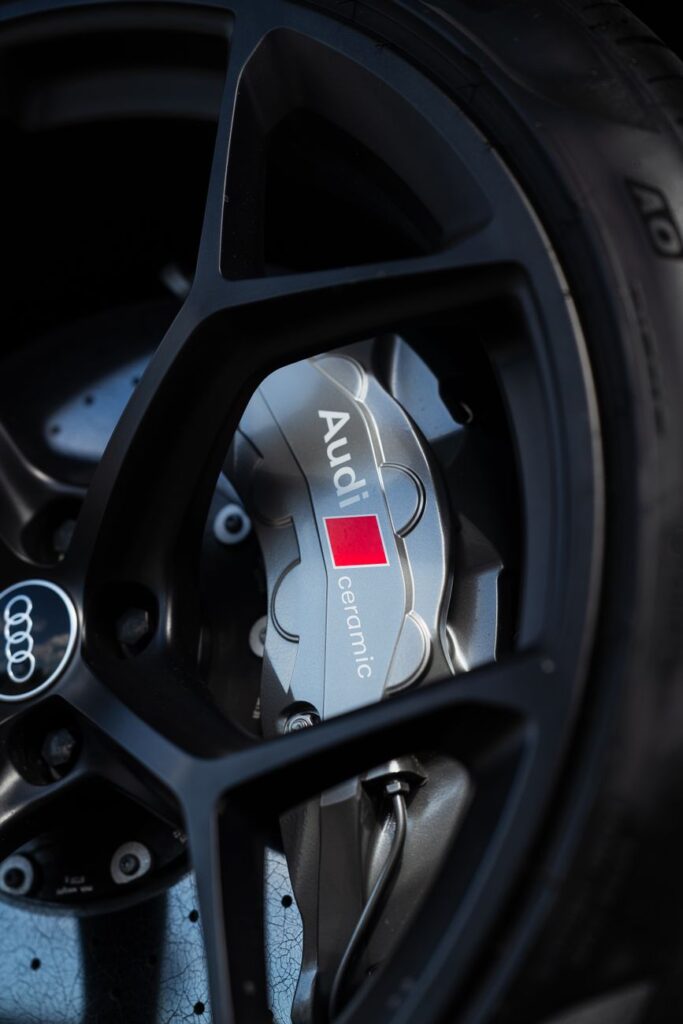
This guide focuses on common brake problems across popular Q5 generations and drivetrains (including 2.0 TFSI engines such as EA888 variants, 2.0/3.0 TDI models, and S tronic DSG-equipped cars), and explains when discs should be replaced, how to confirm the cause, and what repairs typically cost in Europe.
🔧 Recommended Professional Tool
EA888 Engine Diagnostic ToolsEssential tools for EA888 engine diagnostics
✔ Recommended by automotive technicians ✔ Suitable for BMW, Mercedes, VAG & JLR platforms ✔ Fast international shipping
2. Causes
Disc wear, corrosion, and “lipping”
Brake discs are wear items. Over time they thin, develop a lip at the outer edge, and can corrode—especially on cars that do lots of short journeys or sit outside in damp conditions. Corrosion can create uneven contact, leading to noise and vibration.
Disc warping (more accurately: uneven disc thickness / deposits)
Many owners call it “warped discs,” but the usual cause is uneven pad material transfer or thickness variation. This often follows:
- Hard braking while discs are hot, then holding the pedal at a standstill
- Cheap pads that leave uneven deposits
- Poor bedding-in of new pads/discs
Sticking calipers or slider pins
Caliper guide pins can seize or dry out. A partially sticking caliper causes one pad to wear faster, overheats the disc, and can create pulling to one side or a burning smell.
Electronic parking brake (EPB) issues (rear)
On Q5 models with an EPB, rear calipers can suffer from motor or mechanism problems. If the parking brake isn’t releasing fully, the rear brakes can drag and overheat.
ABS/ESC sensor or wheel bearing-related faults
A failing wheel speed sensor, damaged sensor ring, or a worn wheel bearing can trigger ABS/ESC warnings and cause odd brake pedal behaviour. These aren’t “disc problems,” but they often get mistaken for them because the driver feels pulsation or intervention.
Brake fluid and hose age
Old brake fluid absorbs moisture, lowering boiling point and making the pedal feel spongy under repeated braking. Ageing flexi hoses can also expand slightly under pressure, contributing to poor pedal feel.
3. Symptoms
Look out for these common Q5 brake-related signs:
- Steering wheel shake when braking from 80–120 km/h (often front disc thickness variation)
- Pedal pulsation (can be disc deposits or ABS activation from sensor faults)
- Squealing at low speed (pad material, glazed pads, or wear indicators)
- Grinding noise (pads worn through to backing plate; urgent)
- Car pulls left/right under braking (sticking caliper, uneven pad friction, alignment/tyre issues)
- Brake warning light or “brake pads” message (pad wear sensor triggered)
- Burning smell or excessive brake dust on one wheel (dragging caliper/EPB)
- Soft pedal after repeated braking downhill (fluid boiling or air/moisture)
4. How to diagnose
Quick checks you can do safely
- Visual inspection through the wheel spokes: look for heavy scoring, deep rust, or an obvious disc lip.
- Compare wheel dust and heat: after a normal drive, one wheel much hotter than others suggests dragging.
- Listen for patterns: squeal only when lightly braking can be pad compound; grinding is usually metal-on-metal.
Measurements that confirm disc condition
A workshop should measure:
- Disc thickness and compare to the minimum spec (often stamped on the disc hat)
- Disc runout (with a dial gauge) to check hub/disc mounting and lateral deviation
- Pad thickness and wear patterns (inner vs outer pad differences point to caliper/slider issues)
Using diagnostic tools (when faults or warnings appear)
If you have warning lights or inconsistent brake behaviour, proper scanning is important:
- ODIS (VW Group diagnostics) can read ABS/ESC fault codes, EPB faults, live wheel speed data, and perform service functions (e.g., EPB retraction for rear pad changes on applicable models).
- Faults like intermittent wheel speed sensor signals can mimic brake vibration or cause unexpected ABS intervention.
Don’t overlook the hub and mounting surface
Even a good disc can feel “warped” if rust or debris on the hub face prevents it sitting flat. This is a common cause after DIY brake jobs or where the car has seen winter salt.
5. How to fix
Replace pads only (when discs are still within spec)
Pads can be replaced alone if:
- Disc thickness is comfortably above minimum
- No heavy scoring or heat cracks
- Braking is smooth and runout is acceptable
Choose a reputable pad brand and the correct compound for your driving. Cheap pads can be noisy and deposit uneven material.
Replace discs and pads together (often the best value)
This is the most common correct repair when you have vibration, lipping, corrosion bands, or repeated squeal. Replacing both ensures proper mating surfaces and reduces the chance of comebacks.
Address sticking calipers and sliders
If pads are wearing unevenly or a wheel is overheating:
- Clean and lubricate slider pins with correct high-temp grease
- Replace torn dust boots
- Rebuild or replace calipers if the piston is sticking On EPB rear calipers, replacement is often more practical than rebuilding.
Brake fluid flush
If pedal feel is inconsistent or the fluid is older than 2 years, a flush can restore confidence—especially on heavy SUVs like the Q5. Use the correct DOT spec for your model.
Correct bedding-in
After new pads/discs:
- Avoid hard stops from high speed in the first 200–300 km
- Do a series of controlled medium stops to transfer an even pad layer This reduces the risk of future judder.
6. Repair costs
Typical European pricing varies by country and workshop rate, but these ranges are realistic for parts + labour:
Front discs and pads (standard Q5)
- Independent specialist: €350–€650
- Main dealer: €600–€1,000
Larger wheels and higher-spec brakes increase cost.
Rear discs and pads (with EPB service mode if required)
- Independent specialist: €300–€600
- Main dealer: €550–€900
Caliper service or replacement
- Slider service (clean/lube): €80–€180 (often combined with pad/disc job)
- Replace one caliper (front or rear): €250–€600 (including labour; EPB rears can be higher)
Brake fluid flush
- Independent: €80–€150
- Dealer: €120–€220
ABS wheel speed sensor (if warning lights/pulsation from intervention)
- Per sensor fitted: €120–€300
If a wheel bearing is involved, total can rise to €350–€800 per corner.
7. Prevention tips
- Use quality pads and discs matched to your Q5’s brake system and driving style.
- Wash wheels/brakes occasionally in winter to reduce salt buildup and corrosion.
- Avoid holding the brake pedal hard after a heavy stop; use the handbrake/parking brake where appropriate and safe.
- Replace brake fluid every 2 years, especially if towing or driving in mountains.
- If you switch wheel sets (summer/winter), take the opportunity to inspect disc condition and pad thickness.
8. When to see a mechanic
Book in promptly if you notice:
- Grinding noises, strong vibration, or a brake warning light
- The car pulling under braking
- A single wheel getting unusually hot or smelling of burning
- A soft pedal that worsens with repeated braking
- ABS/ESC faults or unpredictable pedal pulsation
A proper inspection with measurements and, if needed, an ODIS scan is cheaper than guessing and replacing parts unnecessarily.
9. Frequently Asked Questions
Frequently Asked Questions
How do I know if my Audi Q5 discs need replacing or just the pads?
If the disc has a pronounced lip, visible scoring, corrosion bands, or the car judders under braking, discs are often due. A workshop can confirm by measuring disc thickness against the minimum spec and checking runout. If the discs are smooth, within spec, and braking is consistent, pads alone may be enough.
Why does my Q5 steering wheel shake when braking from motorway speeds?
This is commonly caused by uneven disc thickness or pad deposits on the front discs rather than true “warping.” It can also be worsened by poor hub cleaning during installation or sticking caliper sliders. Replacing discs and pads together and ensuring correct mounting usually fixes it.
Can rear brake problems be caused by the electronic parking brake?
Yes, on models with EPB the rear caliper mechanism or motor can stick or fail to release fully, causing dragging and overheating. This often shows as excessive dust on one rear wheel, a hot wheel after a short drive, or rapid pad wear. Proper diagnosis may include an ODIS scan and EPB function tests.
Is it safe to drive if my brakes are squealing but still stop well?
Occasional light squeal can be harmless (pad compound, moisture, or light glazing), but it shouldn’t be ignored. If the noise is constant, gets worse, or turns into grinding, you may be at the wear indicator or metal-on-metal stage. Have the pads and discs inspected soon to avoid damaging the discs and calipers.
How long do Audi Q5 brake discs typically last?
It depends heavily on driving conditions, but many owners see front discs last roughly 40,000–80,000 km and rears 60,000–120,000 km. Urban stop-start driving, towing, and aggressive braking shorten life, while motorway cruising extends it. Condition matters more than mileage, so measuring thickness is key.