1. Introduction
Brake calipers don’t get much attention until something feels wrong: a steering wheel shake, a burning smell after a short drive, or a car that seems to “drag” even when you’re off the pedal. For everyday European car owners—BMW, Mercedes, Audi, VW Group, and JLR—caliper issues are common enough to be worth understanding, especially on vehicles with heavier curb weights, powerful engines, and advanced stability systems.
Recommended Tool: Professional OBD2 Scanner
Recommended Tool: Premium Brake Pads
Recommended Tool: Cooling System Diagnostic Tools
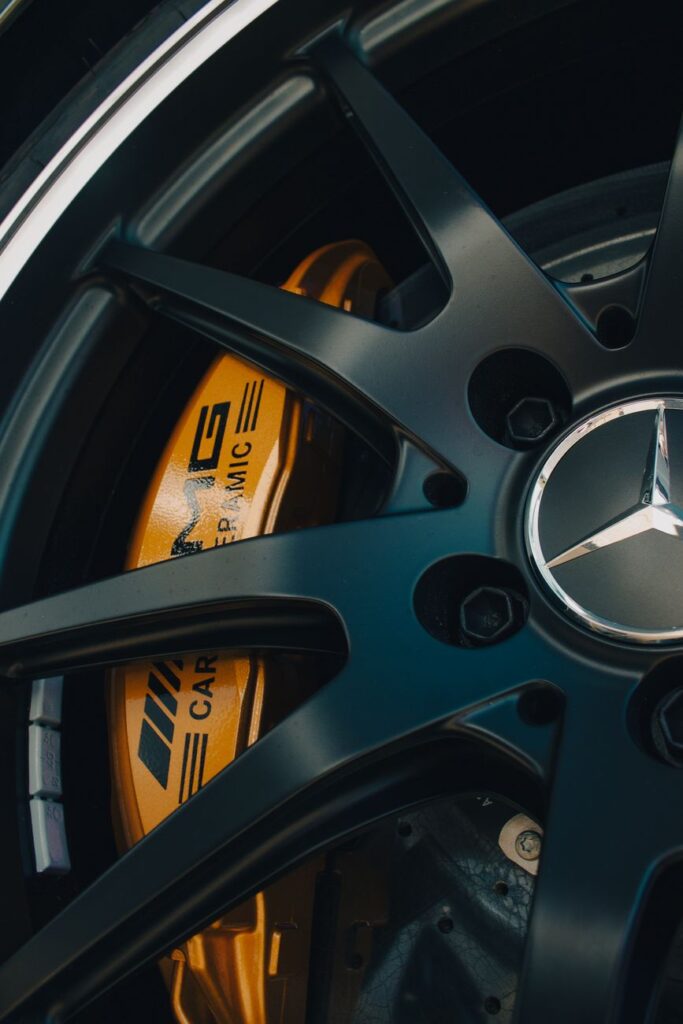
A brake caliper’s job is simple: clamp the pads evenly onto the rotor and release cleanly when you lift off the brake. When it fails to move freely or clamp evenly, you can get uneven braking, rapid pad wear, heat buildup, and in worst cases a loss of braking performance. This guide focuses on practical caliper maintenance and troubleshooting you can understand without being a mechanic, with realistic costs and when it’s time to get professional help.
🔧 Recommended Professional Tool
DSG Transmission Service KitProfessional tools for DSG gearbox service
✔ Recommended by automotive technicians ✔ Suitable for BMW, Mercedes, VAG & JLR platforms ✔ Fast international shipping
2. Causes
Calipers usually don’t “suddenly” fail—most issues build over time. Common causes include:
- Corrosion and road salt exposure
Very common in northern and coastal Europe, especially on sliding pin calipers. - Sticking slider pins or dry pin boots
Pins can seize if grease dries out or water gets past damaged boots. - Piston seal swelling or internal corrosion
Moisture-contaminated brake fluid can corrode piston surfaces and bores. - Collapsed or internally restricted brake hose
The hose can act like a one-way valve: pressure goes in, but doesn’t release quickly. - Overheated brakes
Long descents, towing, or repeated hard stops can overheat seals and grease. - Incorrect past repairs
Wrong grease (petroleum-based), missing pad shims/springs, or overtightened hardware can cause binding. - Electronic parking brake (EPB) actuator issues (common on VW Group, Audi, JLR)
The motor or mechanism can stick, or the system may not retract properly without service mode. - Vehicle-specific factors
Heavier vehicles (e.g., JLR SUVs) and high-output models stress brakes more. Gearboxes like ZF 8HP or DSG aren’t direct causes, but strong engine braking strategies and driving style can change brake heat patterns.
3. Symptoms
You don’t need a lift to notice the warning signs. Watch for:
- Car pulls left or right during braking
- One wheel gets unusually hot (you may smell hot metal or see heat shimmer)
- Steering wheel vibration under braking (can also be rotor-related)
- Uneven pad wear (inner pad much thinner than outer, or vice versa)
- Reduced fuel economy or the car feels “sluggish” (dragging brake)
- Squealing/grinding that returns quickly after pads are replaced
- Brake dust much heavier on one wheel
- Warning lights: ABS/ESC messages, EPB warnings (especially Audi/VW/JLR)
4. How to diagnose
Start with safe, simple checks. If anything feels unsafe, stop and book a professional inspection.
Basic checks you can do
- Compare wheel temperatures after a normal drive
Carefully feel near (not on) the wheel center. A much hotter wheel suggests dragging. An infrared thermometer is ideal. - Visual pad thickness check through the wheel
Many wheels allow you to see the outer pad. Big differences side-to-side are suspicious. - Listen and feel
A scraping sound that changes with speed, or a “sticky” feel when rolling, can point to caliper binding.
More accurate checks (typically workshop-level)
- Lift the car and spin the wheels
A dragging wheel won’t spin freely compared to the other side. - Check slider pin movement and boot condition
Pins should slide smoothly; torn boots often mean corrosion inside. - Piston retraction test
A piston that won’t press back smoothly (with the correct tool) may be corroded or the hose may be restricted. - Brake hose test
A technician may crack the bleeder to see if pressure releases—if the wheel frees up immediately, a hose or master/ABS hydraulic issue is suspected.
Using diagnostic tools (when relevant)
On cars with EPB or brake-by-wire features, correct diagnosis often needs manufacturer tooling:
- BMW ISTA: checks DSC faults, pad wear sensor status, service functions on certain models.
- Mercedes Xentry: EPB actuation tests, brake system fault tracing, especially on newer chassis with integrated modules.
- VAG ODIS (Audi/VW/Skoda/SEAT): EPB service mode, basic settings, fault codes for ABS/EPB.
- JLR SDD/Pathfinder: EPB calibration, actuator diagnostics, and module faults.
If you have an EPB and you’re doing rear brakes, “service mode” is not optional on many models—forcing the piston back can damage the actuator or mechanism.
5. How to fix
The fix depends on the root cause. A proper repair focuses on restoring free movement and even clamping.
Common fixes
- Clean and lubricate slider pins
Pins are removed, cleaned, inspected for pitting, then lubricated with correct high-temperature silicone-based brake grease. Boots are replaced if torn. - Replace hardware kits
Anti-rattle clips, pad springs, and pin boots are inexpensive and often transform brake feel and noise. - Caliper rebuild or replacement
- Rebuild: new piston seal and dust boot; piston and bore must be in good condition. Not every workshop offers this, and some remanufactured calipers are better value.
- Replace: recommended if the piston is pitted, the bore is corroded, or the caliper body is heavily rusted.
- Replace the brake hose if internal restriction is suspected
Often overlooked; can mimic a stuck caliper. - Address EPB actuator issues
The motor may be replaced, the caliper replaced, or the mechanism serviced—then re-calibrated with ODIS/Xentry/SDD/Pathfinder as applicable. - Brake fluid service
If fluid is dark or old, a flush helps prevent future corrosion. Most European makers expect fluid changes around every 2 years.
Important “while you’re there” considerations
- Replace pads and rotors as a matched set on the axle
A dragging caliper overheats pads/rotors and can harden the friction material. - Check wheel bearing and suspension if you had severe heat
Extreme heat can shorten bearing life. - Use correct torque and procedures
Many BMW/Mercedes/Audi hubs and calipers have specific torque angles and one-time-use bolts.
6. Repair costs
Prices vary by country and vehicle class, but these are realistic European owner ranges (parts + labor). Performance models and larger SUVs trend higher.
- Clean/lube slider pins + hardware kit (one axle): €120–€250
Often the best-value fix when caught early. - Brake hose replacement (one side): €120–€220
Includes bleeding; more if seized fittings slow the job. - Brake fluid flush: €80–€160
Premium DOT 4/5.1 fluids and ABS bleed routines may increase cost slightly. - Remanufactured/aftermarket caliper replacement (one corner): €250–€500
Typically includes bleeding; add pads/rotors if heat-damaged. - Genuine/OEM caliper replacement (one corner): €450–€900+
Common for some Mercedes and JLR applications. - EPB-related rear caliper replacement + calibration: €400–€900 per side
ODIS/Xentry/SDD/Pathfinder procedures and extra labor add cost.
If pads and rotors must be replaced due to overheating:
- Pads + rotors (one axle, standard models): €300–€700
- Pads + rotors (premium/performance or large SUVs): €600–€1,400+
7. Prevention tips
A little attention can prevent expensive repeat repairs:
- Change brake fluid on schedule (commonly every 2 years) to reduce internal corrosion.
- Rinse winter salt off wheels and underbody when possible.
- Don’t ignore early signs like slight pull or one dusty wheel—small fixes become big ones with heat.
- After pad replacement, ensure correct bedding-in to avoid uneven deposits and hot spots.
- Use quality parts (OEM/OE brands) and correct brake grease—general-purpose grease can swell rubber boots.
- For EPB vehicles, use proper service mode via ODIS/ISTA/Xentry/SDD/Pathfinder as appropriate.
8. When to see a mechanic
Book a workshop visit quickly if any of the following apply:
- The car pulls strongly under braking or you have reduced braking confidence
- One wheel is noticeably hotter after short, normal driving
- You smell burning or see smoke near a wheel
- You have ABS/ESC/EPB warnings
- Pads wear out unusually fast on one corner
- You have an electronic parking brake and need rear brake work (to avoid actuator damage)
A good workshop will check hoses, caliper movement, pad wear patterns, and run a scan with the correct platform tool (ISTA/Xentry/ODIS/Pathfinder/SDD) if electronics are involved.
9. Frequently Asked Questions
Do I need to replace the caliper if it’s sticking?
Not always. If the issue is dry or seized slider pins and the piston is healthy, cleaning, new boots, and correct lubrication can solve it. If the piston is corroded, the seal is damaged, or the caliper has overheated repeatedly, replacement is usually the reliable option.
Can a stuck caliper damage my brake disc and pads?
Yes. A dragging caliper overheats the rotor and can glaze or crumble the pad material, leading to vibration and poor braking. In many cases you’ll need new pads and rotors on that axle to restore consistent braking.
How do I know if it’s the brake hose or the caliper?
A restricted hose can mimic a seized piston by holding pressure in the caliper. A workshop can test this by checking whether the wheel frees up when pressure is released at the bleeder and by inspecting hose condition. Both faults can coexist on older cars, especially in salty climates.
Is it safe to keep driving with a suspected caliper problem?
It’s risky. Heat can build quickly, reducing braking performance and potentially damaging bearings or tyres. If you suspect a dragging brake, drive as little as possible and avoid motorway speeds until it’s inspected.
Do EPB systems make caliper service more complicated?
Yes, on many Audi/VW/JLR and some Mercedes/BMW setups the rear calipers must be put into a service position before retracting pistons. This is typically done with ODIS, Xentry, SDD, or Pathfinder (and sometimes ISTA), followed by calibration or basic settings. Skipping this step can damage the actuator and increase repair cost.